
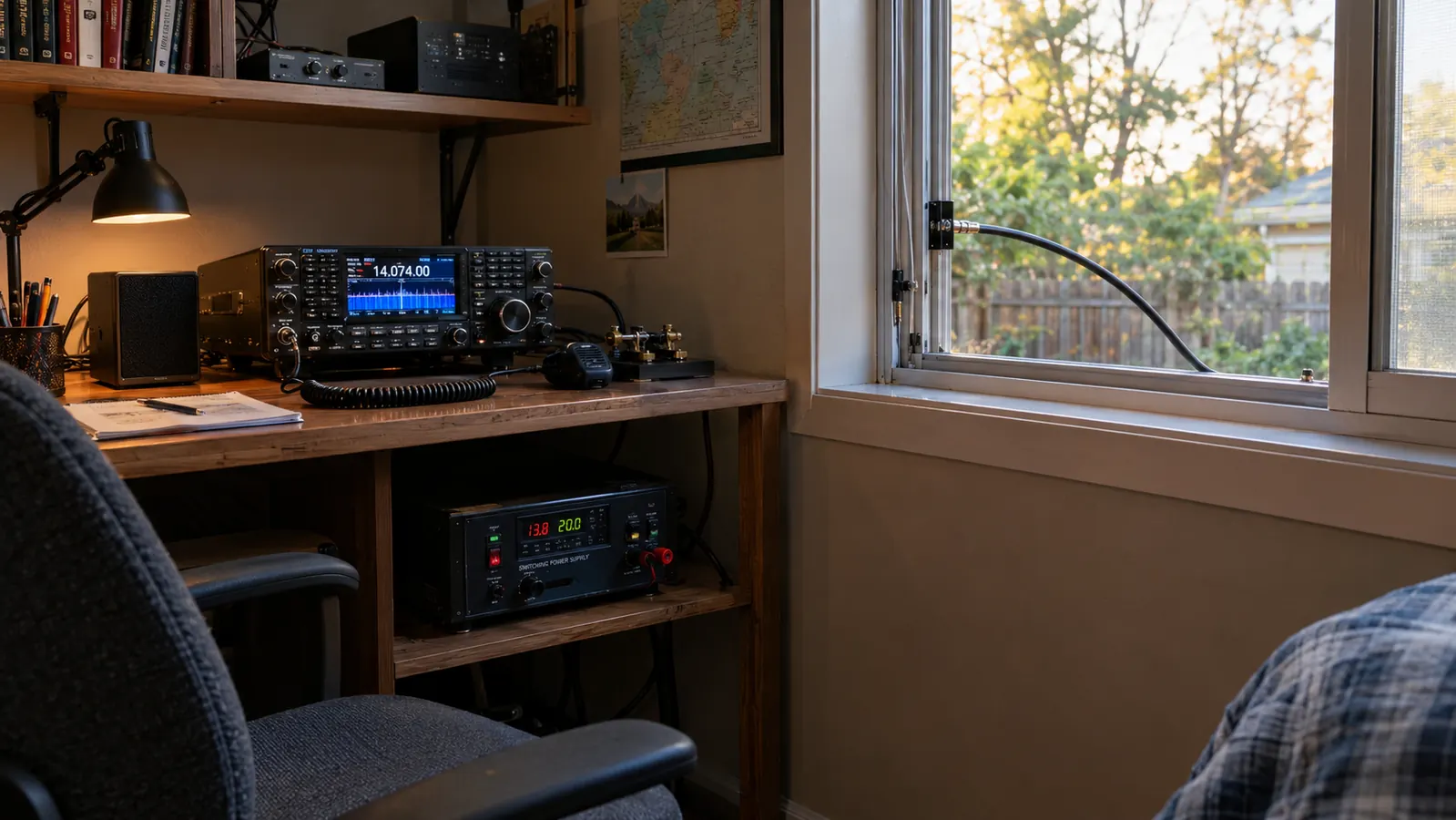
If you are shopping for a 30 amp power supply for your radio bench, here is the honest version of what I learned after two years with the Tekpower TP30SWI. The short version: it is a good supply for the money, and I would buy it again. The longer version has a few wrinkles the listing photos do not show you. The fan is louder than you expect in a quiet room. The noise offset knob does real work, but it is not magic. And the 30 amp rating is a ceiling, not a cruising speed. None of that makes the supply a bad buy. It just means you should go in knowing what you are getting.
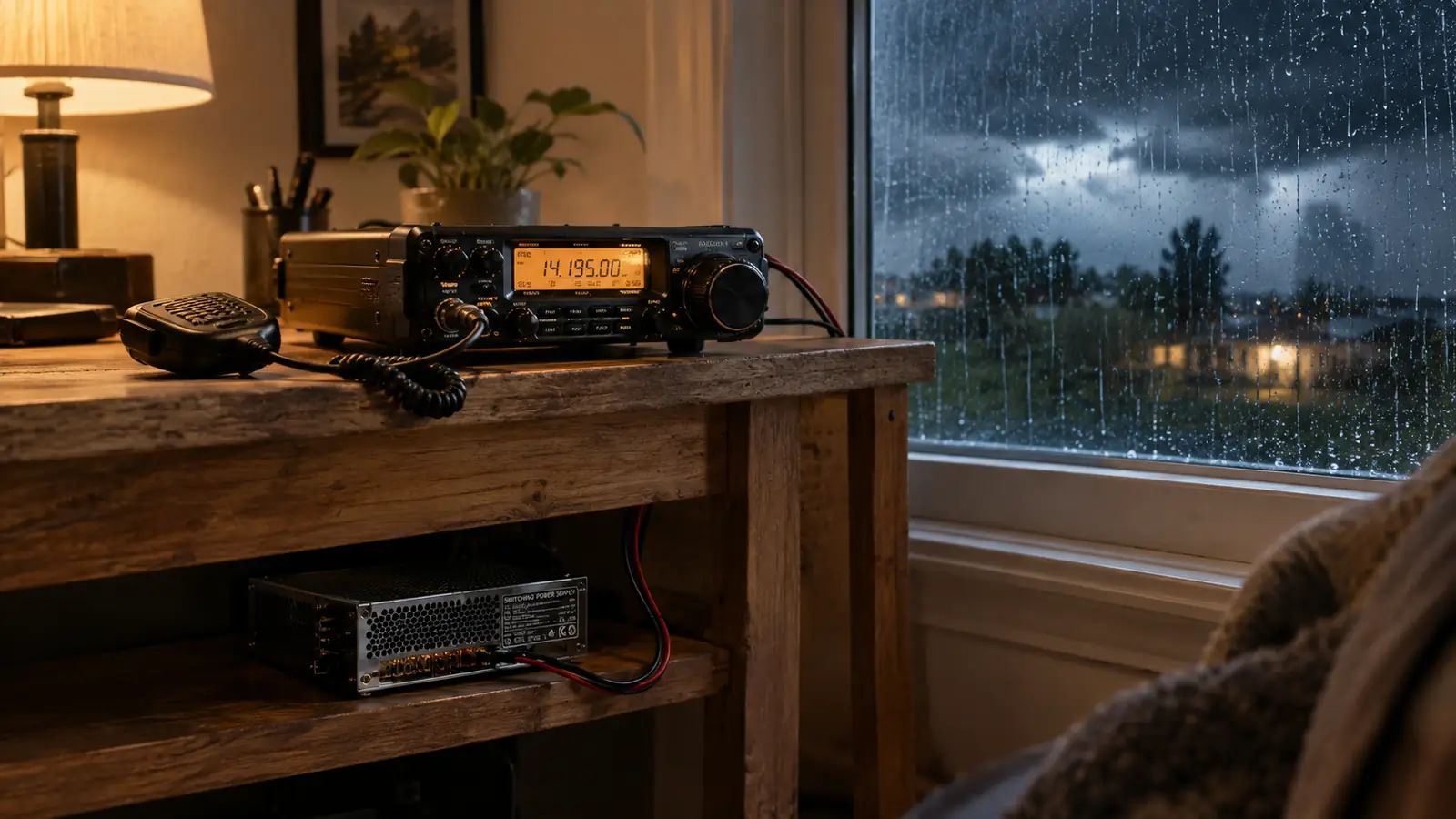
I bought mine about two years ago when I rebuilt my setup after my old handheld finally died. The plan was simple: a proper radio on the bench, a proper antenna in the backyard, and a supply that would run the radio without complaint through a long evening of listening. The Tekpower sits on the lower shelf of my bench, and when a storm is coming I pull the AnyTone out of the truck and run it on the bench off this supply. That way Joan can still reach me on the handheld she keeps on the kitchen counter during storm season. That is the job, and the supply has done it for two years without a hiccup.
The Quick Verdict
A dependable 30 amp switching supply that earns its spot on the bench, as long as you can live with a cycling fan and take the time to learn the noise offset knob. I would buy it again.
Amazon Check Today's Price →The supply that has run my bench for two straight storm seasons
The Tekpower TP30SWI has powered my bench radio through two years of daily listening and every storm watch since. It is not flashy, and it has a couple of quirks, but it has never let me down. Check today's price on Amazon and see if it fits your setup.
Amazon Check Today's Price on Amazon →How I've Used It
My setup is simple. The bench is a corner of the spare bedroom, and the antenna lead runs out the window to a wire antenna in the backyard. The Tekpower sits on the lower shelf, and the AnyTone mobile radio sits on the desk above it. Most evenings I run the radio on low power for listening, and a few times a week I key up a local repeater on high power to check in with the net. The supply does not strain at any of it.
The one job I did not plan for is storm duty. When a storm is coming, I pull the AnyTone out of the truck, bring it inside, and run it on the bench off the Tekpower. The truck's magnet-mount antenna can't help me inside the house, so I connect the radio to the backyard wire antenna instead. I checked the match with my NanoVNA when I first set it up, and the standing wave ratio, or SWR, which tells you how well the antenna is matched to the radio, came out fine. The supply has never missed a beat during any of this.
I also measured what the radio actually draws, because that is the number that matters. A 50 watt mobile radio on high power pulls roughly 10 to 12 amps on transmit. The Tekpower is rated for 30 amps continuous. That leaves a lot of headroom, which is exactly how I like to run a supply. I would rather use half of the rating and never think about it than run it at the edge.
Most nights I sit down at the bench around eight, after dinner. I listen to the local nets, check in on the repeater, and sometimes just tune around to see what the band is doing. The routine is the same every time: flip the supply on, let the radio warm up, and listen. I do not think about the supply during any of it, which is exactly what I want from a piece of gear.
The Noise Offset Knob Is the Whole Story
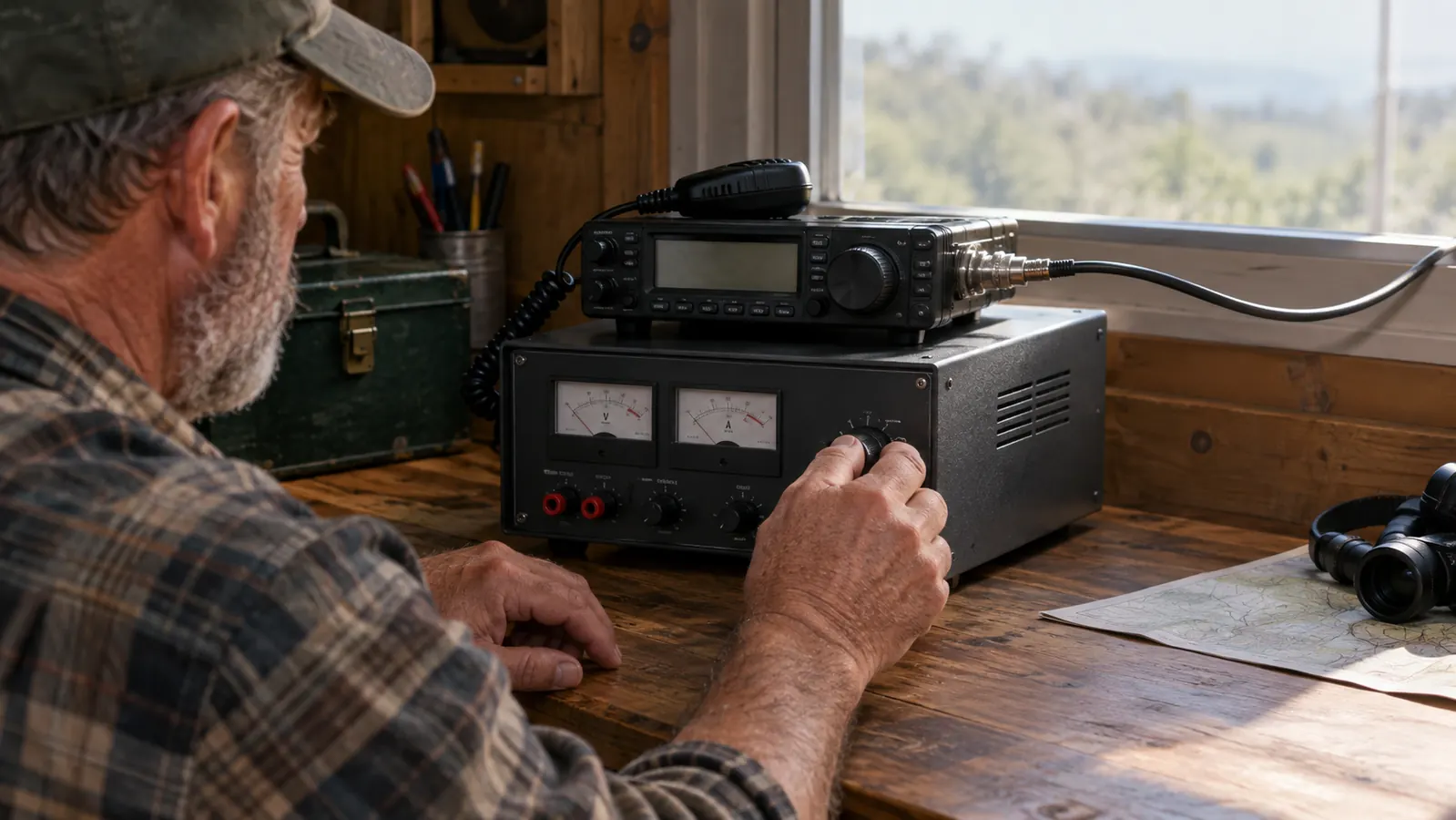
The reason I chose the Tekpower over other supplies in the same class is the noise offset knob on the front panel. A switching supply hums. It has to, because that is how it converts 120 volts AC from the wall into 13.8 volts DC for the radio. The hum is usually faint, but it can land right on top of the frequency you are listening to. The noise offset knob shifts that hum to a different spot so it moves off your listening frequency. That is the whole job of the knob, and it does it.
What nobody tells you is that it is not a set-and-forget control. The sweet spot changes depending on the band you are listening to. I usually find one position that works well on the local 2 meter repeater, and a slightly different position that works better on 70 centimeters. When I switch bands, I give the knob a nudge. It takes about ten seconds and it is not hard, but you have to know it is there and you have to be willing to fiddle with it.
The other thing nobody tells you: it moves the noise, it does not erase it. If the supply is being pushed hard and the fan is running and the hum is strong, the knob will move the worst of it off your frequency, but you may still hear a faint buzz in the background of a very quiet signal. On a busy repeater you will never notice. On a quiet frequency at night, listening for a weak station, you will be glad the knob is there.
The clearest example I can give you happened on a quiet night last winter. I was listening on a frequency that was completely empty except for a faint station out of Alabama. There was a hum from the supply sitting right on top of it. I turned the noise offset knob a few degrees, and the hum moved off the frequency like it had been pushed aside. The station came up out of the noise. That is what the knob is for, and it is the reason I chose this supply over the others.
The Fan Will Be the Loudest Thing in the Room
Here is the honest part. The fan on this supply cycles on and off, and in a quiet room you will hear it. It is not a jet engine. It is a small thermal fan doing its job. But when the room is otherwise silent and you are listening to a weak signal, the fan spinning up is the loudest thing you will hear. I did not expect that, and I wish someone had warned me.
The fix is simple: do not put the supply on the desk right next to your chair. Put it on the floor, or on a lower shelf like I did, and the noise drops to a background hum you stop noticing. The supply runs warm, not hot, in normal use, so the fan does not cycle as often as you might think. In two years I have never heard it run continuously for more than a few minutes. If you plan to run digital modes for long evenings, expect the fan to be part of the experience, because the supply will be working and it will let you know.
If you are the kind of operator who runs the radio for an hour at a time, the fan will not bother you much, because the supply does not get hot enough to spin it up that often. It is the all-day digital sessions and the long contest weekends where you notice it. For those, put the supply in the next room if you can, or just accept that the room is not a library.
What 30 Amps Actually Means on the Bench
Let me give you the math that matters. A 50 watt mobile radio draws about 10 to 12 amps on high power transmit. A 100 watt radio draws more like 18 to 22 amps. So a 30 amp supply covers a whole bench of typical gear with room to spare. If you are only ever going to run a handheld, you do not need 30 amps, and you can stop reading right here.
The honest caveat is that 30 amps is a ceiling, not a place to live. If you plan to sit on a digital mode and transmit for long stretches at high power, the supply will get warm and the fan will work harder. I run my radio at 20 amps or less for anything longer than a quick check-in, and the supply stays cool enough that the fan only cycles occasionally. That is the way to make a switching supply last.
One more thing I check every few months: the output voltage. The supply is rated for 13.8 volts, and I verify mine against a separate multimeter. It has read true every time I have checked. It takes thirty seconds and it is the kind of habit that catches a problem before it becomes a failure.
The other number worth knowing is the size of the wire from the supply to the radio. I run 10 gauge wire, which is plenty for the short runs on my bench. If your cable runs are long, go bigger. The supply will deliver what the radio asks for, but the cable has to carry it, and a thin cable under load will drop voltage you cannot see.
I also use the supply when I tune antennas. When I check the match on the backyard wire with the NanoVNA, I key the radio on low power and listen to the result. The supply handles the quick transmit bursts without the voltage dipping. A supply that holds its voltage under load is worth more than one that reads well on paper, and this one holds.
The Honest Downsides After Two Years
I have already covered the fan and the learning curve on the noise offset knob, so let me be straight about the rest. The Tekpower is a budget brand, and it shows in the little things. The manual is thin. There is no phone support. If something goes wrong, your recourse is the Amazon listing you bought it from. That is the trade you make for the price, and for me it has been a fair trade because nothing has gone wrong.
The bigger honest point is that this supply is not an off-grid solution. It needs 120 volts from the wall, and when the power goes out, it goes quiet. The 2020 ice storm that knocked out power and cell service in our county for four days is the reason I rebuilt my setup at all, so I want to be clear: the Tekpower is the part of my setup that runs when the house has power. For the outage itself, the truck battery and the handheld are what carry me. If your goal is to operate through a multi-day outage, buy a supply like this for the bench, but plan a battery for the actual emergency.
The last thing I will say about downsides is the one that applies to every switching supply: it will never be as quiet on the air as a good linear supply. The old heavy iron transformers are quieter, but they are heavy, expensive, and hard to find new. For a 30 amp bench supply at this size and weight, the switching design is the right trade. You just have to accept the trade instead of pretending it is not there.
If I could change one thing, it would be the power switch placement. It is easy to bump when you reach across the bench, and the radio goes quiet until you flip it back on. It has only happened a few times in two years, and it never caused real trouble, but it is the kind of small detail you only learn by living with a piece of gear.
Alternatives I Considered
The supply I compared it against most seriously was the Pyle 30 amp bench supply. It has a similar rating and a similar price, and plenty of hams run them happily. The deciding factor for me was the noise offset knob. I knew I would be doing a lot of listening on quiet frequencies, and the ability to shift the supply's hum off my listening frequency was worth the choice by itself.
I also thought about going straight to a battery-based setup, a deep cycle battery with a charger, which is the real off-grid answer. It costs more, it takes up more room, and it needs more maintenance than a plug-in supply. I may add one someday. For now, the Tekpower covers the bench, and the truck battery covers the outage. That division of labor has worked well for two years.
If I were advising a new ham just setting up a first bench, I would tell them the same thing I tell myself: buy a dependable 30 amp supply, learn its quirks, and spend the money you saved on a better antenna. The antenna is where your signal lives. The supply just needs to stay out of the way. The Tekpower stays out of the way.
What I Liked
- Noise offset knob actually works and shifts the supply hum off your listening frequency
- 30 amp rating covers a 50 watt mobile radio with plenty of headroom
- Compact and light for a 30 amp supply
- Runs cool in normal use, fan only cycles occasionally
- Two years of daily use and storm-season duty without a single failure
Where It Falls Short
- Fan is audible in a quiet room and you will hear it cycle
- Noise offset is not set-and-forget; the sweet spot changes by band
- Not an off-grid solution; it needs wall power
- Thin manual and minimal support, typical of a budget brand
- 30 amps is a ceiling, not a cruising speed; plan to leave headroom
After two years and two storm seasons, the Tekpower has never once failed to key up when I needed it. The fan noise I can live with; the reliability I cannot do without.
Who This Is For
This supply is for the ham who wants a dependable bench supply for a mobile radio used at home, does not need portability, and is willing to spend ten seconds with a knob when switching bands. It is also for the person who listens a lot on quiet frequencies and wants the ability to move the supply's hum out of the way. If you are setting up a first bench on a budget, or replacing an old supply that finally gave up, the Tekpower is an easy recommendation. It is not the last word in power supplies, but it is a very good first word.
Who Should Skip It
Skip it if you need true off-grid operation, because this supply cannot run without wall power and you will be better served by a battery and a charger. Skip it if a silent room matters more than anything else, because the fan will cycle and you will hear it. And skip it if you only run handhelds, because 30 amps is more supply than you will ever use. None of those are flaws in the supply. They are just mismatches between the tool and the job, and being honest about mismatches is how you end up with gear you keep for years.
Two years in, I would buy it again
The Tekpower TP30SWI has earned its place on my bench. It has a couple of quirks, and now you know what they are. If you are in the market for a 30 amp supply, check today's price on Amazon and decide for yourself.
Amazon Check Today's Price on Amazon →