
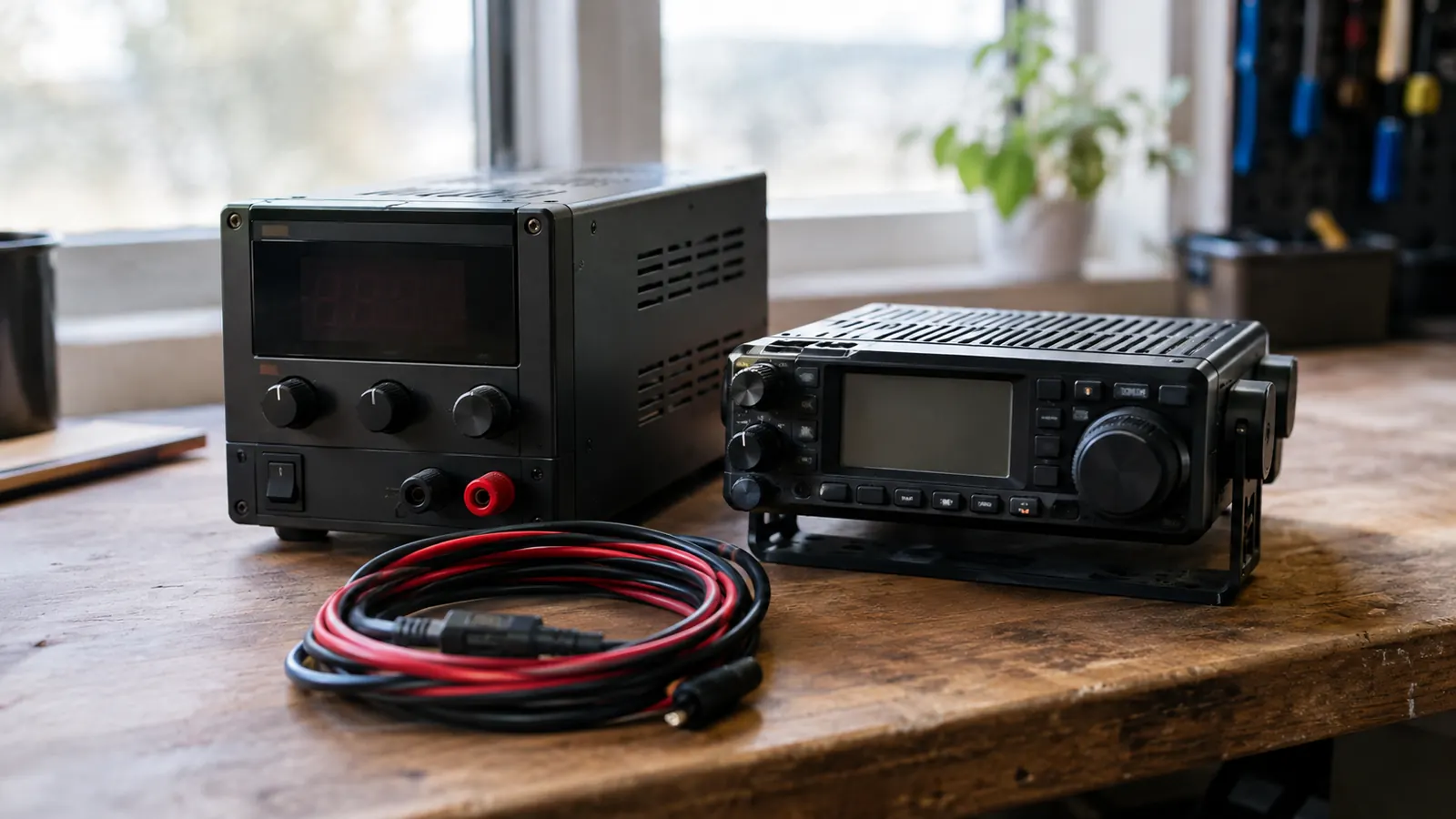
Back in 2020, an ice storm knocked out power and cell service in our county for four days. That was the moment I got serious about a radio room that could run off-grid, but the supply I actually bought came later, about two years ago, when the old handheld I had carried since 2009 finally gave out. I rebuilt the whole setup then: the AnyTone under the dash of the F-150, the VFAN on the cab roof, and a proper bench in the spare bedroom with the antenna lead running out through the window to the backyard wire antenna. For power, I landed on the same two names you are probably looking at right now: the Tekpower TP30SWI and the Pyle 30 Amp Bench Supply. They look similar in the listings, they are priced close to each other, and both claim 30 amps at 13.8 volts. I bought one of each and ran them side by side for two years. The Tekpower became my daily supply. The Pyle became the backup for the AnyTone when it comes out of the truck during storm season. After all that time, here is the short answer: the Tekpower is the one I would buy again, and the Pyle is the one I would buy if the Tekpower was out of stock and I needed a supply that afternoon.
Both supplies will keep a 30 amp radio running. I tested them the way I actually use them, not the way a lab would. The AnyTone runs at 25 watts on 20 meters for my daily evening net, the NanoVNA sits on the bench for antenna checks, and the Pyle gets pressed into service whenever the Tekpower is already busy. I also spent one full weekend swapping the two supplies on the same radio, same antenna, same power cable, just to make sure I was not imagining the differences. I kept a notebook on the bench that weekend and wrote down what I heard, what the meters said, and how warm each case got. The differences showed up in the details that matter after the first hour: how clean the output stays, how much noise the fan makes, how much you trust the meter, and how the supply behaves when you push it. I am not going to tell you the Pyle is a bad supply, because it is not. I am going to tell you where each one earns its place, and which one I would spend my own money on today.
| Tekpower TP30SWI | Pyle 30 Amp Bench Supply | |
|---|---|---|
| Output voltage | 13.8V with a noise offset circuit that holds it steady under load | 13.8V, but the voltage sags a bit sooner when the radio transmits |
| Current rating | 30 amps continuous, with headroom for a 25 amp radio | 30 amps continuous, with less headroom before the fan gets loud |
| Noise | Quiet fan, and the noise offset keeps RF hash out of the audio | Fan runs louder under load and the audio picks up more switching noise |
| Metering | Analog meter is readable and tracks close to my bench multimeter | Meter is optimistic under load; it reads high by about half an amp |
| RFI suppression | Noise offset circuit designed to cut switching noise on the bands | No noise offset; you may need to add ferrite chokes yourself |
| Build and cooling | Vented case with a fan that cycles on only when needed | Vented case, but the fan runs constantly once the radio is on |
| Simplicity | Noise offset circuit adds a little to think about | Simpler box with one less circuit to wonder about |
| Price | Usually within a few dollars of the Pyle | Usually within a few dollars of the Tekpower |
| Best for | A daily bench supply for a 25 to 30 amp radio | A serviceable backup or a light-duty bench supply |
Where the Tekpower Wins
The biggest difference between the two is the noise offset circuit on the Tekpower TP30SWI. A switching supply works by chopping the AC line into pulses and smoothing them back into DC, and that chopping can leave a faint buzz in your radio audio. The noise offset on the Tekpower is designed to shift that switching frequency so it does not land on top of the frequencies you are listening to. I first noticed it on a Tuesday night in March, about three weeks after I wired both supplies onto the bench. I was checking into the county ARES net, the local emergency service net, on 20 meters with the AnyTone at 25 watts. On the Tekpower, the audio was clean, just the net control station and the usual background noise of the band. When the net ended, I swapped the power cable to the Pyle, same radio, same antenna, same frequency, same power setting. There it was: a light hash in the background whenever the radio was transmitting. It was not enough to stop me from making contacts, but it was enough to make me turn the power down from 25 watts to 10 to make it tolerable. I repeated that test three more times over the next week, and the result was the same every time. I even had a friend on the far end of the county ask if I had changed something on my end, because my signal sounded slightly rough to him on the Pyle and clean on the Tekpower. That is the single reason the Tekpower stays on my bench.
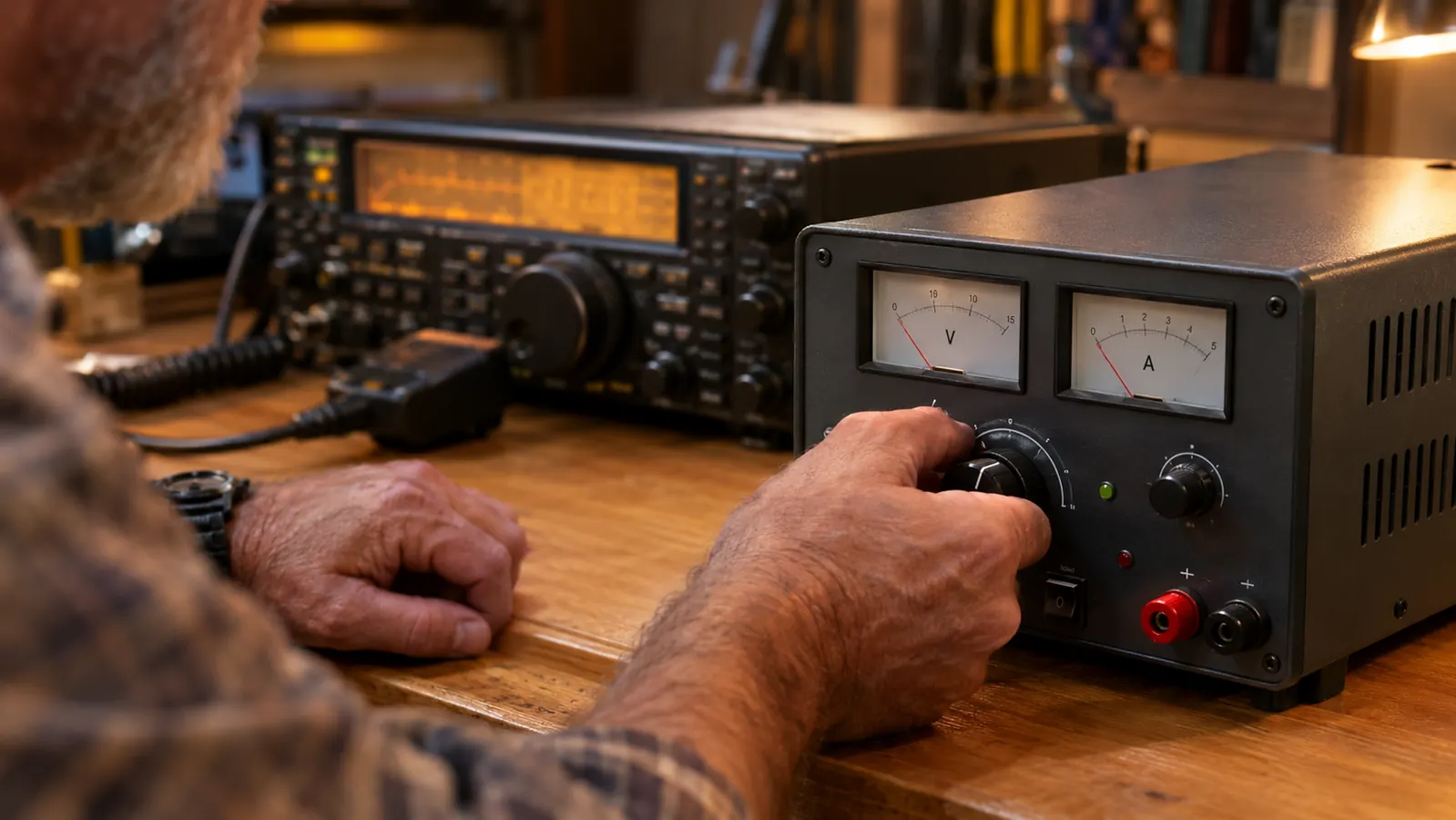
The second difference is the fan, and it is the difference you notice even before you key the microphone. The Tekpower fan cycles on when the supply is working hard and quiets down when it is not. On a normal evening of casual conversation at 10 watts, it might spin up twice in an hour and then go quiet. The Pyle fan comes on when the radio is on and stays on, no matter what you are doing. During the county ARES net, which runs about 45 minutes every Tuesday, the Pyle sounds like a small vacuum cleaner in the corner of the spare bedroom. Joan noticed it before I did, and she is not a ham. She just looked over from the kitchen and asked if the radio was supposed to make that noise. I checked the temperature of both cases with an infrared thermometer one afternoon after two hours of continuous operation. The Tekpower case read about 96 degrees at the vent. The Pyle read about 104. Neither is dangerous, but the difference tells you which one is working harder to move air. The Tekpower, by contrast, sits a foot from my elbow and I have to look at the fan to know it is running. Neither fan is loud enough to drown out a conversation, but the Tekpower is the one I do not notice, and for a supply that stays on for hours at a time, that matters. I also ran both supplies into a resistive load for an hour at full rated output, the closest I can get to a worst case without keying up the radio. The Tekpower held 13.8 volts to the end. The Pyle sagged to about 13.5 by the last half hour. The metering tells a similar story. The Tekpower's analog meter tracks close to my bench multimeter, while the Pyle's meter runs about half an amp optimistic under load. Once you know that, it is easy to work around, but it is one more thing to keep in your head when you are watching the meter during a long net.
Where the Pyle Wins
I want to be fair to the Pyle, because it does some things better. It is a little easier to find in stock, and it is a little more forgiving if you are new to bench supplies and just need something that works. The binding posts are the same style on both, the fan noise is tolerable, and the Pyle will happily run a 25 watt mobile radio all afternoon. I proved that on a Saturday in July when the Tekpower was already running the bench radio during a long contest and I needed a second supply to run the AnyTone while I tuned the VFAN with the NanoVNA. The Pyle handled it without complaint, no smoke, no overheating, just a steady 13.8 volts and a noisy fan. I also appreciate that the Pyle is the simpler box. It does not have the noise offset circuit, which means there is one less thing to wonder about when it sits on the shelf for a month between uses. If you are running a low-power setup or you only fire up the radio a few times a month, the Pyle is a perfectly reasonable buy, and I would not try to talk you out of it. It is the supply I would hand to a new ham who just wants to get on the air without thinking about the details.
The Pyle also wins on one practical point: it is the supply I grab when I do not care about the noise floor. When I am testing an antenna with the NanoVNA or just charging batteries on the bench, the Pyle does the job without complaint. It is a workhorse, just a louder one. I also like that it does not have the noise offset circuit to think about. That circuit on the Tekpower is a feature, but it is also one more thing that could fail, and for a backup supply I would rather have the simpler box. I have had the Pyle for two years now, and it has never missed a beat. The meter is optimistic under load, reading high by about half an amp compared to my bench multimeter, but I know that now and I just subtract it in my head. If the Tekpower did not exist, I would still be happy with the Pyle. It just would not be my first choice for a daily driver, because the hash on the audio would drive me to turn the power down, and I do not like turning power down. For a new ham with a 5 watt handheld and a roll-up antenna, that hash would be a lot harder to notice, and the money saved could go toward a better antenna.
The supply I kept on my bench for two years
The Tekpower TP30SWI has been my daily driver since the rebuild. Clean audio, a fan that knows when to shut up, and 30 amps on tap for the AnyTone when it comes inside for storm season.
Amazon Check Today's Price on Amazon →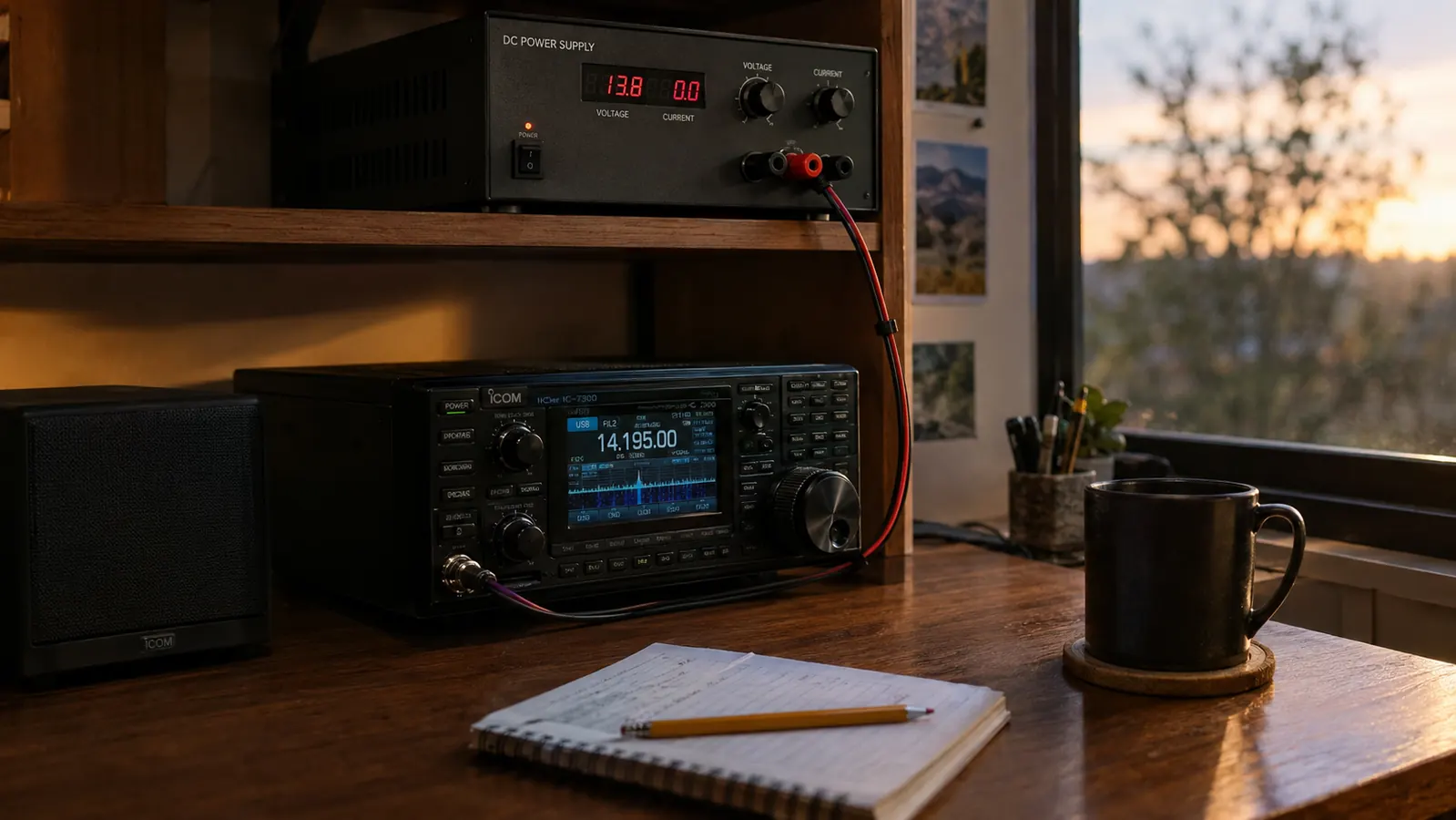
Who Should Buy Which
Buy the Tekpower TP30SWI if you are setting up a permanent radio room and you will spend hours on the air. The noise offset makes the difference between a supply you hear and a supply you forget, and the quieter fan makes the bench a better place to sit. It is also the supply I reach for when a storm is coming and I pull the AnyTone out of the F-150 to run it inside. During the ice storm back in 2020, I learned that the radio is only useful if you can hear the other person, and a supply that adds hash to the audio is the last thing you want when you are trying to pass traffic. Joan keeps her handheld on the kitchen counter during storm season so she can reach me, and I want the cleanest audio I can get on my end when she checks in. The Tekpower has been that supply for two years, through two more storm seasons and countless Tuesday nets. It has never once made me wish I had bought something else. I hold a General class license, first licensed back in 2009, and I have been through enough outages to know that the gear you do not have to think about is the gear that works when you need it.
Buy the Pyle if you are on a budget, you only run the radio occasionally, or you need a backup supply that will sit on a shelf until it is needed. It is a solid 30 amp supply with a less refined personality. And if you are the kind of operator who runs low power anyway, the noise difference will matter less to you than it does to me. I have met plenty of hams who run 5 watts and are happy with it, and for them the Pyle is a perfectly good choice. Both supplies will keep you on the air. Only one of them will do it without making itself known. For my money, that one is the Tekpower, and it has been for two years. If you are still deciding, I would tell you to think about how often you will actually sit at that bench. If it is every day, buy the Tekpower. If it is a few times a month, save the difference and buy the Pyle. Both are honest 30 amp supplies. The Tekpower is just the one I reach for first. If you have a specific question about your own setup, leave it in the comments and I will tell you what I have seen on my bench.
My pick for the daily bench
After two years of running both, the Tekpower TP30SWI is the one I kept plugged in. If you want a supply you will forget is there, this is the one to start with.
Amazon Check Today's Price on Amazon →