
Somewhere in the middle of the 2020 ice storm, I sat in the dark and made a list of everything in the house that still worked. Cell phones were dead. The landline was dead. The only radio that could reach me from the backyard was the little handheld Joan keeps on the kitchen counter, and it ran on batteries I had to ration. When that same handheld finally died for good about two years ago, I decided the next setup would run off something I could feed from the wall or from a battery, whichever the day called for. That is how the Tekpower TP30SWI ended up on my bench.
The TP30SWI is a 30 amp switching supply that puts out 13.8 volts DC, which is what just about every ham radio wants to see. A switching supply chops the incoming house power into pulses and converts it down to DC, which is a fancy way of saying it does the same job as the old 40 pound linear supplies without needing a furniture dolly. It is not the biggest supply on the market and it is not the cheapest. It is the one that has sat on my bench for two years without giving me a reason to replace it.
The Quick Verdict
A 30 amp supply that has run my mobile radio on the bench every day for two years. The noise offset works, the fan is louder than I would like, and I have no plans to swap it out.
Amazon Check Today's Price →Two years on my bench and still earning its spot
If you are rebuilding your radio setup the way I did, this is the supply I would buy again. Check today's price on Amazon.
Amazon Check Today's Price on Amazon →How I've Used It
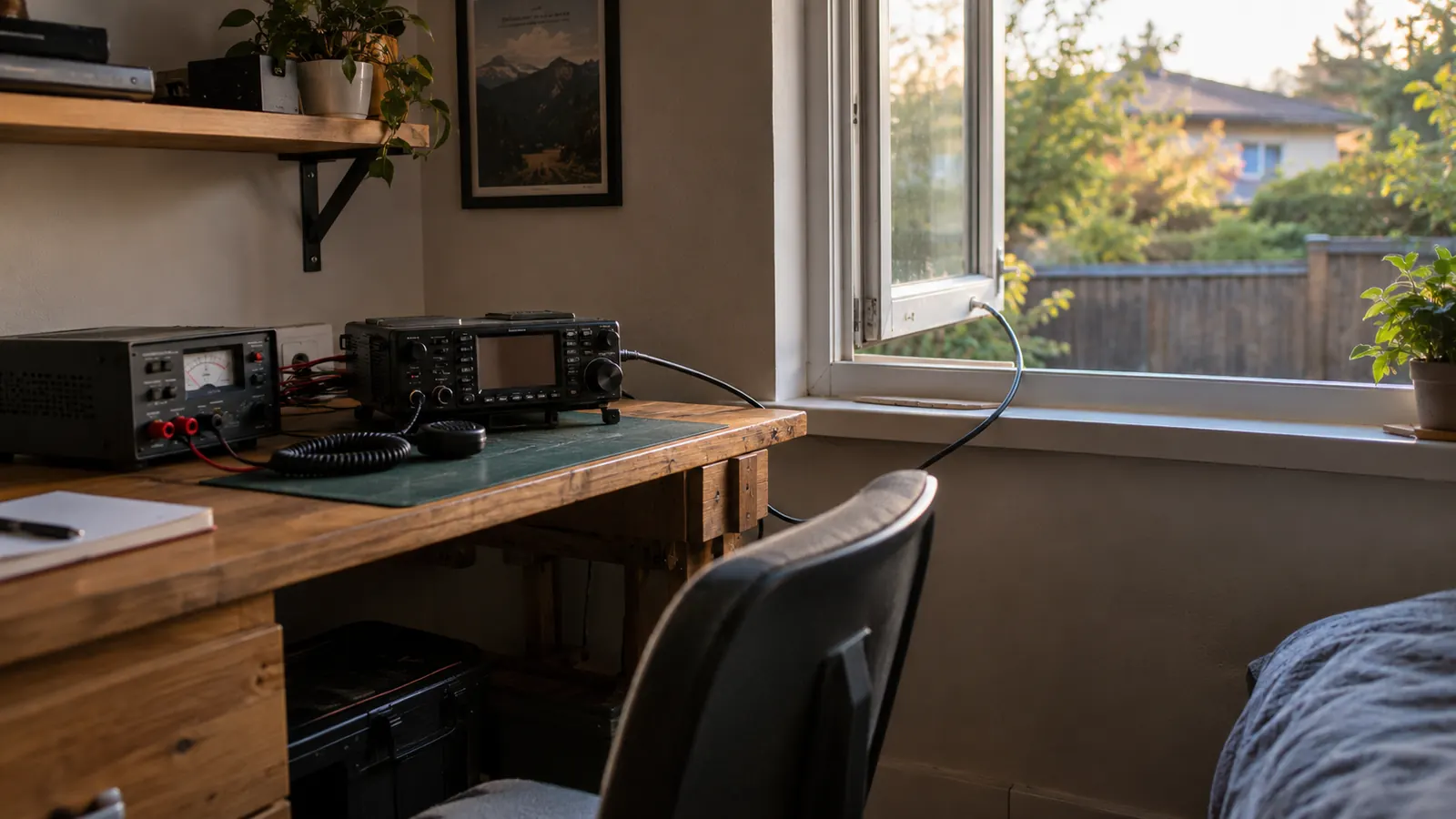
The TP30SWI does not live a pampered life. It sits on the bench in the corner of the spare bedroom, under the window where the antenna lead comes in from the backyard. Most days it runs the AnyTone AT-778UVII, the same mobile radio I keep under the dash of my F-150. When I am driving, the radio runs off the truck battery through the VFAN antenna on the cab roof. When I am home, the radio comes inside and the Tekpower takes over. I have done this swap so many times that the power cord has a permanent bend in it.
The storm routine is the same every time. When the forecast turns, I pull the AnyTone out of the truck, set it on the bench, and plug it into the TP30SWI. Joan knows that radio works as long as the house has power, and the handheld on the kitchen counter covers us if the grid goes dark. Last storm season we had two nights of high winds and one outage that lasted about nine hours. The bench radio stayed on the whole time, and the supply never complained.
I also use it as the workhorse for antenna work. When I tune the backyard wire with the NanoVNA-H, my antenna analyzer, the radio stays on for hours while I walk back and forth to the far end of the yard. The supply just sits there. That is the whole point of a bench supply, and it is the thing most reviews skip: after the first week you stop thinking about it, and that is exactly what you want. The TP30SWI is light enough that I have carried it out to the garage workbench twice, when I wanted to test a radio before putting it in the truck. It is not a permanent installation. It is a tool I move where the work is.
Maintenance has been exactly nothing. I have never opened the case and I have never needed to. Once a year I blow the dust off the fan grille with a can of compressed air, because the fan pulls dust and the bench is not a clean room. That is the entire maintenance schedule.
What the Noise Offset Does
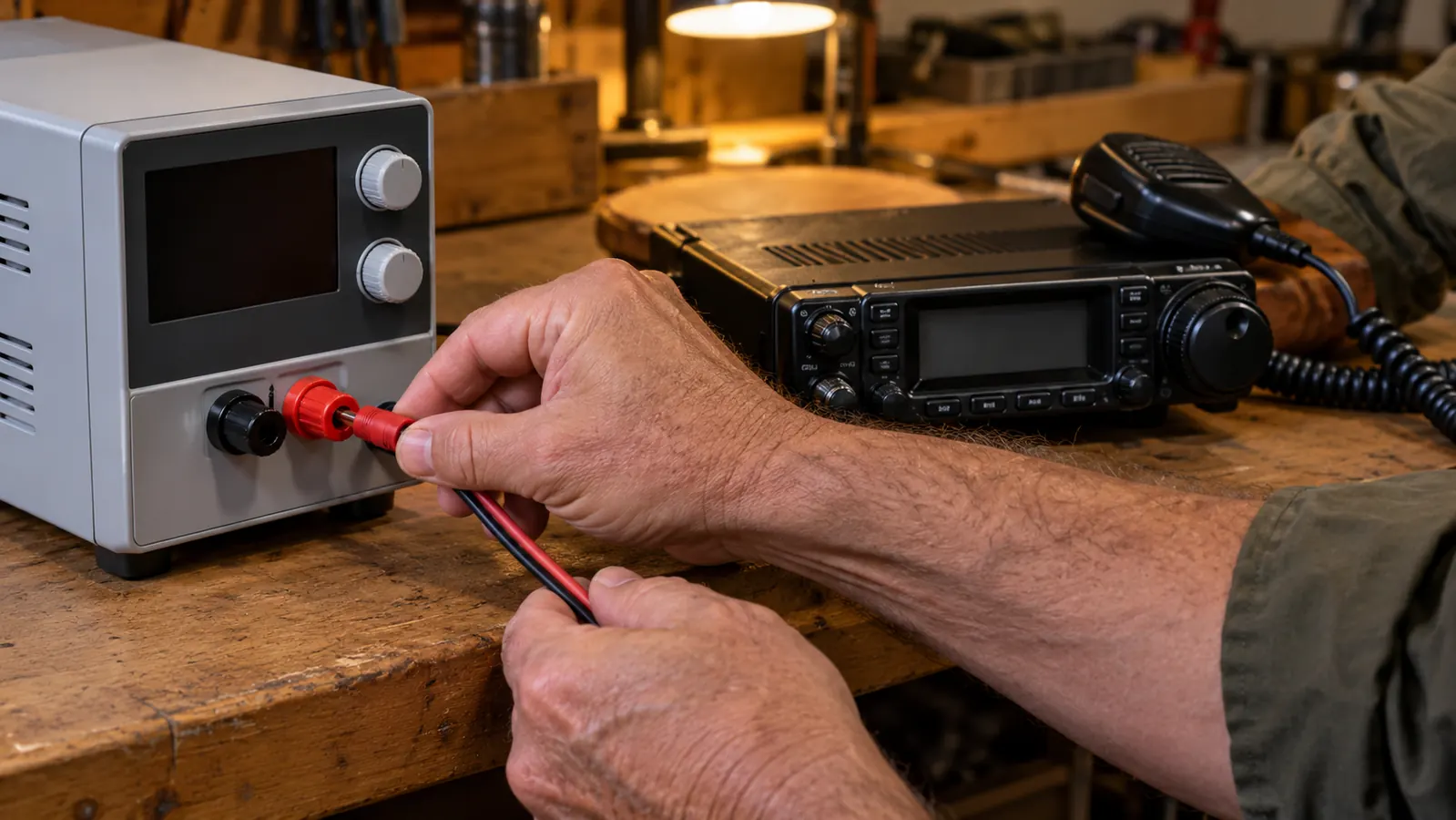
The reason I picked this supply over a dozen others is the noise offset, and it deserves an honest explanation. A switching supply can throw a faint whine across the receive band, because the internal chopping happens at a frequency that lands inside the range your radio listens to. The noise offset knob on the TP30SWI shifts that chopping frequency up or down, so the whine moves somewhere you are not listening. It is not a filter and it is not a cure. It is a way to park the noise in a different spot, and it works.
On my bench, the hash used to sit right around the middle of the 2 meter band, the VHF slice where most of the local repeaters live. A quarter turn of the knob moved it up near the top of the band, where I never operate, and it has stayed there for two years. I set it once and I have not touched it since. If you are the kind of operator who scans the whole band, you will still hear it when you pass that frequency. There is no way around that with a switching supply.
The honest version: the noise offset is not a reason to buy the supply by itself. It is a reason to buy this supply instead of the other 30 amp switching supplies that do not have it. That is a real difference, and it is the difference that sold me.
How It Holds Up Under a Real Load
The numbers on the box say 30 amps at 13.8 volts. My radio draws a fraction of that, around 5 amps on receive and maybe 10 or 11 when I am transmitting at full power. So I am not the guy to tell you whether this supply will run a 50 amp amplifier. I can tell you that for a 25 watt mobile radio running on a bench, the meter sits at 13.8 when the radio is idle and dips a hair when I key up. That hair is the supply doing its job, not failing at it. That is the test that matters for most of us.
I checked the voltage with a plain voltmeter about six months in, and it read 13.8 on the nose with the radio on receive and 13.7 with the radio transmitting. That half a volt of sag is nothing. A radio that sees 13.8 volts is a happy radio, and mine has been happy for two years. The Tekpower is rated for 30 amps continuous, and I have never once wondered whether it was going to keep up.
The fan is the one thing I notice. It is not loud enough to hear across the house, but in a quiet room you know it is there. I have the supply on the bench at ear level, and when the room is silent I can hear it cycling. It has never bothered me enough to move it, but if you are the kind of operator who needs total silence at the bench, you will want a linear supply instead. I keep meaning to move it to a lower shelf, because the fan is quieter when the supply is not at ear level. The next time I rearrange that corner of the spare bedroom, it goes lower. I will come back to that.
What Two Storm Seasons Taught Me
The 2020 ice storm is the reason any of this gear is in my house, so it is worth saying what the TP30SWI did and did not do when the power flickered. The honest answer is that a power supply needs wall power, and when the grid goes down for four days, the wall is dead. The TP30SWI did not run my radio through the dark. The handheld on the kitchen counter did that, on batteries I rationed. What the supply did was run the bench radio for the two days before the storm hit, when the forecast said trouble and the power was still on, and again the morning the power came back, when the county was still a mess and I wanted to know who needed what.
That sounds like a small thing until you live through it. In the day before a storm, the radios are the only way to hear what is coming, and the supply was on for hours at a stretch. It also gave me one less thing to worry about when everything else was uncertain. The radio worked when I plugged it in. It worked the next morning. That is the whole job, and it did it.
If you are building for the same reasons I was, buy the supply for the everyday bench work and buy batteries for the outage. The two do not compete. The supply is what makes the bench usable, and the batteries are what make the radio usable when the bench is dark. I wish someone had said that to me in plain words before I spent a decade limping along on a handheld. The morning the power came back in 2020, the first thing I did was plug the bench radio in and call the repeater. The supply came on like it had been waiting. No drama, no clicking, no nothing. That was the moment I stopped thinking of it as new gear and started thinking of it as furniture.
Where It Falls Short
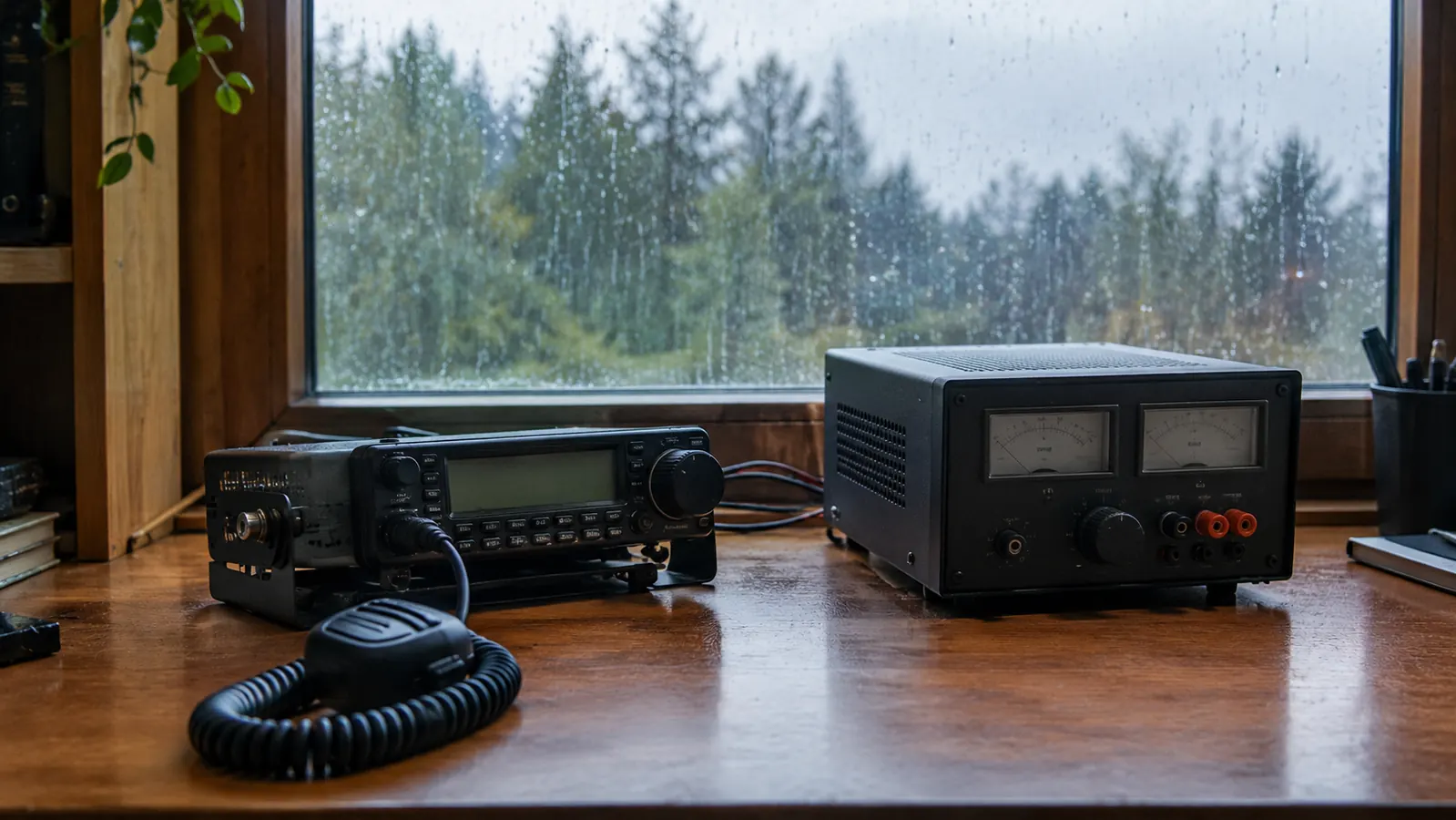
No piece of gear is perfect, and the TP30SWI has a few things I would change if I could. The fan is the first, and I already said my piece on it. The second is the binding posts, the screw-down terminals where the power wire connects. They take the wire I use, a standard 12 gauge power cord, but they are snug. If you are running heavy welding cable for a big amplifier, you will be fighting the hole. For a mobile radio on a bench, it is a non-issue. I spent my working life as a telephone company lineman, so I have opinions about terminals and wire, and these are adequate.
The third is the meter. It tells you voltage and current, and it is accurate enough for radio work, but it is not a lab instrument. If you need to know your voltage to the hundredth of a volt, buy a separate meter. I have never needed to.
The other thing is the one you will read in every honest review of a switching supply: it is not RF silent. The noise offset helps, and on my bench it helped a lot, but a linear supply with a big transformer is still the quietest thing you can buy. You are trading 40 pounds and a higher price for a lighter box and a knob that moves the noise around. For me, that trade is worth it. It is not worth it for everyone.
What I Compared It Against
Before I bought the Tekpower TP30SWI, I looked at three other ways to power the bench. The first was a linear supply, the old heavy kind with the transformer hum. They are lovely and quiet and I have used them for years, but they are heavy, they cost more to ship than they cost to build, and I did not want 40 pounds of transformer on a shelf in a spare bedroom.
The second was a bigger switching supply, something in the 50 amp range, so I would never think about current again. That is a real temptation and a real waste of money for a 25 watt mobile radio. Thirty amps is already three times what I need. Fifty would have been five times what I need, for more money and a louder fan.
The third was the Pyle 30 amp supply that shows up in every search. I looked at it seriously, and the difference came down to one knob. The Pyle is a fine supply, but it does not have the noise offset, and the noise offset is the reason my bench radio is quiet. That is the whole comparison in one sentence, and it is the sentence I would give you if we were standing at my bench.
What I Liked
- Steady 13.8 volts under load, confirmed with a voltmeter six months in
- Noise offset actually moves the RF hash off the frequency you use
- Light enough to move from bench to shelf without a second person
- 30 amps is plenty of headroom for a 25 watt mobile radio
- Simple controls, no menus, no software, nothing to break
Where It Falls Short
- Fan is audible in a quiet room
- Binding posts are snug if you run heavy wire
- Switching supplies are never as RF-quiet as a linear supply
- Meter is good enough for radio work, not a lab instrument
Two years of daily use, two storm seasons, and the meter still reads 13.8 on the nose when I key up. That is the whole review.
Who This Is For
This supply is for the ham who runs a mobile radio on a bench and wants clean 13.8 volts without hauling a transformer around. It is for the guy who pulls his radio out of the truck when the weather turns and wants it powered by something that just works. It is for the operator who has heard the switching supply whine on someone else's bench and wants the version with a knob to move it. If that sounds like you, the Tekpower TP30SWI is a boring, reliable purchase, and I mean that as the highest compliment. I have been a General class licensee since 2012, and this is the supply I would put on any bench I build from here on.
Who Should Skip It
Skip it if you run a big amplifier that wants 50 amps, because this is a 30 amp supply and no amount of wishing changes that. Skip it if the sound of a fan in a quiet room will drive you around the bend, because you will hear this one. And skip it if you are the kind of operator who wants the absolute quietest receiver possible, because a linear supply is still the answer for that. There is nothing wrong with wanting any of those things. This supply is just not built for them.
Thirty amps, 13.8 volts, two years of trouble-free bench time
If that is what your bench needs, the TP30SWI is worth a hard look. Check today's price on Amazon.
Amazon Check Today's Price on Amazon →