
When the ice storm hit our county in February 2020, we lost power for four days and cell service for most of it. My old handheld, the one I had carried since I got my Technician license in 2009, got me through the first night, and then the battery sagged and the charger would not hold a contact. I remember sitting in the dark with a radio that was almost useful, and deciding that the next radio I bought would be one I could count on for years. Two years ago, that next radio finally arrived, and it has been on my bench, in my coat pocket, and on the kitchen counter ever since: the BAOFENG BF-F8HP.
I hold a General class license, so I did not buy the BF-F8HP expecting a lot for the money. I bought it because it was the cheapest dual band handheld I could find that would reliably hit the repeater on the ridge east of town, and because the price meant I could afford to treat it like a tool instead of a trophy. Two years later, it has earned its place. It has also taught me exactly where Baofeng cut corners, and I think you should know about those before you buy.
The Quick Verdict
A tough, cheap dual band handheld that has run daily for two years without failing. The stock antenna and the menu are the weak spots, not the radio itself.
Amazon Check Today's Price →The dual band handheld that has sat on my bench for two years without a failure
If you want a radio you can afford to keep as a spare and trust as a daily, the BF-F8HP is worth a hard look. Check today's price before you decide.
Amazon Check Today's Price on Amazon →How I've Used It
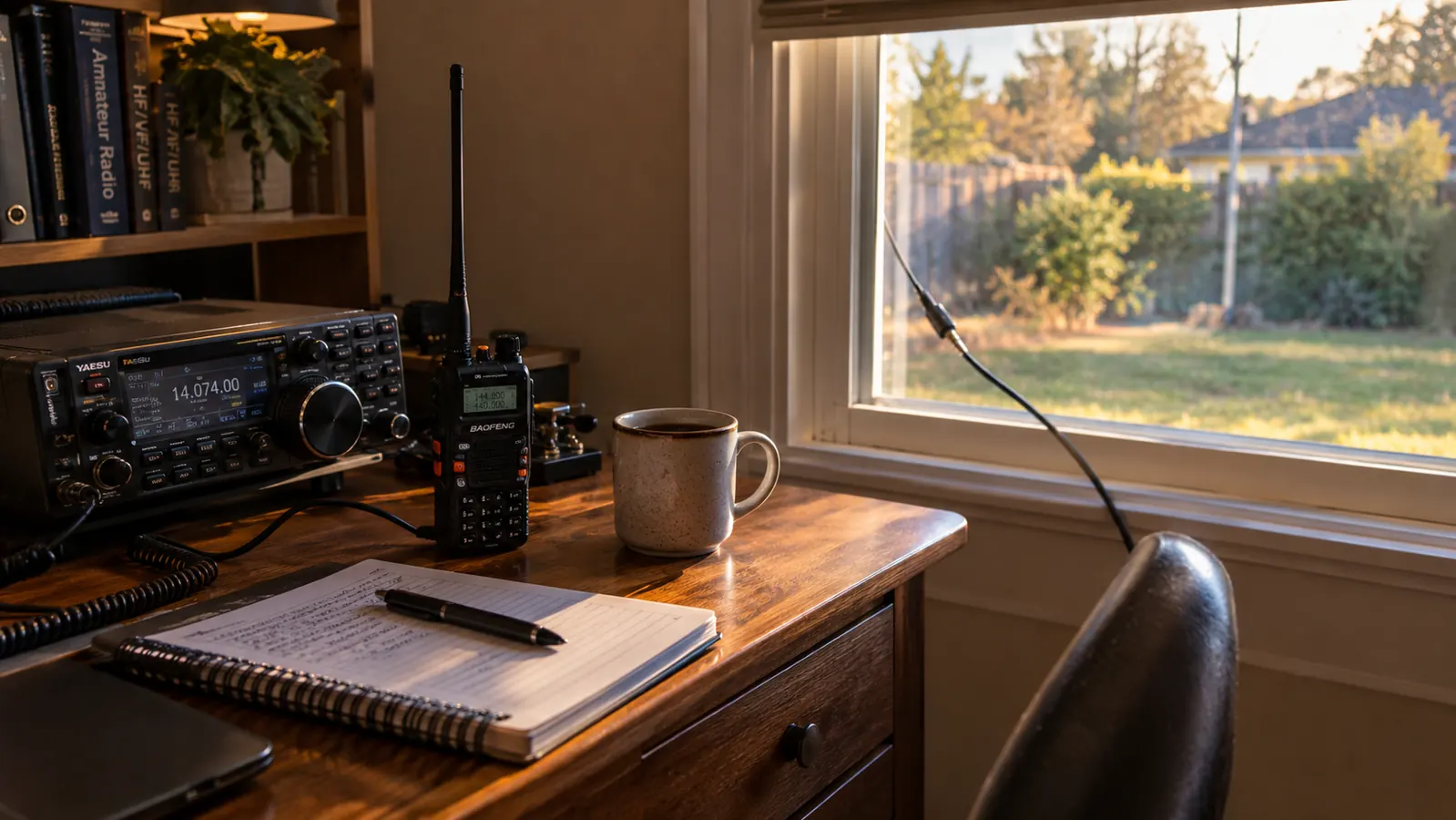
My radio corner is the corner of the spare bedroom, with an antenna lead running out the window to a wire antenna in the backyard. The BF-F8HP lives there most of the year, on the bench next to the power supply, and I grab it when I walk the property, when I am working on the antenna, or when I want to listen to the weekly county net check-in while I do something else. It is the radio I reach for when I do not want to pull the mobile out of the truck.
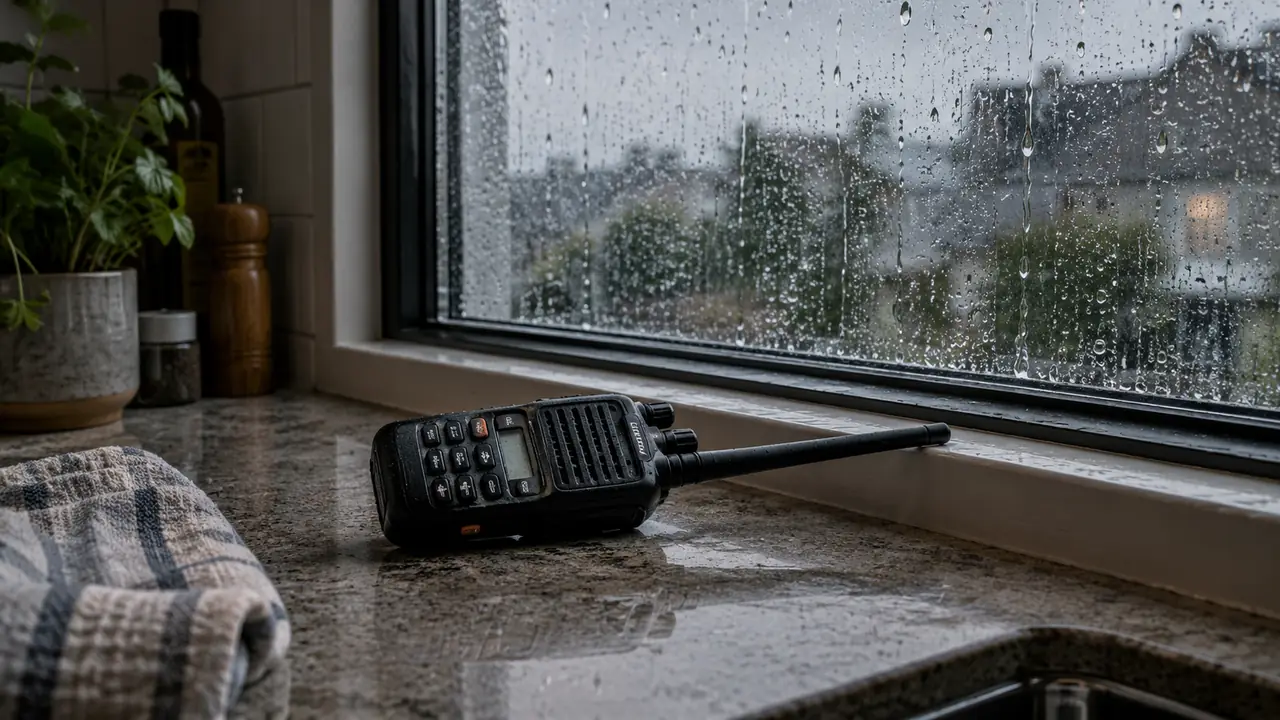
During storm season, it sits on the kitchen counter, charged and ready, so Joan can reach me if the power goes out. She is not a ham and has no interest in becoming one, but she knows that radio the way she knows the flashlight drawer: when the weather turns, you grab it and push the button. That is the whole point of the setup. The 2020 ice storm taught us both that a charged handheld in the kitchen is worth more than anything in the radio corner.
In normal weather I recharge it every couple of weeks, usually when the low-battery beep starts showing up on the screen. In two years, it has never died on me in the middle of a transmission, and the battery still holds a charge about as well as it did the week I bought it. That alone surprised me, because the battery in my old 2009 handheld was the first thing to go.
What You're Actually Getting
The BF-F8HP is the third generation of Baofeng's UV-5R, the handheld that basically built the cheap radio market. It is also one of the most-reviewed radios on Amazon, with more than 15,000 owner reviews, which tells you how many people run them. Dual band means it transmits and receives on both the 2-meter VHF band and the 70-centimeter UHF band, which covers most of the repeaters and the simplex frequencies, the direct radio-to-radio channels, that a General class operator actually uses. It offers three power levels, with 8 watts claimed on the top setting, 4 on mid, and 1 on low.
That claimed 8 watts deserves a caveat. Plenty of owners have measured the actual output and found something closer to six or seven watts on the top setting, and the difference between 6 and 8 watts is rarely the difference between making the repeater and not. What matters is that the radio will hit the repeater on the ridge east of town from my driveway, and it will do it on the stock antenna. That is the test that counts.
The box includes the radio, a battery, a drop-in charger, the stock antenna, a wrist strap, and a belt clip. The manual is thin and the menu is deep, but more on that in a minute. The build is all plastic, which sounds like a complaint until you drop it on concrete and it keeps working. What is not in the box is a programming cable, so budget for that separately.
One thing I learned early: this radio has a huge aftermarket. Batteries, antennas, speaker mics, and cases are everywhere, which matters more than it sounds. When a radio has been around this long and this many people own it, you can get parts for it years from now. That is a real advantage, and it is part of why I picked it over a newer radio with fewer owners.
Two Years of Performance
The honest summary of two years of use is that the BF-F8HP has never once failed to do what I asked of it. It has been knocked off the bench onto a concrete floor twice. Both times I picked it up, keyed the mic, and the repeater came back. The screen still lights up, the buttons still click, and the battery still charges.
Receive performance is where the radio surprises people. With the stock antenna it hears the repeater on the ridge clearly from the kitchen, which is a good hundred yards and a couple of walls away from the antenna in the radio corner. With a better antenna, an upgraded whip or a roll-up, it hears noticeably more. That is the single best upgrade you can make to this radio, and it costs less than the radio did.
Transmit audio is fine for FM work, which is what almost everyone uses these radios for. The microphone gain is a little hot, so you sound best if you do not eat the mic. At high volume the speaker gets harsh, and I keep mine a notch below max. None of that has ever stopped anyone from understanding me, but it is worth knowing before you buy.
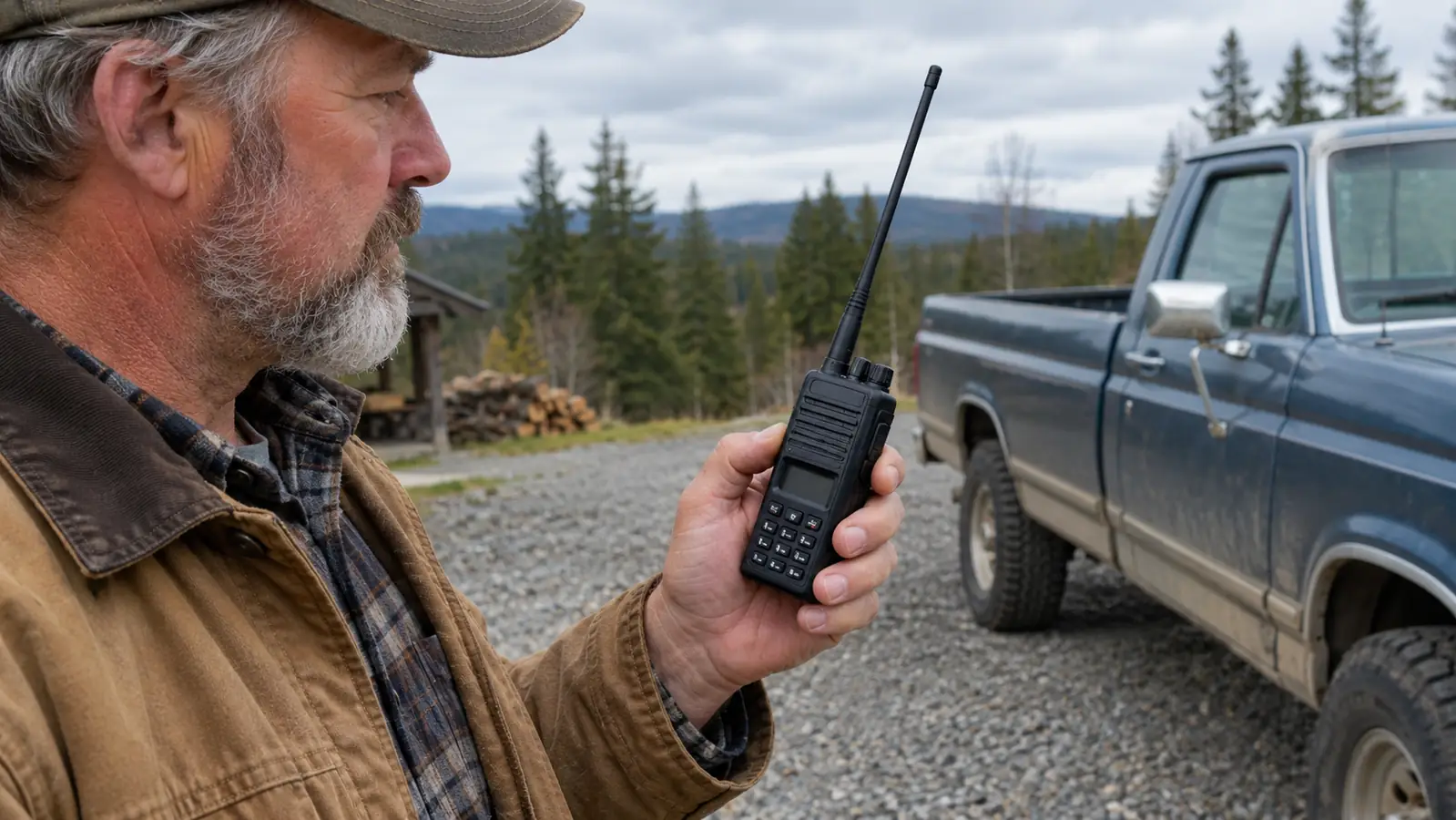
One more detail from two winters of use: the radio has spent plenty of cold nights in the truck and it has never blinked. The screen is easy to read in daylight, the backlight helps at night, and the buttons work with gloves on, which matters more than you would think when you are out in the yard at dusk during storm cleanup.
The Menu, the Cable, and the Annoying Bits
The menu system is the part of this radio that makes new hams give up. There are dozens of menu items, navigated with two small buttons, and the manual explains almost none of them well. If you are the kind of person who wants to change the CTCSS tone, the sub-audible tone that tells the repeater to open its squelch, you can do it from the keypad, but you will probably look it up first.
The fix is a programming cable and free software called Chirp. You plug the radio into a computer, load a list of frequencies and tones, and write them all at once. I program every radio in the house this way now, and it turns a forty-minute menu session into a two-minute job. Factor a cable into the cost of the radio and you will be glad you did.
The drop-in charger works, but it wants a firm seat. If the radio is not pushed down square, the contacts do not make and the battery does not charge. I have come back to a dead radio that I thought was charging, which is exactly the failure you do not want during storm season. The fix is a habit: press down until you feel it click.
One more thing about the menu: the manual that ships with the radio is not much help, but the internet is full of guides written by people who figured it out. If you get stuck on a setting, search for the model number and the setting name and you will find a plain-English walkthrough. That is not true of every radio, and it is worth knowing.
Portable Use and the Go Bag
Most of my use is close to home, but the BF-F8HP also rides in a go bag that stays by the back door. It is the radio I grab if I have to go check the fence line after a storm, or if we lose power and I need to walk the property to see what the wind took. The belt clip works, the wrist strap works, and the radio is light enough that you forget it is there.
The one thing I would not do is count on the stock antenna for portable work in rough country. It works, but an upgraded whip makes a real difference when you are trying to hit a repeater from a valley. I keep a better antenna in the go bag with the radio, and I consider that part of the cost of the setup.
For listening, the BF-F8HP scans slowly and the scan feature is basic. If you are the kind of operator who wants to sit and scan a dozen frequencies, you will find yourself waiting on it. I mostly listen to one or two repeaters, so it has never bothered me, but it is worth knowing.
How It Compares to the Alternatives I Considered
When I rebuilt my setup two years ago, the BF-F8HP was not the only radio on my list. I seriously considered the Yaesu FT-65, which costs several times more and has a better receiver, better audio, and a menu that makes sense. If I were buying one radio to last ten years and money were no object, I would probably own that one.
I bought the Baofeng anyway, and I would make the same choice today. The reason is not that the BF-F8HP is better. It is that the price difference bought me a second radio's worth of peace of mind, and the FT-65's advantages, mostly better filtering and audio, matter less to me than having a radio I can afford to keep on the kitchen counter all season.
I also considered a used commercial handheld, the kind that shows up at hamfests for about the same money. Those are built like bricks and sound great, but they are usually single band, and programming them is a chore that makes the Baofeng menu look friendly. For the money, the BF-F8HP was the most useful thing I could put in my pocket.
The other radio in my life is the mobile unit in the truck, which is a different animal entirely. The handheld is never going to match a mobile with an antenna on the roof, and it does not need to. They do different jobs. The BF-F8HP is the radio that goes where I go, and the mobile is the radio that stays put. Knowing the difference is half of building a setup that works.
What I Liked
- Tough enough to survive two years of drops, bench work, and a spot on the kitchen counter
- Dual band VHF/UHF with three power levels, topped out at a claimed 8 watts
- Battery still holds a charge after two years of regular use
- Cheap enough that you can afford a second one as a spare
- Programs easily with a cable and free Chirp software
Where It Falls Short
- The stock antenna is the weakest part; plan on upgrading it
- The menu system is clunky and the manual is thin
- Speaker audio gets harsh at high volume
- The claimed 8 watts is optimistic; expect closer to six or seven on a meter
- The drop-in charger needs a firm seat or it won't charge
Two years in, the battery still holds a charge, the screen still lights up, and it still hits the repeater on the ridge. I have dropped it on concrete twice, and both times it came right back.
Who This Is For
This radio is for the new ham who wants a first handheld without spending a fortune, for the experienced ham who wants a radio to keep in the truck or the go bag, and for the household, like mine, that wants a charged radio on the counter when the weather turns. It is also for anyone who has ever hesitated to take a nice radio somewhere rough. At this price, you take it, and that is the point.
If you are just getting your Technician license, this is the radio I would hand you first. You will learn how repeaters work, how tones and offsets matter, and how to program it all on a radio that cost you very little. When you eventually break it or outgrow it, you will know exactly what you want next. That is a better way to learn than spending real money on a radio you are not sure you will use.
Who Should Skip It
Skip the BF-F8HP if you need great audio on a noisy net, if you spend your time on bands where better receiver filtering actually matters, or if you want a radio you will never have to think about programming. The menu will annoy you, the stock antenna will limit you, and you will end up buying the Yaesu anyway. There is no shame in that. It is a better radio. It just costs more, and for my money the Baofeng earns its place first.
And if you already own a BF-F8HP and find yourself fighting the menu, do not assume the next cheap radio will be better. The menu is the price of admission at this price point. The upgrade that actually changes the radio is an antenna, not a different brand in the same class.
Two years on my bench and I still reach for it first
The BF-F8HP is not the best handheld I have ever used. It is the best value, and after two years that matters more. Check today's price and decide for yourself.
Amazon Check Today's Price on Amazon →