
The 2020 ice storm hit our county hard. We lost power for four days, and the cell towers went with it. Roads were closed, and the only way I could reach anyone across the county was on VHF. That is when I got serious about a radio setup that works when the grid does not. The AnyTone AT-778UVII is the mobile radio I bought when I rebuilt that setup, and it has been under the dash of my F-150 ever since. The old handheld I had trusted since 2009 finally died a couple of years back, and that is when I rebuilt the whole setup at once.
I did not buy it for the truck, exactly. I bought it because it was a dual-band mobile that did not break the bank, and because the same radio could come inside and run off my Tekpower supply on the bench when a storm was coming. Two years later, that is still how I use it. It lives in the truck most of the year, and it spends about a week each winter on the workbench, keeping me in touch with Joan and the local repeaters when the weather turns.
The Quick Verdict
A dependable dual-band mobile that has run two years without a hiccup. The only real complaint is programming, and that is a cable away from being solved.
Amazon Check Today's Price →Two years in, I would buy it again.
If you are shopping for a first dual-band mobile, this is the one I would start with. See the current price and what other owners say on Amazon.
Amazon Check Today's Price on Amazon →How I've Used It
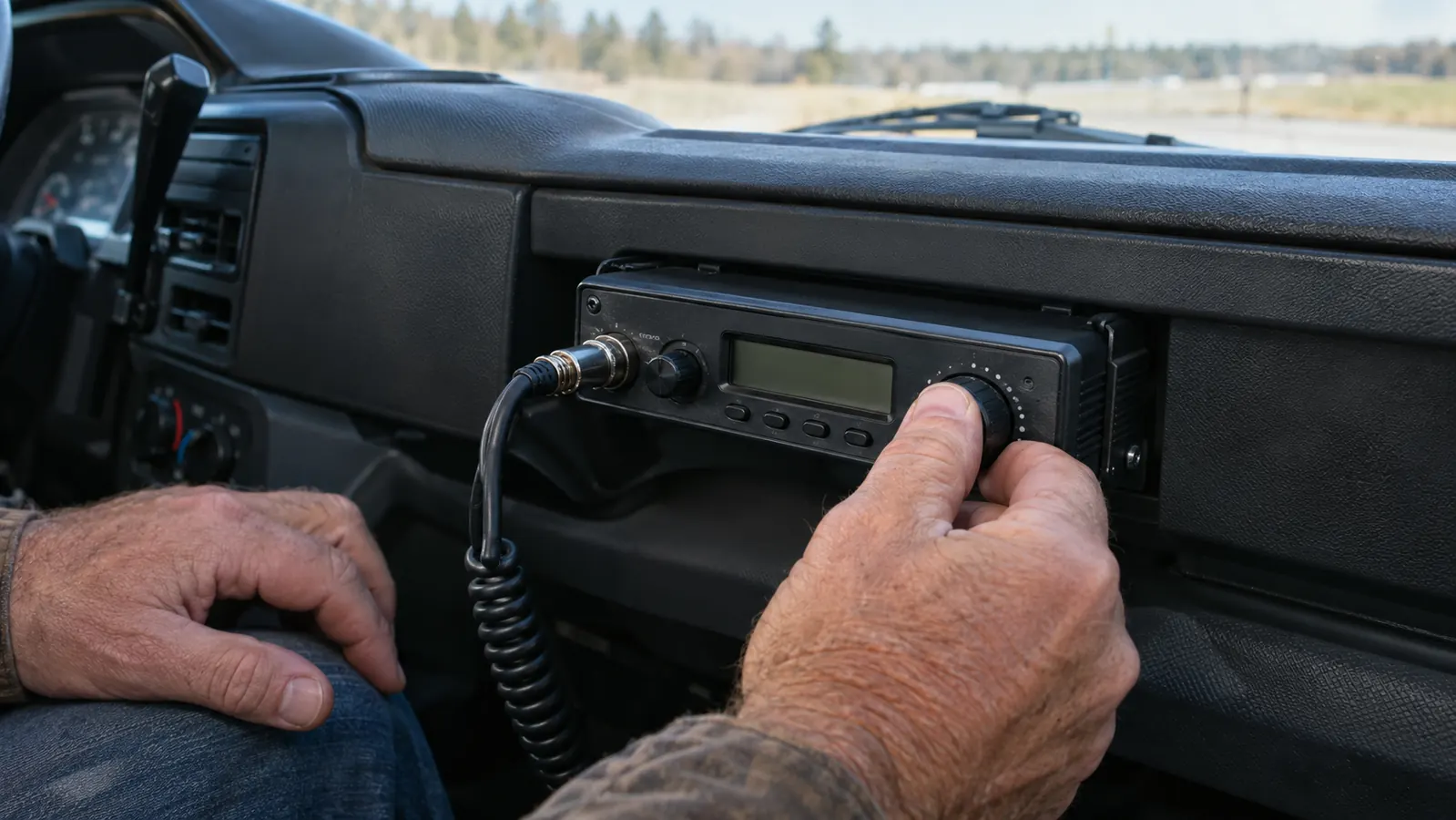
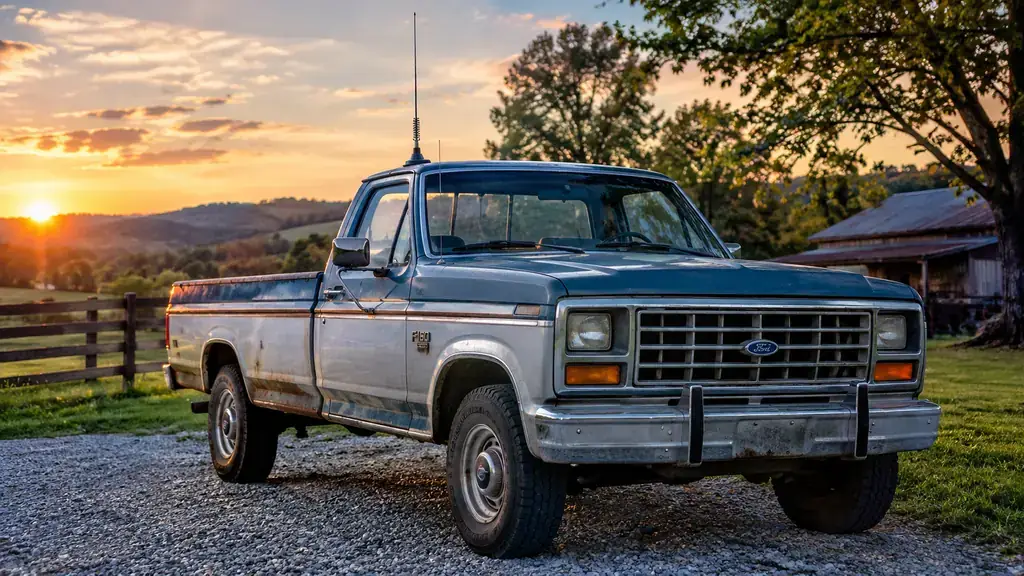
The radio is mounted under the dash of my F-150, with a VFAN dual-band magnetic-mount antenna on the cab roof. That antenna matters more than the radio, honestly. A 25-watt mobile into a good antenna will run circles around a 50-watt radio into a bad one. I checked the SWR with my NanoVNA when I first installed it, and I recheck it every few months. The whole setup has been out of the truck and back in again at least a dozen times, and the mounting bracket has never worked loose. The bracket has two bolts and a thumbscrew, and the whole thing comes out in about a minute when I want it on the bench.
On a normal day, the radio does the commute into Cookeville and back, hits the local repeaters, and keeps me company on the county roads. I run it at 25 watts on both 2 meters and 70 centimeters. The hills around here eat weak signals, so antenna height and feedline quality matter more than the extra watts a bigger radio would give me. The VFAN on the cab roof gives me the height, and the AnyTone gives me a clean signal the repeaters can actually hear.
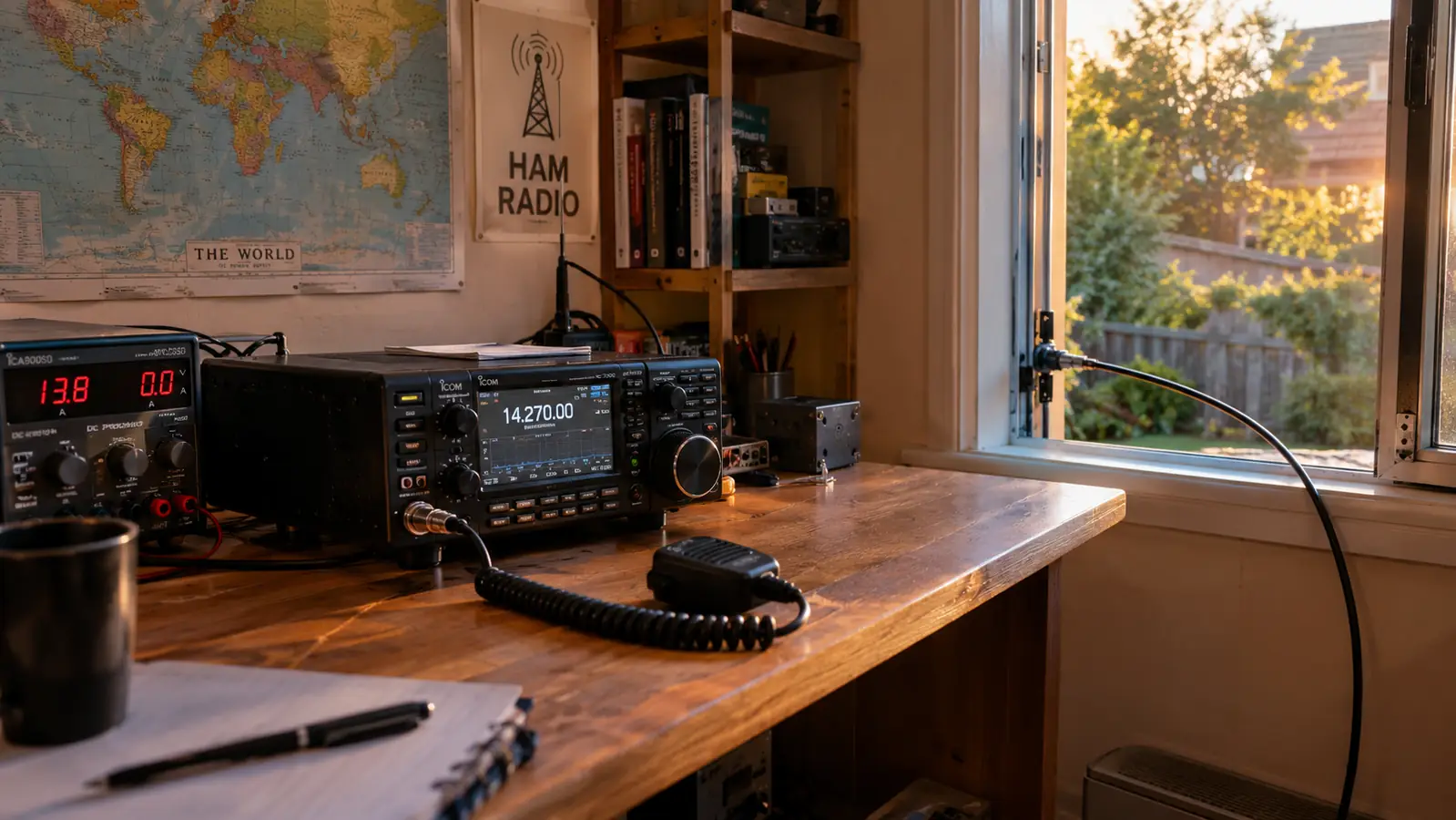
When a storm is in the forecast, I pull the radio out of the truck, set it on the workbench, and hook it to the Tekpower TP30SWI. The antenna lead runs out the window to the backyard wire antenna. Joan keeps the Baofeng on the kitchen counter during storm season so she can reach me without hollering. The AnyTone has been the backbone of that setup for two winters now, and it has never once let me down when the lights went out.
What the AT-778UVII Actually Is
The AT-778UVII is a dual-band mobile, meaning it transmits on both 2 meters and 70 centimeters, the two bands where most repeater traffic lives. It puts out 25 watts, which is less than the 50-watt mobiles you can buy, but it is enough to work a repeater from a couple of counties away when the antenna is right. It has 200 memory channels, CTCSS and DCS tone squelch, the subaudible tones that keep a repeater from opening for every stray signal, wide and narrow band selection, dual watch so you can monitor two frequencies at once, and VOX for hands-free operation with a headset.
The second version of the 778 added VOX and a few small updates over the original. I have used VOX twice to test it and left it off since, but it is nice to know it is there. The front panel is simple: a big volume knob, a channel knob, and a handful of buttons. The display shows frequency, channel number, and signal strength, and it is readable in daylight, which is more than I can say for some radios I have owned.
Inside the box you get the radio, the mounting bracket, a microphone, and the power lead with an inline fuse. The manual is thin and the English is rough in places, but the menus are logical enough that a retired telephone lineman can figure them out. If you have programmed any dual-band radio in the last twenty years, you will find your way around this one in an evening.
Setting It Up
Mounting the radio took an afternoon. The bracket bolts under the dash, the power lead runs to the fuse box, and the antenna cable runs along the door sill to the VFAN on the cab roof. The hardest part was routing the coax so the door did not pinch it. I used a couple of adhesive clips to keep it tidy. The microphone hangs on a hook I screwed into the dash, within easy reach but out of the way of the heater controls.
The first thing I did after install was check the SWR. That is standing wave ratio, a measure of how much of your power actually reaches the antenna instead of bouncing back into the radio. A high SWR can cook a transmitter. With the NanoVNA I confirmed the VFAN was resonant on both bands, then I set the offset for the local repeater and saved it to a memory channel. The whole job took an evening, and I have not touched the settings since.
The AnyTone also scans, and the scan function is one I use more than I expected. I keep it scanning the local repeaters during the commute, and it lands on whatever is active. For a radio in this class, the scanner is responsive and easy to start and stop.
The radio draws maybe 8 amps on transmit at 25 watts, so it runs fine on the Tekpower supply and it does not strain the truck's electrical system. I wired the power lead with a fused connection at the fuse box and kept the factory inline fuse in place. That is the kind of detail that saves you from a dead battery at the worst time.
How It Has Held Up Over Two Years
The truck is where things go to die. Heat in the summer, cold in the winter, vibration on gravel roads, and the occasional splash of coffee. The AnyTone has taken all of it. The mounting bracket has not worked loose, the power lead is still sound, and the microphone, which is the first thing to wear out on a cheap mobile, still keys up every time. I have owned radios that developed a crackle in the mic after a year. This one has not.
On the bench it has run for days at a time during outages. The case gets warm, not hot, and it sits there for hours without complaint. I have never once had it overheat or shut down. The only thing I have replaced is the inline fuse in the power lead, and that was my own fault for hooking it up while the battery was connected. The radio itself has needed zero repairs in two years.
Cold weather is the other test. The truck sits outside all winter, and the radio has started up without a complaint at temperatures that made the door latches stiff. The display dims a little in the cold, but the radio has never failed to come on. I cannot say that about the cheaper handheld I used before this one.
The knobs still feel tight, the buttons still click, and the display has not developed any dead segments. For a piece of electronics that lives in a truck cab, that is a good report. I cannot promise yours will be identical, but mine has been boring in the best way: it just works.
Two years, maybe twenty thousand miles, and it has never once failed to power up. That is the whole review, really.
Where It Falls Short
The biggest complaint is programming. You can program the AT-778UVII from the front panel, and I did for the first few months. It is tedious. Entering a repeater offset or a CTCSS tone means poking through menus one digit at a time, and a single mistake means starting over. The programming software exists and the cable is inexpensive, but it is a separate purchase. If you buy this radio, budget for the cable. It turns a thirty-minute chore into a two-minute one.
The display is small, and in the truck it sits low enough that you have to take your eyes off the road to read it. The speaker is loud enough for highway driving but not what I would call hi-fi. And 25 watts means your antenna has to earn its keep. With a bad antenna, this radio will frustrate you. With a good one, you will never think about the wattage. That is true of any radio, but it is especially true at 25 watts. I have learned to glance at it, but a voice announcement would be a genuine improvement.
There is no APRS built in, so if you want automatic position reporting or packet work, you will need a separate TNC or a different radio. I do not need APRS, so it has never bothered me, but it is worth knowing before you buy. The same goes for cross-band repeat, which this radio does not do.
The other small gripe is the manual. It is translated, and some of the menu names do not match what is on the screen. You will figure it out, but you will spend an evening with the manual in one hand and the radio in the other, pressing buttons to see what does what. The microphone is functional but basic. It has the PTT and up and down buttons, and that is about it. The audio quality on the other end is clean, which is what actually matters. If you want a fancier mic with a keypad and a display, you will be buying an accessory.
What I Liked
- Dual-band VHF and UHF with 200 memory channels
- Has run two years in a truck without a single failure
- Mounts easily under a dash and pulls out for bench duty
- Runs cool for days at a time during outages
- VOX, dual watch, and tone squelch are all there if you want them
Where It Falls Short
- Front-panel programming is slow and tedious
- Programming cable is a separate purchase
- 25 watts means your antenna has to be good
- Small display that sits low in the truck
- No APRS and no cross-band repeat
Who This Is For
If you are a new ham looking for a first mobile, or a General like me who wants a dependable radio to leave in the truck, the AT-778UVII is hard to beat for the money. It is also a good choice if you want one radio that can do double duty: under the dash most of the year, on the bench when the power goes out. And if you are willing to spend ten minutes with the programming software, the tedious part goes away. For a first mobile, you could do a lot worse and spend a lot more.
It also suits someone who wants a radio they can move. The mounting bracket is a standard shape, the power lead is long, and the whole thing packs into a duffel bag if you want to take it to a field exercise or a campout. I have done exactly that twice, and it took five minutes to set up each time.
Who Should Skip It
If you know you want 50 watts, or if APRS and cross-band repeat are on your list, this is not the radio. If the idea of buying a programming cable bothers you, and you will not program from the front panel either, you will be frustrated with it. And if you only ever operate from the house, a desktop radio with a bigger display and a proper microphone is probably a better fit. The AT-778UVII shines in the truck and on the bench in a pinch, not as a permanent base station.
And one more group: people who want a radio that is ready to go the moment it arrives. The AT-778UVII needs an antenna, a power source, and a few minutes of programming before it is useful. None of that is hard, but it is not zero. If you want plug and play, a handheld out of the box is the easier path.
At the end of the day, the AT-778UVII is a tool. It is not the most powerful radio I own, and it is not the prettiest. But it is the one I trust when the weather turns, and it is the one I would replace tomorrow with the exact same model if it died. That is about the highest praise I can give a piece of gear. It has earned its place, and I do not say that about much of the gear I have owned over fifteen years of this hobby.
The radio I trust when the grid gets shaky.
After two years and two storm seasons, the AT-778UVII is still the first thing I would put in a new truck. Check the current price on Amazon and read the 839 owner ratings.
Amazon Check Today's Price on Amazon →