
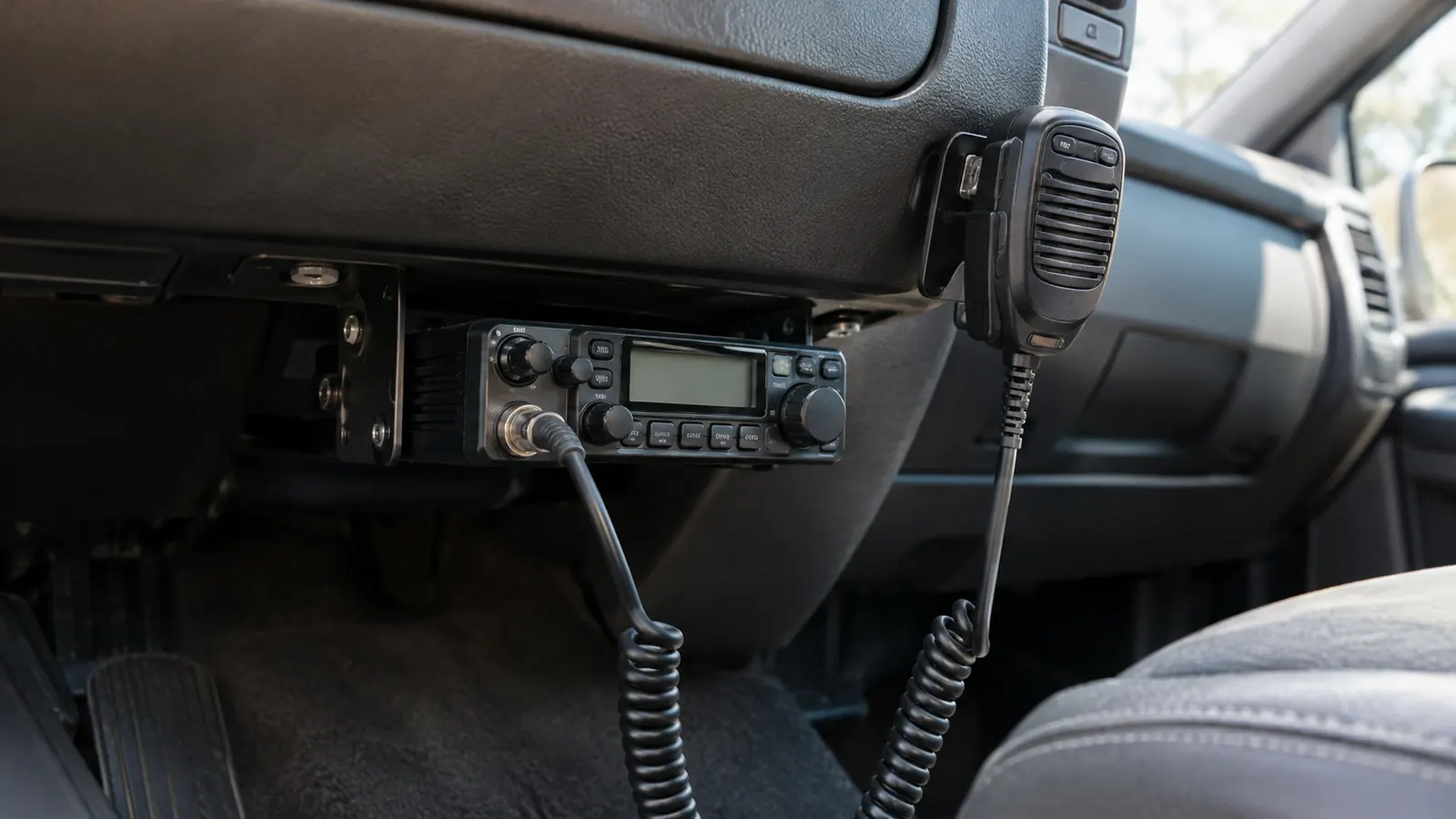
I have spent two years with the AnyTone AT-778UVII in my F-150 and a good chunk of that same stretch with the BTECH UV-50X2 on the bench in the spare bedroom. If you are trying to decide between these two dual band mobile radios, the short answer is that both will get you on the air, but they are built for slightly different habits. The AnyTone is the one I reach for on a normal Tuesday. The BTECH is the one I grab when I need every watt I can get on a distant repeater, a relay station that passes your signal along.
After the ice storm in 2020 knocked out power and cell service in our county for four days, I rebuilt my whole setup. I bought both of these radios about two years ago when my old handheld finally died. I have used the AnyTone under the dash of the truck every day since, and I have run the BTECH on the bench with the Tekpower supply and in the truck for a few weeks to compare them fairly. Neither radio embarrasses itself. The difference is in how they feel to use day in and day out.
| AnyTone AT-778UVII | BTECH UV-50X2 | |
|---|---|---|
| Power output | 25 watts on both bands, enough for county-wide contacts | 50 watts on both bands, more punch on the interstate |
| Receive range | 136-174 MHz and 400-480 MHz | 136-174 MHz and 400-520 MHz, a bit wider on UHF |
| User interface | Shallow menu, easy to work without the manual | Deeper menu, more features but more scrolling |
| Programming | Connected on the first try, software is straightforward | Same software, but I had to fight the COM port |
| Heat and noise | Runs cool and silent at 25 watts | Runs warm with an audible fan at 50 watts |
| Best for | Daily driving and unattended operation | Reaching a weak repeater with maximum power |
How I Compared Them
I ran both radios on the same bench setup: the Tekpower TP30SWI 30 amp supply, the same coax, and the same antennas. For the truck test, I used the VFAN dual band magnetic-mount antenna on the cab roof. I checked SWR (standing wave ratio, a measure of how well the antenna matches the radio) with the NanoVNA-H before each session, because a comparison is only fair if both radios see the same feedline. Both showed acceptable SWR on 2 meters and 70 centimeters, so the difference in performance came down to the radios themselves.
I spent three weeks with the AnyTone as my daily driver, then two weeks with the BTECH in the same mount. Same route to town, same repeaters, same times of day. I kept a notepad on the passenger seat and wrote down when a signal broke squelch, when a contact dropped, and how often I had to reach for the manual. It is not a lab test, but it is the kind of test that tells you what a radio will do on a Tuesday.
I also did a bench test with a dummy load to check power output. The AnyTone sat right at 25 watts on both bands. The BTECH hit about 48 watts on 2 meters and 45 on 70 centimeters. That extra power is real, and it shows up on the far side of a hill.
Where AnyTone Wins
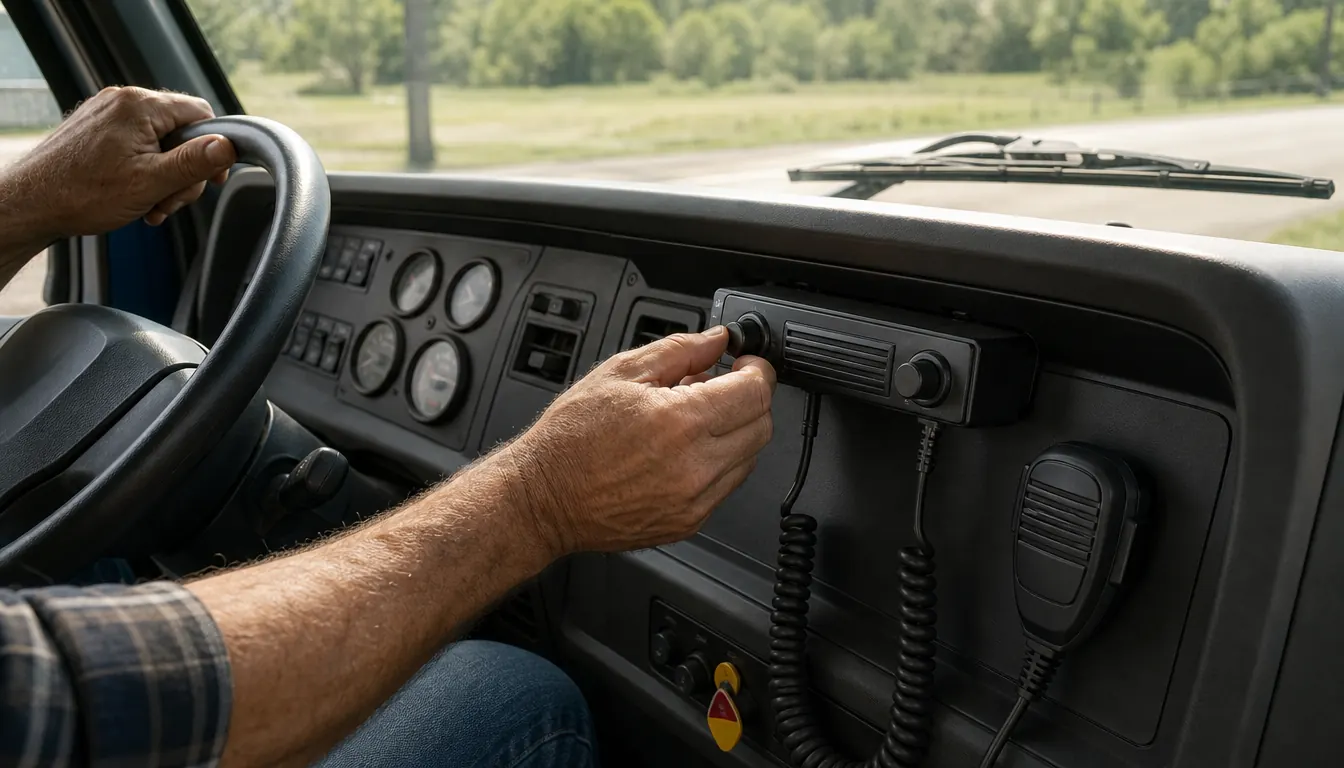
The AnyTone wins on the things you touch every time you get in the truck. The front panel is laid out so I can change volume, squelch, and channel without taking my eyes off the road for long. The menu is shallow enough that I rarely need the manual, and the buttons have a positive click that I like. I programmed it once with the cable and software, and it has held its memory through two Tennessee summers and one very cold January. That matters when you are bouncing down a gravel road.
It also runs cooler than the BTECH at its full 25 watts. I have sat through two-hour nets on a hot afternoon with the AnyTone on the bench, and the case stays warm, not hot. The BTECH at 50 watts gets noticeably warmer, and its cooling fan is audible in a quiet room. If you are going to leave a radio on for hours, the AnyTone is the more comfortable companion. The mounting bracket is also sturdier, and the microphone connector seats with a firm click that has never loosened on me.
Where BTECH Wins
The BTECH UV-50X2 has one clear advantage on paper and it shows up in practice: power. At 50 watts on both bands, it puts out twice the power of the AnyTone. On a simplex contact across town or into a repeater that sits behind a ridge, that extra power can be the difference between a readable signal and a scratchy one. I have used the BTECH in the truck on the same VFAN antenna and same route, and it does open up a couple of repeaters that the AnyTone only keys up part of the time.
The BTECH also has a slightly wider receive range on UHF, stretching up to 520 MHz. That matters if you like to listen to public service traffic or other services above the 70 centimeter band. The menu is deeper and the manual got more use in my first week, but once I had it set, it stayed set. The extra power is the reason to choose it. If your main repeater is marginal and you want every decibel you can get, the BTECH gives you that.
I also noticed the BTECH's display is a little brighter, which helps in direct sun. It is a small thing, but if you park facing west at the end of the day, you will see it. The AnyTone's display is fine, but the BTECH's backlight is a step ahead.
Programming and Everyday Use
Programming is where the AnyTone wins for me. I plugged in the cable, opened the software, and had my local repeaters and simplex frequencies loaded in about twenty minutes. The BTECH uses the same style of software, but I had to fiddle with the COM port settings more than once before it would talk to the radio. Once it connected, the process was the same, but the AnyTone was less fussy on the first try.
In daily use, the AnyTone's front panel is easier to navigate without a manual. The menu is about three levels deep, and the buttons are spaced so I can work them with gloves on. The BTECH has more features, including a wider range of scan options and a few extra settings that the manual calls advanced, but that also means more time scrolling to find the setting you want. For a radio that lives in a truck, I will take simpler over more every time.
Both manuals are printed in type small enough that I keep the PDF versions on my phone. The AnyTone manual is shorter and gets to the point faster. The BTECH manual covers more features, which helps once you want to dig into the advanced settings, but it is not the first thing I would hand to a beginner. If you are new to mobile radios, read the AnyTone manual first, then use the BTECH manual as a reference.
On the Bench and in the Truck
The AnyTone has been under the dash of my F-150 for two years. It has rattled over gravel roads, sat in the sun on summer afternoons, and handled a few cold snaps where the cab got down to single digits. It has never missed a memory channel and never needed a reset. The BTECH spent two weeks in the same mount and did fine, but it is not my daily driver. I would not hesitate to use it, but the AnyTone has earned the spot.
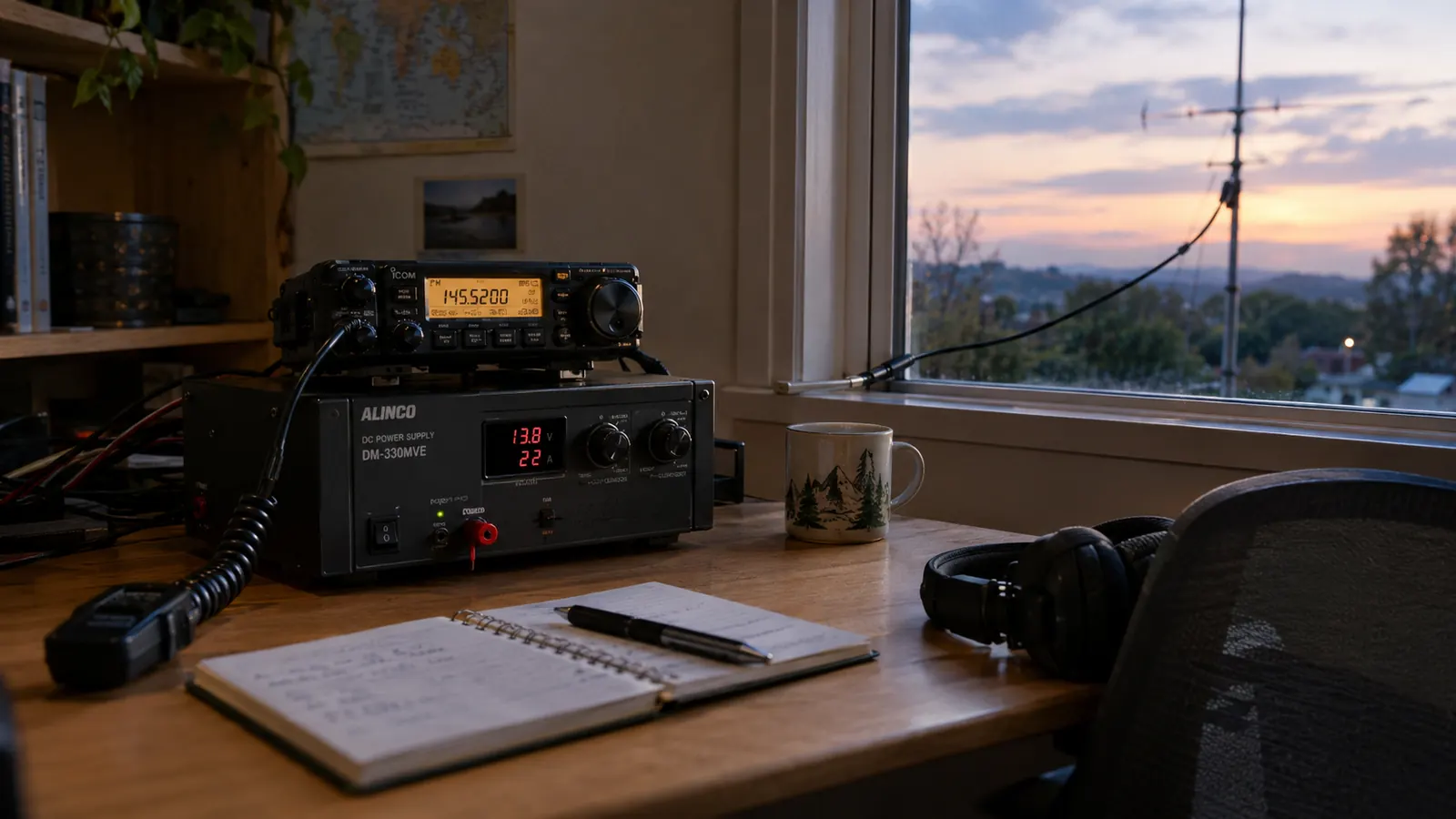
On the bench, I run the AnyTone off the Tekpower supply during storm season. When the power goes out, I pull it out of the truck, hook it to the supply, and put up the backyard wire antenna. It runs cool and quiet, which matters when you are listening for hours. The BTECH at 50 watts is louder and warmer, and it draws more current. If you are on battery power, that extra draw is something to plan for.
Build Quality and Buttons
I am a retired telephone company lineman, so I have strong opinions about tools that feel right in the hand. The AnyTone's knobs are knurled and easy to grip, and the buttons have a positive click. The microphone is a standard style with a coiled cord, and the connector seats firmly. The BTECH's microphone connector is similar, but on my unit it took a little more force to click in, and I could feel a slight wiggle once it was seated. It never failed, but it did not inspire the same confidence.
The mounting brackets are different. The AnyTone uses a bracket that slides and locks, and it has not loosened in two years of gravel roads. The BTECH uses a similar design, but the thumbscrews felt a little softer. I would not call it a deal breaker, but it is the kind of thing you notice when you are under the dash on a hot day.
The dual band radio I leave in the truck every day
If you want a mobile radio that programs easily, runs cool, and just works on the daily commute, the AnyTone AT-778UVII is the one I trust. Check today's price on Amazon and see if it fits your setup.
Amazon Check Today's Price on Amazon →What About the Features
Both radios are dual band, meaning they transmit and receive on 2 meters and 70 centimeters, the two bands most repeaters use. Both have a VOX function, which lets you key the microphone with your voice instead of pressing the button. I do not use VOX in the truck because road noise keys it at the wrong times, but it is there if you want it for hands-free operation on the bench.
The AnyTone has a simple front panel with a volume knob, a channel knob, and a small screen that shows frequency and memory channel. The BTECH has a similar layout but adds a few more buttons and a slightly larger display. Neither radio has a touch screen, and I would not want one in a truck. The AnyTone's display is easier to read in bright sun, which is a small thing that matters when you are driving west into a low sun.
Memory channels are where the two radios differ in a practical way. The AnyTone holds 200 memory channels, which is plenty for the repeaters I use. The BTECH holds 200 as well, but it organizes them in a way that took me a while to get used to. Both will store the frequencies you need, but the AnyTone's channel list is simpler to scroll through on the road.
One thing I tell every new ham who asks about these radios: transmitting on either one requires a license. Listening does not, but the moment you key the microphone, you are the one responsible for what goes out. I took my Technician exam in 2009 and upgraded to General in 2012, and that license is what makes all of this worth doing.
Antennas and SWR
A radio is only as good as its antenna. I used the VFAN dual band magnetic-mount on the cab roof for both radios, and I checked SWR with the NanoVNA-H before each test. On 2 meters, both radios showed an SWR under 1.5 to 1. On 70 centimeters, it was under 2 to 1. That is well within safe limits, so neither radio was protecting itself by cutting power.
If you are comparing these two, do not forget the antenna. The BTECH's extra power will not help if your antenna is poorly matched. The AnyTone at 25 watts with a good antenna will often outperform the BTECH at 50 watts with a bad one. Get the antenna right first, then decide how much power you need.
The One Thing That Surprised Me
The thing that surprised me most was how much the extra 25 watts mattered on a specific repeater I use. There is a repeater about 40 miles away that sits behind a ridge. With the AnyTone at 25 watts, I could open it about half the time from the truck. With the BTECH at 50 watts, I opened it almost every time. That is a real difference, and it is the strongest argument for the BTECH.
But that same repeater is the only one where I noticed the difference. On the repeaters I use most, which are closer and on higher ground, both radios sounded identical. The extra power is a safety margin, not a daily upgrade. If you live in flat country or your repeaters are close, you may never notice the difference.
The other surprise was the fan. The BTECH's cooling fan comes on whenever you transmit at high power, and it is loud enough to hear over the radio's speaker at low volume. The AnyTone has no fan at 25 watts, so it is silent in the spare bedroom.
In the Radio Corner
In the radio corner, the AnyTone sits on the bench next to the Tekpower supply. During storm season, that is the radio I grab when the power flickers. I plug it in, connect the backyard wire antenna, and I am on the air. The setup takes less than two minutes. The BTECH would do the same job, but it draws more current and runs warmer, so on a long outage I would rather have the AnyTone on battery.
Joan keeps the Baofeng handheld on the kitchen counter during storm season so she can reach me without going into the spare bedroom. The mobile radios are mine. If the power goes out, I can run the AnyTone off the Tekpower supply and the truck battery if I need to. The BTECH would need a bigger supply or a shorter transmit cycle at full power.
On the Property
On the few acres around the house, I use the AnyTone to stay in touch with Joan when she is out in the garden and I am in the shop. The 25 watts through the VFAN antenna covers the property easily. The BTECH would cover it too, but it would be overkill. For property-wide coverage, the AnyTone is plenty.
The property also has a few low spots where a handheld will not hit the radio on the bench. With the AnyTone in the truck, I can always hit the repeater on the hill to the east. The BTECH would do the same, but the AnyTone does it with less noise and less heat. For me, that is the more useful radio.
Who Should Buy Which
If you are new to mobile radios, or if you want something you can set up once and forget, buy the AnyTone. It is the radio I recommend to someone who wants to talk to family during a storm and not fight with a menu. If you are an experienced operator who needs maximum power for weak-signal work or a distant repeater, the BTECH is worth the extra menu time. I keep the AnyTone in the truck and the BTECH on the bench. If I had to keep only one, it would be the AnyTone, because it does what I need 95 percent of the time with less fuss.
If you are still on the fence, think about how you will use the radio. If it will live in a truck and you want to set it up once and forget it, the AnyTone is the easier path. If you have a specific weak repeater you need to reach, the BTECH's extra power is worth the extra menu time. I keep both because they serve different jobs, but if I had to sell one tomorrow, the AnyTone would be the last to go.
The Bottom Line
After two years, the AnyTone AT-778UVII is the radio I trust for daily use and storm season. The BTECH UV-50X2 is a fine radio with a real power advantage, but it asks you to trade simplicity and cool running for that power. For most hams, especially anyone new to mobile radios, the AnyTone is the better buy. For the operator who needs every watt on a marginal repeater, the BTECH makes sense. I keep both, but the AnyTone is the one that stays in the truck.
Still deciding? Start with the AnyTone
It is the radio that has earned its spot under my dash. See today's price on Amazon and you can decide for yourself.
Amazon Check Today's Price on Amazon →