
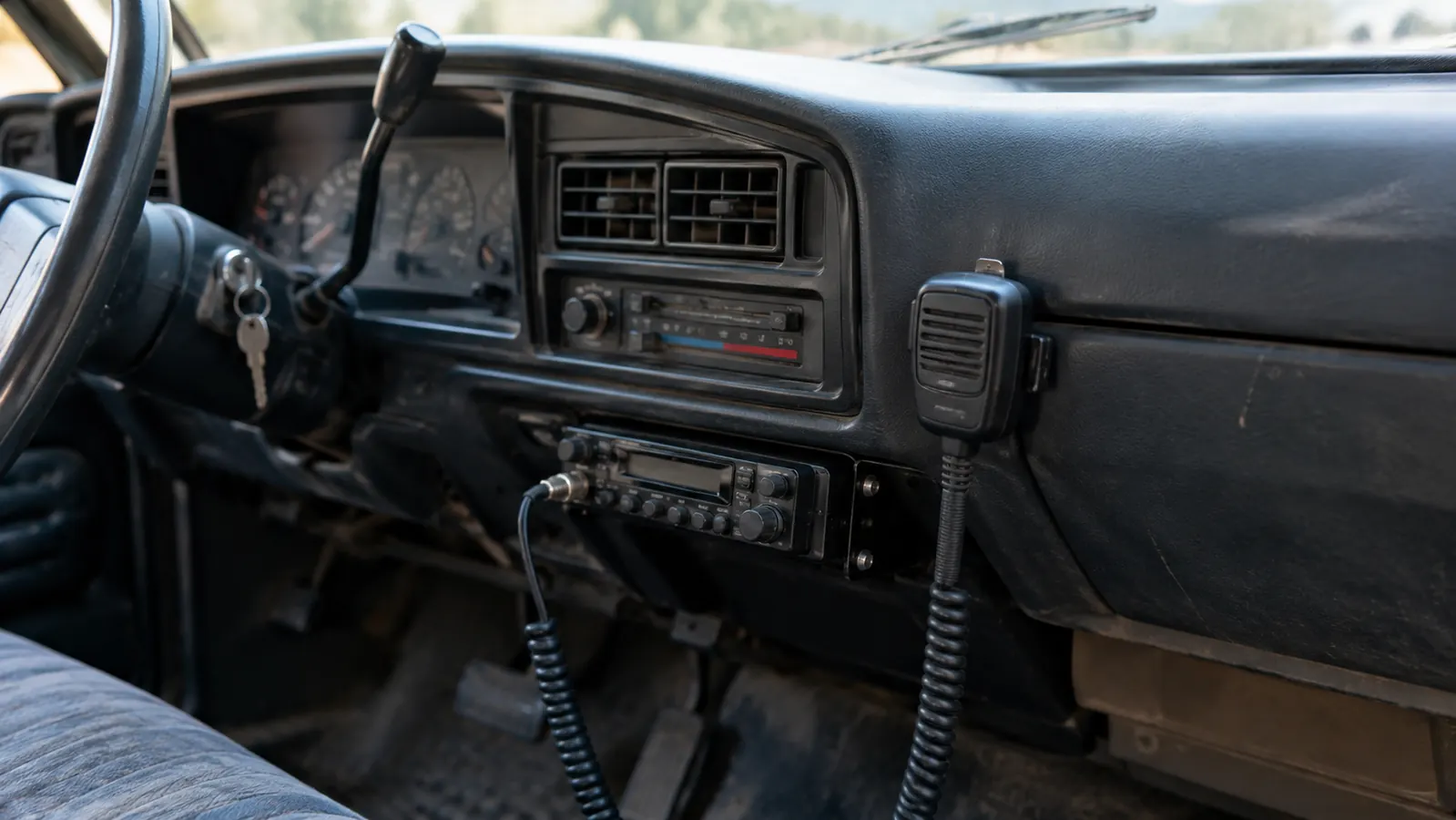
I drove a basic handheld in my truck for years. It worked, sort of, as long as I held it near the window, kept the volume up, and didn't mind dropping the mic to shift gears. Then the old handheld finally died, I rebuilt my setup around the AnyTone AT-778UVII, and I found out what I'd been missing. If you spend real time in a vehicle with a ham license in your pocket, here are ten reasons a mobile radio beats a handheld in the truck.
Stop fighting the handheld. Put a real radio under the dash.
The AnyTone AT-778UVII is the dual-band mobile I run in my F-150 every day. It transmits at 25 watts, which is a different world from a 5-watt handheld when you are working the rolling hills around Cookeville.
Amazon Check Today's Price on Amazon →25 watts reaches the repeater the handheld can't
A typical handheld puts out about 5 watts. The AnyTone AT-778UVII puts out 25. That is not a small difference. On the same stretch of I-40, the same repeater, the relay that carries your signal around the hills, the same antenna, the mobile opens the repeater from the valleys where the handheld only produced static. One Tuesday morning last fall, heading south through the valley near Monterey about ten miles from the repeater, the handheld gave me nothing but squelch. I pulled off at the next exit, swapped in the AnyTone, and got into the net clean, like I was parked at the repeater site. I checked the SWR, which tells you how well the antenna and feed line are matched, with my NanoVNA-H after the install, and it read 1.4 to 1 on 2 meters. Power is not everything, but it is the cheapest thing you can buy.
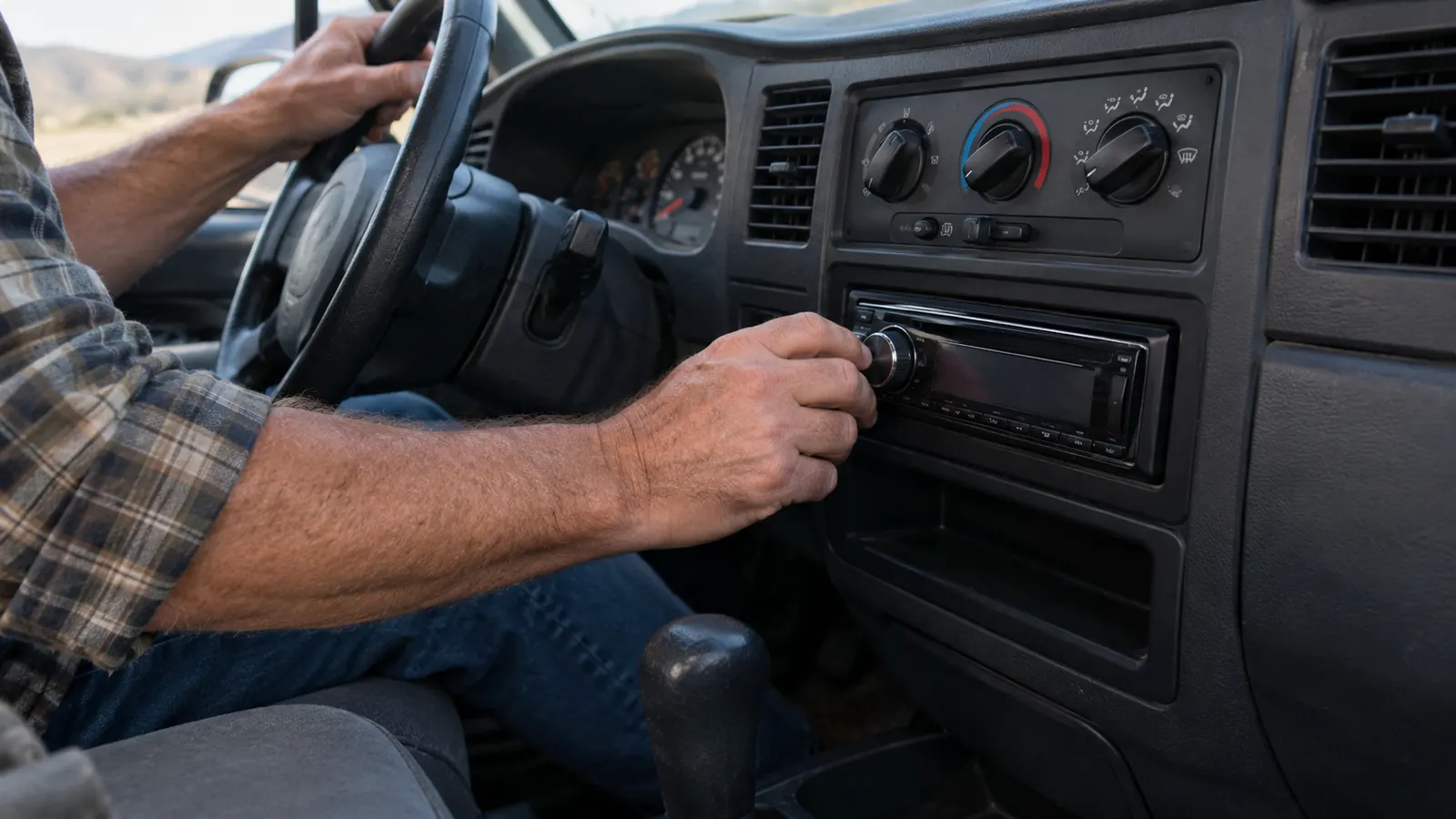
The antenna is outside the truck, where it belongs
A handheld's antenna sits inside a metal box called a car. A mobile radio connects to a magnet-mount antenna on the roof, like the VFAN I run on my F-150. I ran the coax under the rear window trim and down the cab corner, about 14 feet of cable total, and the SWR on 70 centimeters came in at 1.6 to 1. The roof gives the antenna a ground plane to work against, and the antenna gets clear air. The difference showed up the first time I drove through the cut west of town, where the hills block both sides of the road. The handheld lost the repeater halfway through the cut. The mobile held it the whole way. That is the whole argument in one drive. You can spend a lot of money trying to make a handheld work in a car, or you can mount the radio properly and be done.
You can actually hear the other side
Receiver sensitivity matters more than most new hams think. A mobile radio has room for a proper receiver, and in practice that means you hear the weak stations, the ones the handheld buries in noise. On a group run, I hear the truck ahead of me call out road hazards before the handheld users hear anything.
The microphone is where your hand already is
With a handheld, you either hold the radio, clip it to your shirt, or wedge it in the cup holder. With the AnyTone, the radio body stays under the dash and the microphone sits on a clip beside your knee. On the way to the hardware store in Cookeville, I can key the mic, answer a call, and never take my hand off the wheel. You talk without taking your eyes off the road, and you shift gears without wrestling a radio.
One hand stays on the wheel in an emergency
During the 2020 ice storm, I watched neighbors fumble with handhelds while trying to drive. A mobile radio changes that: key the mic with your thumb, report the downed line, keep both eyes on the road. When conditions turn bad, the last thing you need is a second object to manage.
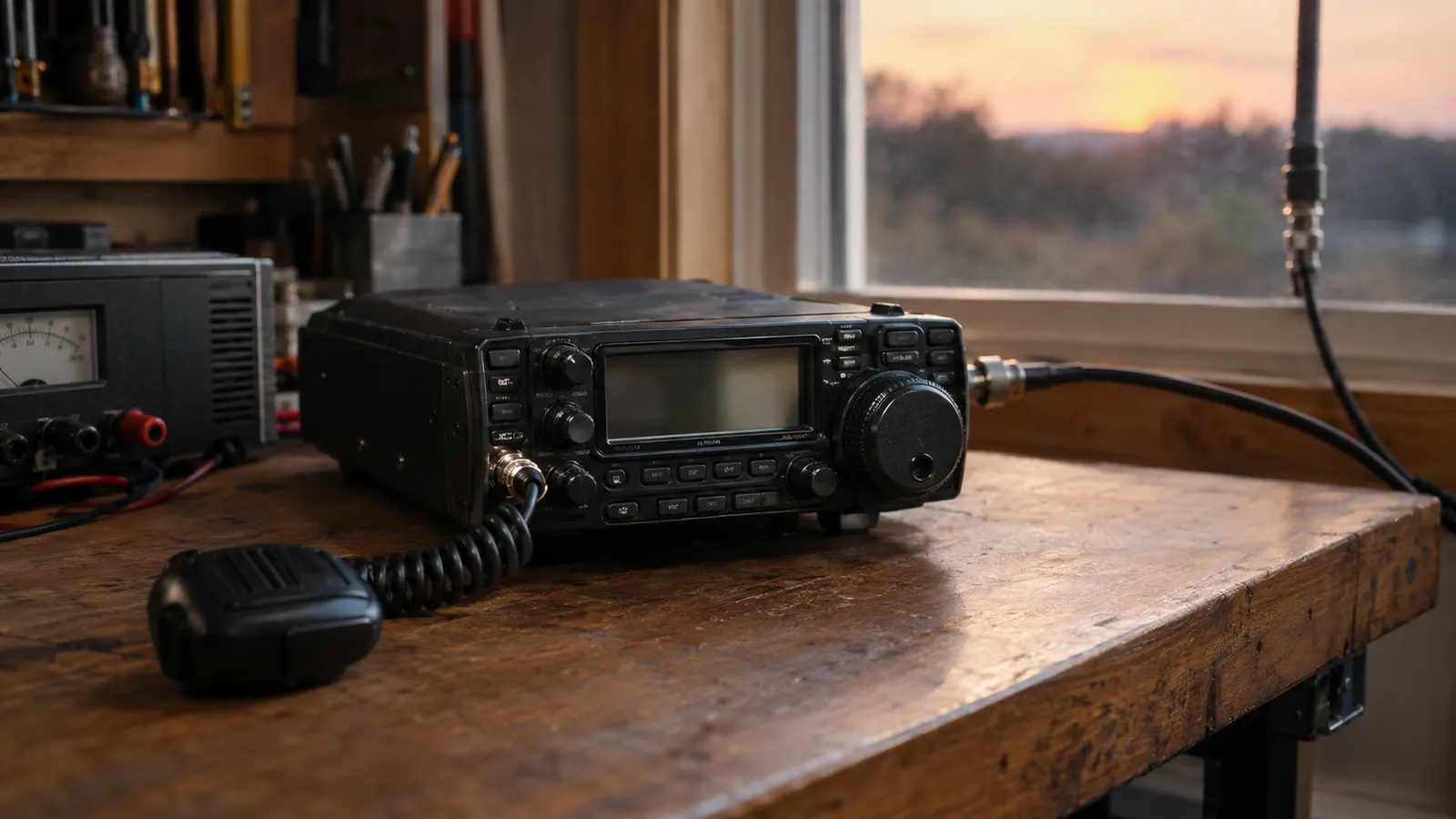
Dual band means 2 meters and 70 centimeters in one box
The AT-778UVII covers both 2 meters and 70 centimeters, the two bands where most local repeaters live. You do not need a second radio for the other band. That matters when you are driving through an area where the active net is on 70 centimeters and your handheld only does 2 meters well.
It leaves the truck and becomes a base station
The AnyTone pulls out of the truck in about a minute. When a storm is coming, I bring it inside, hook it to my Tekpower 30 amp power supply on the bench, and run it as a base station with the backyard wire antenna. During the 2020 ice storm, the power was out for four days and the cell towers went with it. That was the week this setup earned its keep. I worked the county net every evening from the spare bedroom, and neighbors with handhelds could hear the net but could not get into it from their living rooms. The Tekpower sits on the bench with the NanoVNA-H and a spare roll of coax, so the changeover takes longer to explain than to do. One radio, two jobs. A handheld can do that too, but it is a lot harder to hear across the county with 5 watts.
The controls are where you can see them
A handheld's buttons are small and you have to look at them to find the right one. The AnyTone has a proper face with a volume knob, a channel knob, and a screen you can read at a glance. When you are driving, glancing is all you have time for.
It survives the heat and cold of a parked truck
A handheld left in a hot truck cooks its battery. The AnyTone runs off the truck's electrical system, so there is no battery to cook. I have left the F-150 parked in July sun and January frost, and the radio is ready the moment I turn the key. Last July I spent a long afternoon helping a neighbor fence a pasture, and the dashboard read 118 degrees by the time I got back to the truck. The AnyTone fired up before the engine finished turning over. The old handheld I used to carry would have been gasping, and its battery would have needed a charge before it could be trusted for anything. In January, after a week of single-digit nights, it came on with the same clean audio it had in October. There is something reassuring about a radio that does not care what the calendar says.
It keeps the household handheld where it belongs
Joan keeps the Baofeng on the kitchen counter during storm season so she can reach me. She checks it the same way she checks the flashlight by the back door. If I ran that handheld in the truck every day, it would live in the truck and the kitchen counter would be empty when a storm rolled in. With the AnyTone in the F-150, the household handheld stays charged and ready exactly where it is needed.
What I'd Skip
I would skip the idea that a mobile radio replaces a handheld entirely. It does not. The handheld is lighter, cheaper, and better for hiking, public service events, and walking the property. I would also skip buying a mobile radio without a proper antenna, because a 25-watt radio on a bad antenna is barely better than a 5-watt handheld on a good one. And I would skip any mobile radio that does not let you pull it out and use it on a bench power supply, because that is half the value.
On the same stretch of I-40, the same repeater, the same antenna, the mobile opens the repeater from the valleys where the handheld only produced static.
The AnyTone AT-778UVII is the radio I reach for first
Two years in, it still starts up instantly, the knobs still feel right, and it has never left me without a way to reach out. If you spend your driving time wishing your handheld would do more, this is the upgrade that actually works.
Amazon Check Today's Price on Amazon →