

The first time I keyed up my AnyTone on the bench and watched the watt meter sag, I blamed the radio. Then I checked the voltage under load and watched it fall below 12 volts before I let off the mic. The radio was fine. My power supply was the problem. That is how the Tekpower TP30SWI ended up on my bench, and it is why I tell new hams to buy the supply before they buy the next radio.
A power supply is not a glamorous piece of gear. It sits in a corner of the spare bedroom and does one job, and it does that job for years without anyone thanking it. But that one job, turning wall current into steady 13.8 volt DC, decides whether your radio sounds clean, transmits full power, and keeps working when the grid gets shaky. Here are ten reasons the Tekpower TP30SWI earns its spot.
Your radio is only as good as the voltage feeding it.
A 30 amp 13.8V supply with noise offset covers a mobile radio, a battery charger, and room to spare. I have run mine for two years. Check today's price.
Amazon Check Today's Price on Amazon →Radios are built for 13.8 volts, not 12
Look at the spec sheet on almost any mobile radio and you will see 13.8 volts DC listed as the operating voltage. That is not a suggestion. A resting car battery sits around 12.6 volts, and under load it sags lower. Feed a radio 12 volts and you get less transmit power, and on some rigs the frequency drifts as the voltage moves. The Tekpower holds 13.8 volts whether the radio is receiving or transmitting at full power. That is the number your radio was designed around, and the number every manual assumes you have.
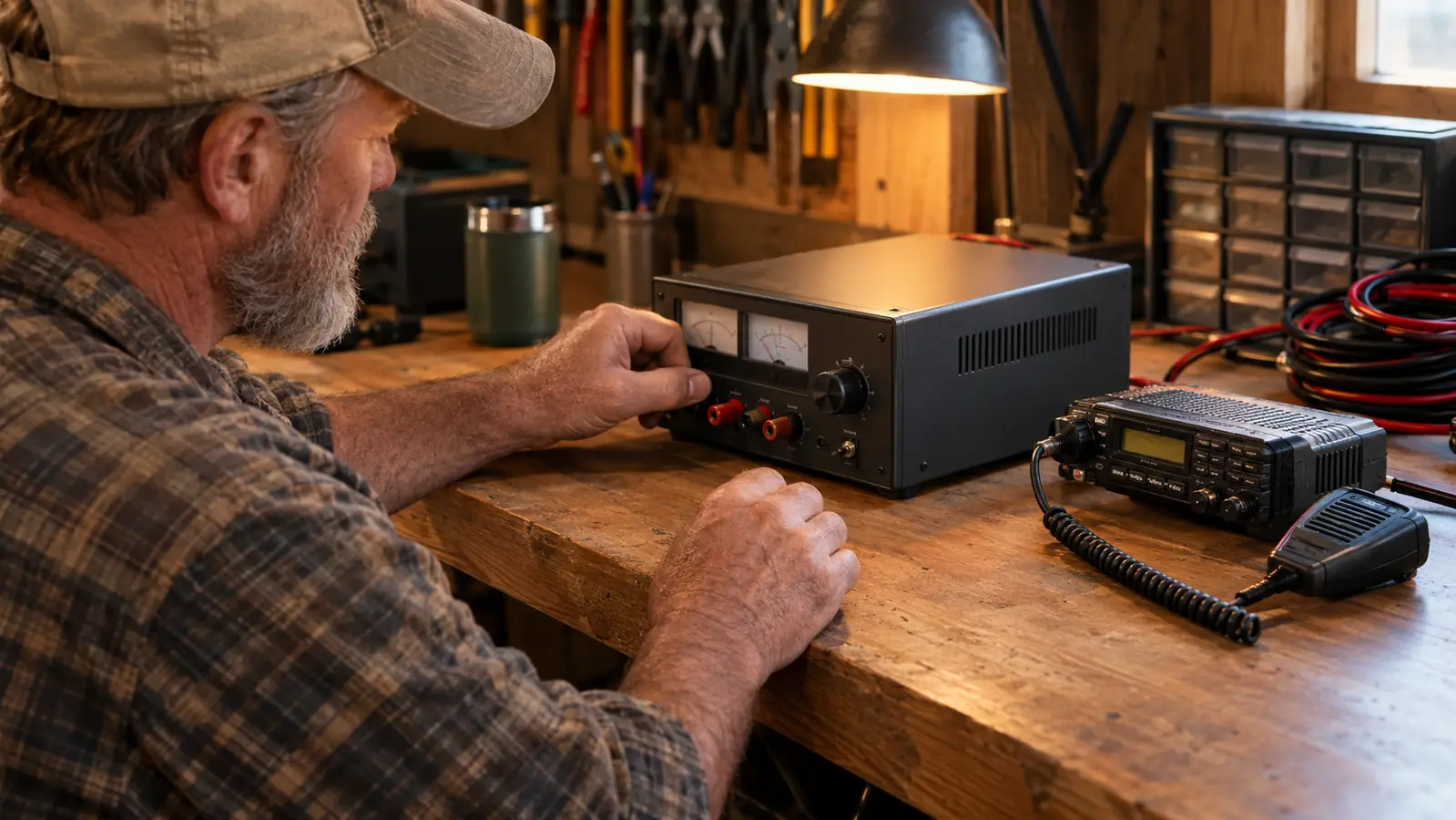
Voltage sag is the silent power killer
A 50 watt mobile radio can draw 15 amps or more when you key up. A weak supply sags under that load, and sagging voltage means sagging output power. The first test I run on any supply is simple: key the radio and watch the meter. My old supply dropped more than a volt and a half. The Tekpower barely moves. That headroom is the difference between a radio that sounds strong and one that sounds like it is running on fumes, and it is the first thing I check on any supply that comes through my door.
The noise offset feature actually does something
Switching power supplies are efficient, but they can put a buzz or hash on receive. The noise offset on this supply shifts the internal switching frequency so it does not land on top of the band you are listening to. On my bench it cleaned up the background hash I used to hear on 40 meters, the seven megahertz band. It is not a filter that removes every noise on the air, but it took away the one the supply itself was adding. That is a real fix, not a marketing checkbox. The difference was plain the first night I listened after swapping supplies.
30 amps means you are not running it wide open
A 30 amp supply running a single mobile radio at 15 amps is working at half load. Electronics like that. They run cooler, they last longer, and they hold voltage better because they are not straining. If you add a charger for the handheld or a small light strip to the bench, the supply does not blink. Headroom is the cheapest insurance you can buy for your gear. If you are weighing this against the Pyle 30 amp bench supply, I ran them side by side (tekpower-tp30swi-vs-pyle-30-amp-bench-supply).
It runs cool and quiet enough for a bedroom station
I run my radios in a corner of the spare bedroom, so a supply that hums or throws heat all day would drive me out of the room. The switching design runs much cooler than the old iron linear supplies, and the fan is modest. It is not silent, but I notice the clock on the wall more than I notice the supply. The first supply I owned sounded like a box fan with a cold. This one I forget is on. If you share a room with your radios, that matters more than you think.
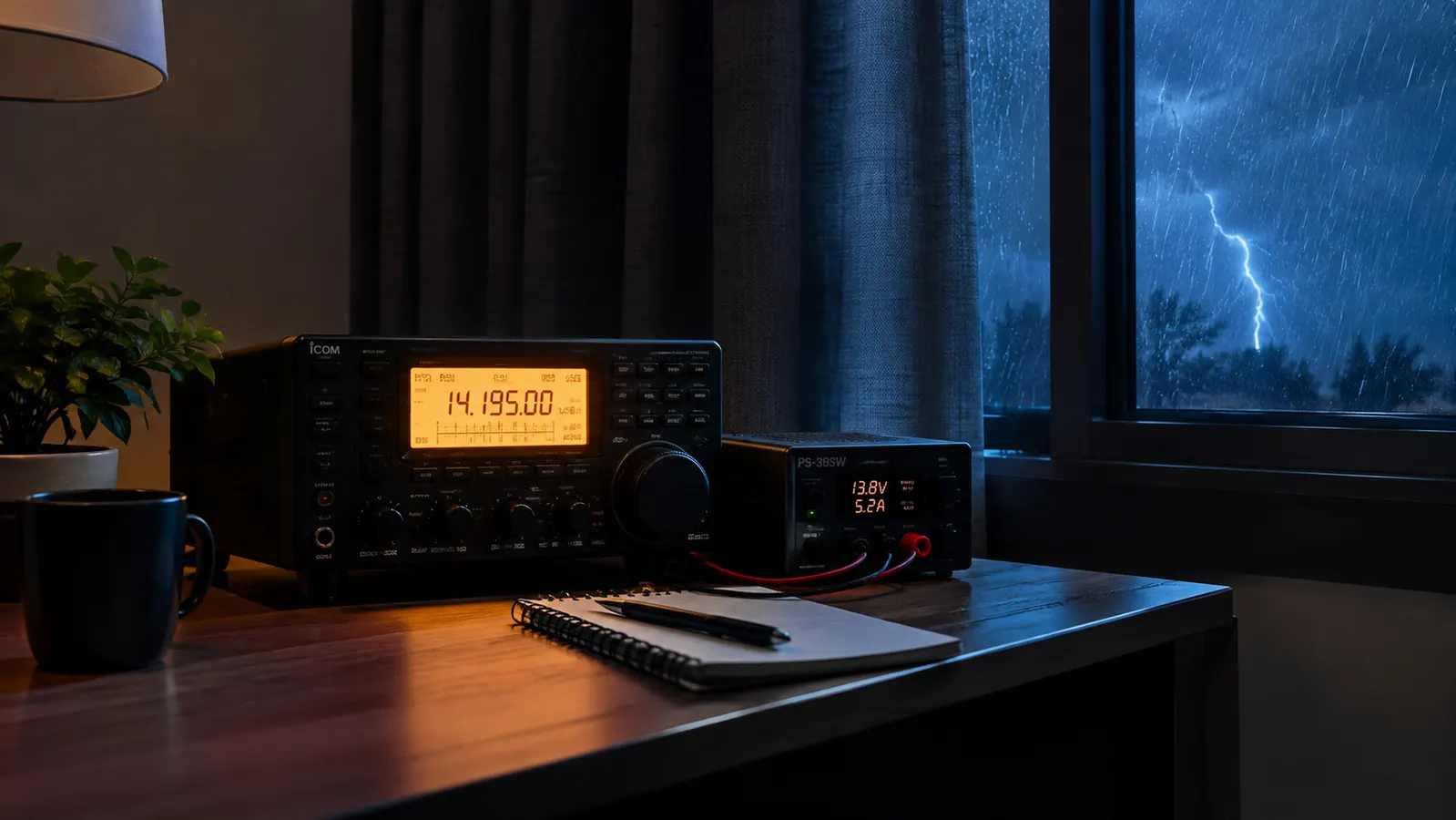
One supply runs the whole bench
During storm season I pull the AnyTone out of the truck and run it on the bench, and the same supply charges the Baofeng handheld and powers a small lamp. One supply, everything on the bench covered. It also means one power switch to flip when I leave the room, which my wife Joan appreciates. The front panel meter also tells me what the whole setup is drawing, which is handy when I am trying to figure out whether I can add one more thing without upgrading anything.
It is the piece that makes off-grid plans work
The 2020 ice storm knocked out power and cell service in our county for four days. I got serious about a setup that works when the grid does not, and a supply like this is the middleman. Whatever you have for power, a small generator or a battery bank, has to become clean 13.8 volt DC before the radio will use it. This supply does that conversion without drama. It is not the exciting part of an emergency plan, but it is the part that makes the rest work. The longer story of why I rebuilt my setup after that storm is here (tekpower-tp30swi-advertorial-story).
The front panel meter tells you what is really happening
A meter is a troubleshooting tool, not a decoration. When the radio sounds weak, I key up and watch the current reading. When the battery charger is done, I watch the draw drop. The meter also caught a dying connector before it became a real problem, which paid for the supply by itself. The numbers on the front panel have saved me from chasing problems that did not exist. If your supply does not show you voltage and current, you are working blind.
It protects the radio from your wall outlet
Wall power is dirty. Surges, dips, and noise come in with the utility feed, and radios do not like any of it. A supply with overload and overvoltage protection cuts out before that garbage reaches your gear. I would rather replace a power supply than a radio. A radio is a precision instrument. Feeding it dirty power is like running a fine engine on bad fuel. The Tekpower has never tripped on me, but I sleep better knowing the protection is there.
It is the piece you stop thinking about
The best gear on the bench is the gear that disappears. Two years in, the Tekpower just sits there and holds 13.8 volts, day after day, through daily use and storm season alike. That is the whole job. It is also why the supply carries a 4.6 star average across more than 680 reviews on Amazon. People do not write long reviews about power supplies. They just quietly buy another one when they build a second station. I wrote up the full two-year picture in my long-term review (tekpower-tp30swi-review-long-term).
What I'd Skip
If you only ever run a 5 watt handheld and you charge it from the wall, you do not need 30 amps. A smaller supply saves money and bench space. And if you are a purist who wants a heavy linear supply for the sake of tradition, this switching supply will not scratch that itch. But if you run a mobile radio on the bench, or you want room to grow, the TP30SWI is the right size. It has been on my bench for two years and I have not once wished it were bigger or smaller.
The needle on my old supply sagged every time I keyed up. This one holds 13.8 volts flat, and that is the whole difference.
A station runs on voltage. Give yours a solid foundation.
The Tekpower TP30SWI has held 13.8 volts on my bench for two years. Check today's price on Amazon and see if it fits your setup.
Amazon Check Today's Price on Amazon →