
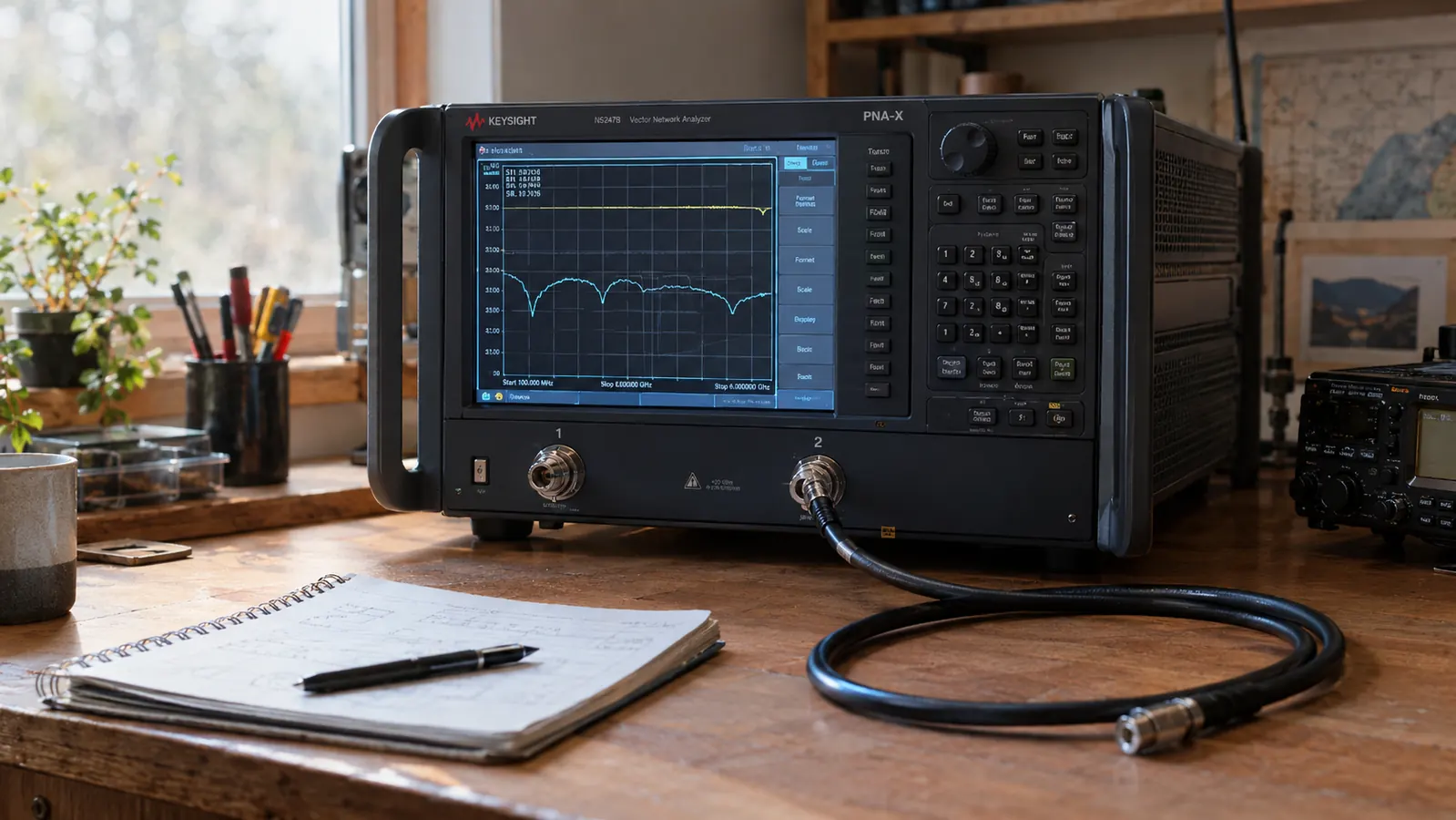
I bought the AURSINC NanoVNA-H about two years ago, after the 2020 ice storm that knocked out power and cell service in our county for four days. That storm is why I rebuilt my whole setup, and part of that rebuild was learning to check my own antennas instead of guessing. The NanoVNA-H is the tool I use for that. It is a vector network analyzer, which is a fancy name for a device that measures how an antenna behaves across a range of frequencies. It fits in the palm of your hand, and it does in minutes what used to take me an afternoon with a borrowed SWR meter and a lot of guesswork. After two years of using it on the VFAN antenna on my truck and the backyard wire for the radio corner, here is the honest picture. It is not perfect, and I will get to the flaws, but it is the first tool I grab when something does not sound right on the air.
Before I get into the details, let me say what this review is not. It is not a lab test with calibrated instruments and a clean room. It is one ham, two years of use, and the things that surprised me, both good and bad. If you are looking for a reason to buy one, you will find it here. If you are looking for a reason to skip it, you will find that too. I have no stake in whether you buy this thing. I just want you to know what you are getting into.
The Quick Verdict
The best value in antenna testing if you accept the learning curve and the small screen.
Amazon Check Today's Price →Stop guessing whether your antenna is the problem
If you are tired of chasing SWR problems by trial and error, the AURSINC NanoVNA-H is the tool I reach for. It shows you what is actually happening at the feed point in a few minutes.
Amazon Check Today's Price on Amazon →How I've Used It
The NanoVNA-H covers 9 kHz to 1.5 GHz, which is more range than I need for ham radio, but it means I can also check FM broadcast antennas and the little whip on Joan's handheld. The main job for me is SWR, which is a number that tells you how much of your transmit power is going out the antenna instead of reflecting back into the radio. High SWR can damage a radio's final amplifier, so it is worth knowing before you key up. I check SWR on every antenna I own at least once a season, and after any storm that might have moved something.
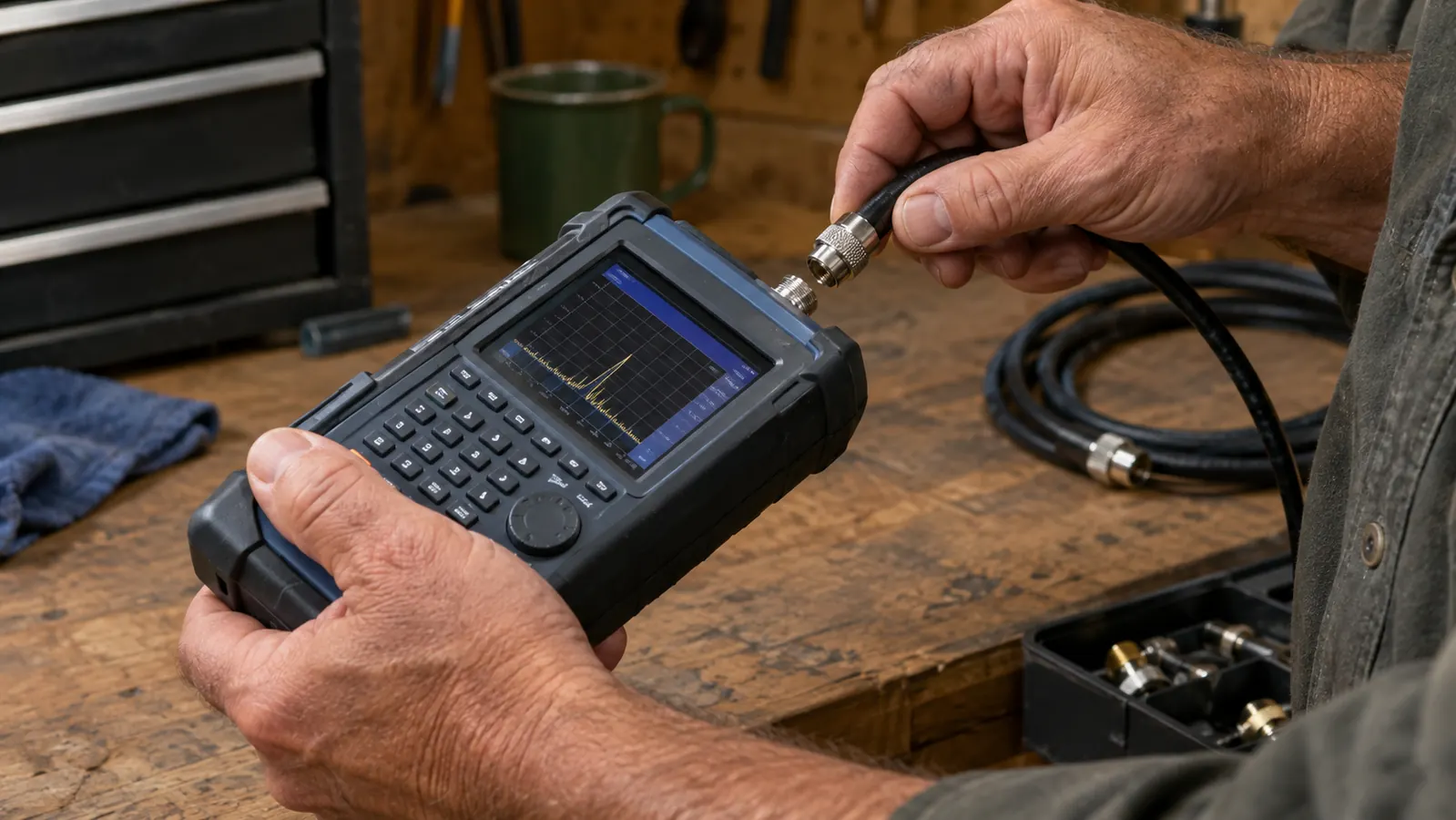
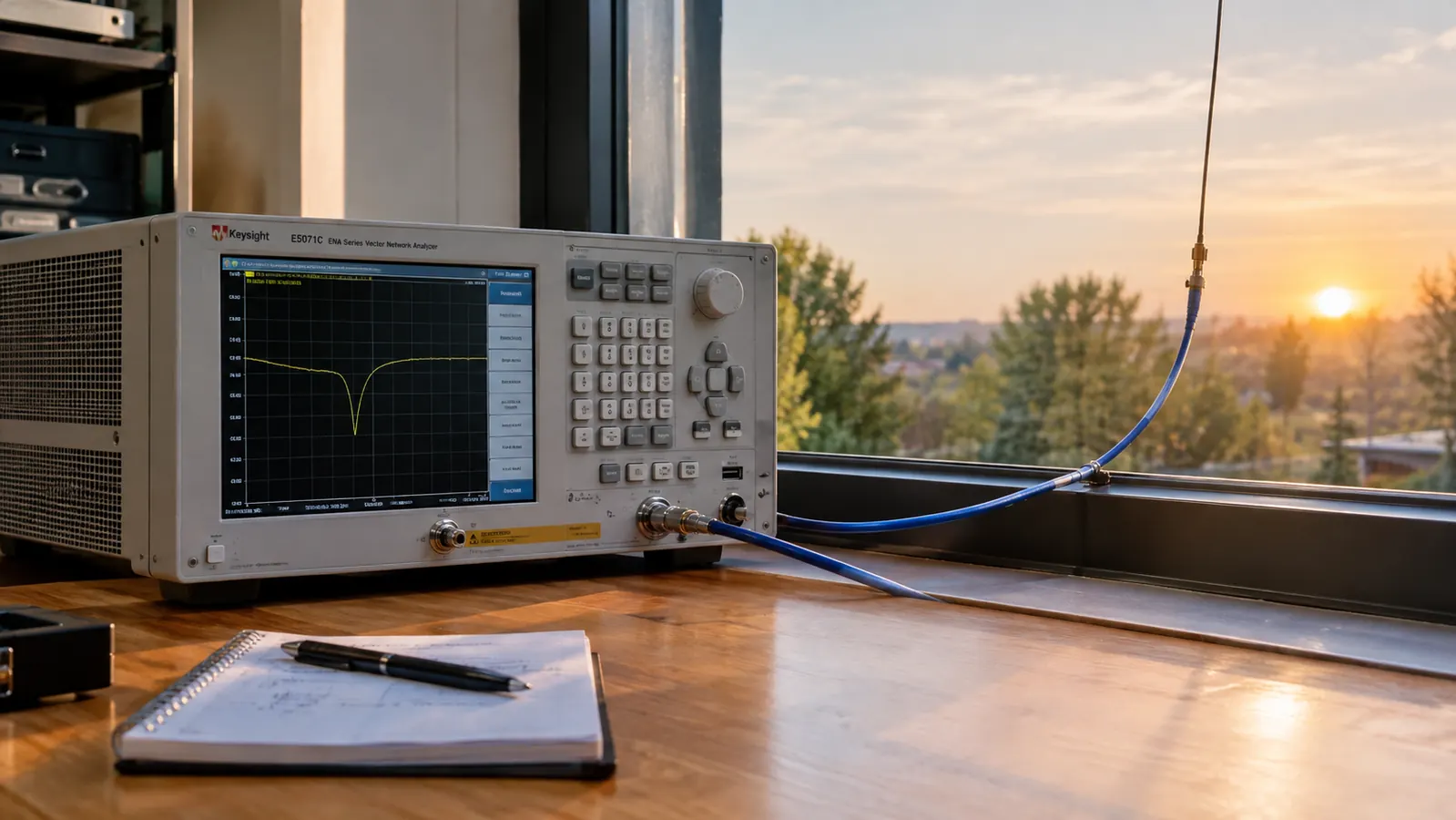
I use it a few ways. On the truck, I disconnect the VFAN antenna from the AnyTone and run a short jumper from the antenna feed to the NanoVNA-H. The analyzer sweeps the band and I can see the resonance dip on the screen. On the backyard wire, I do the same thing from the spare bedroom, with the lead running out the window. I have also used it to check a roll-up J-pole before storm season, and to verify that a coax cable I suspected was bad actually was bad. That last one saved me from replacing a perfectly good radio.
The learning curve is real. The menu system is not something you will figure out without the manual or a YouTube video. But once you learn the three or four screens you actually need, it becomes quick. I can have the analyzer calibrated and sweeping a band in about two minutes now. For the first few weeks, I kept the manual on the bench next to it. Now I only open the manual when I want to try a measurement I have not done before.
One thing I did not expect is how much I would use it for homebrew projects. I built a simple dipole for 40 meters last winter, and instead of guessing at the length, I used the NanoVNA-H to trim the wires until the resonance dip landed where I wanted. That is the kind of thing that used to take me a whole weekend with a lot of cut and try. Now it takes an hour. I have also used it to check the little antenna on Joan's handheld before storm season, just to confirm it is still resonating where it should.
The first time I used it, I did not trust the numbers. I had an SWR meter that I had used for years, and the NanoVNA-H gave me a curve that dipped at a frequency the meter had never shown. I checked it against the meter and the meter agreed at the center frequency. The difference is that the analyzer shows you the whole picture, not just one point. That is when I stopped thinking of it as a toy and started thinking of it as a tool.
The other place it earns its keep is after a storm. Last spring a branch came down and clipped the VFAN on the truck cab. The radio still worked, but it sounded thin. I pulled the antenna, ran a sweep, and the resonance dip had moved up the band by a good bit. A few minutes with the analyzer told me the antenna needed a look before I went back to the bench and started swapping radios. Without it, I would have blamed the AnyTone and spent an evening chasing nothing.
What Nobody Tells You About the NanoVNA-H
First, the calibration. The AURSINC unit ships with a set of calibration standards, and you have to do an open, short, and load calibration before you trust any measurement. If you skip it, the numbers will be off, sometimes by a lot. It takes about a minute once you have done it a few times, but it is a step nobody mentions in the product photos. I keep the standards in a little bag with the analyzer so they do not get lost.
Second, the screen is small and the menus are deep. The display is a 2.8 inch color screen, and it is not a touchscreen. You navigate with a rotary knob and a couple of buttons. It works, but it is not slick. You will spend time scrolling through settings, especially the first few sessions. The font is small enough that I keep reading glasses on the bench.
Third, the battery is fine for bench work but not for a long afternoon in the field. I get maybe two hours of continuous use on a charge, and the battery is not user-swappable without opening the case. If you plan to use it away from a power source, bring a USB power bank. The USB port on the side will charge it while you use it, which is handy.
Fourth, the firmware. The version that ships with it is usable, but there are community builds that add features and fix quirks. I run the stock firmware because I do not need the extras, but you should know the option is there. The unit is essentially an open platform, which is great if you like tinkering and a little intimidating if you do not. Flashing new firmware is not hard, but it is another thing to learn.
Fifth, the accuracy is good but not lab grade. The NanoVNA-H is calibrated at the factory, but the calibration drifts over time and with temperature changes. For ham radio work, that is fine. For building a duplexer or a filter with tight tolerances, you will want a better instrument. I use mine for antennas and feed lines, not for component design.
One more thing about the software. The unit connects to a PC over USB, and the software for pulling sweep data is not the prettiest thing you have ever seen. It works, but it looks like it was built by engineers, not designers. If you are the kind of person who likes to save plots and compare them over time, you will spend some time learning that software too. I do not use it much, because I mostly read the screen and write numbers in a logbook.
There is one more thing, and it is the thing that will bite you if you are not careful. The NanoVNA-H is a tool that rewards patience. The first few sweeps you take will probably confuse you, because you do not know yet what a healthy antenna looks like on the screen. That is normal. The answer is to sweep a known good antenna first, so you have a baseline on the display. I keep a short piece of coax with a known good antenna on the bench just for that.
The Good and the Bad
The good outweighs the bad for my use. The first time I tuned my backyard wire with it, the SWR dropped from 2.1 to 1.3, and the radio stopped dropping the repeater on the way to town. That is a concrete improvement I could measure, not a feeling. I wrote the numbers in my logbook and I can see the difference.
It also caught a bad coax. I had a length of RG58 that I thought was fine, but the analyzer showed a dip where there should not have been one. Replacing that coax fixed a weak signal I had blamed on the radio for months. Without the analyzer, I would have kept chasing the wrong problem.
For what it does, there is nothing else that does this. A bench VNA is a different class of instrument, and a simple SWR meter only gives you one number at one frequency. The AURSINC NanoVNA-H gives you a sweep across the whole band, so you can see the resonance curve and spot problems a single reading would miss. It has more than 1,600 reviews on Amazon and a 4.6 average, and my experience matches that.
Let me also say something about value. This is a tool that costs a fraction of what a bench VNA costs, and for antenna work it is close enough. I have used it to tune a dipole, check a mag mount, and verify a roll-up J-pole, and every one of those jobs came out right. The money I saved by not chasing the wrong problem paid for it in the first season.
The biggest shortfall for me is the connector. The unit uses an SMA connector, and my antennas use SO-239 and N connectors, so I need adapters. The included adapters are okay, but they add a little loss and a little frustration. You will want a short jumper cable with the right ends, and that is an extra thing to keep in the go bag.
The other shortfall is the learning curve for reading the display. The Smith chart mode is useful once you understand it, but it is not obvious. I mostly use the return loss and SWR modes, which are straightforward. If you want to use the more advanced modes, plan to spend an evening with the manual and a cup of coffee.
And the build quality is what you expect at this level. The case is plastic, the screen scratches easily, and the buttons feel a little soft. It is a tool, not a piece of test equipment you would hand to a calibration lab. Treat it gently and it will last. I keep mine in a padded pouch when it is not on the bench.
There is also the matter of the included accessories. The box comes with a set of calibration standards, a couple of adapters, and a USB cable. The carrying case is soft and basic. It is not a hard case, so I bought a small padded pouch for it. That is a small thing, but it tells you what kind of product this is. It is a capable tool with budget packaging.
What I Liked
- Sweeps a wide frequency range in seconds
- Shows SWR and return loss across the whole band
- Open firmware means community improvements
- Small enough to toss in a go bag
- Takes the guesswork out of tuning antennas
Where It Falls Short
- Steep learning curve
- Small screen and deep menus
- Needs calibration before every serious session
- SMA connector requires adapters for most ham antennas
- Plastic case and soft buttons
The first time I tuned my backyard wire with it, the SWR dropped from 2.1 to 1.3, and the radio stopped dropping the repeater on the way to town.
Who This Is For
This is for the ham who wants to stop guessing. If you have ever replaced an antenna, moved a feed line, or wondered why your signal is weak, the NanoVNA-H will answer the question in a few minutes. It is also for the preparedness-minded person who wants to verify that the antenna on the roof is actually working before a storm, not after. After the 2020 ice storm, I made a habit of checking my antennas every spring and fall, and the analyzer makes that a ten minute job instead of a Saturday project.
It is for the person who does not mind reading a manual. The learning curve is real, but the payoff is knowing your station is tuned. If you are the kind of person who keeps a logbook and checks your SWR after every storm, this is your tool. It is also for the ham who likes to build things, because it takes the guesswork out of cutting wire and tuning elements.
If you are new to ham radio, this might be more than you need at first. But if you are the kind of person who likes to understand your gear, it will not take long before you want to know why your signal is weaker than it should be. That is exactly when the NanoVNA-H earns its place on the bench. It is a learning tool as much as a test tool.
Who Should Skip It
Skip it if you only use a handheld with a rubber duck and never plan to do more. A simple SWR meter or even the radio's own SWR reading is enough for that. Skip it if you want an appliance that works out of the box with no learning curve. This is a tool for tinkerers, not for someone who wants to plug and play. There is nothing wrong with that, but you will be frustrated.
Also skip it if you need precision lab measurements. The NanoVNA-H is accurate enough for ham work, but it is not a calibrated instrument. If you are building filters for a contest station or doing serious antenna design, you will want something with a better display and better connectors. For the rest of us, it is more than enough.
And if you are the kind of operator who just wants to talk, not tinker, this will sit in a drawer. There is no shame in that. A lot of good hams never touch a VNA. They use a radio that works and an antenna that was put up by someone else. If that is you, save the money and the bench space.
Ready to see what your antenna is really doing?
The AURSINC NanoVNA-H is the tool I reach for every time I move an antenna or suspect a feed line. It has saved me hours of guesswork and a length of coax that did not need replacing.
Amazon Check Today's Price on Amazon →