
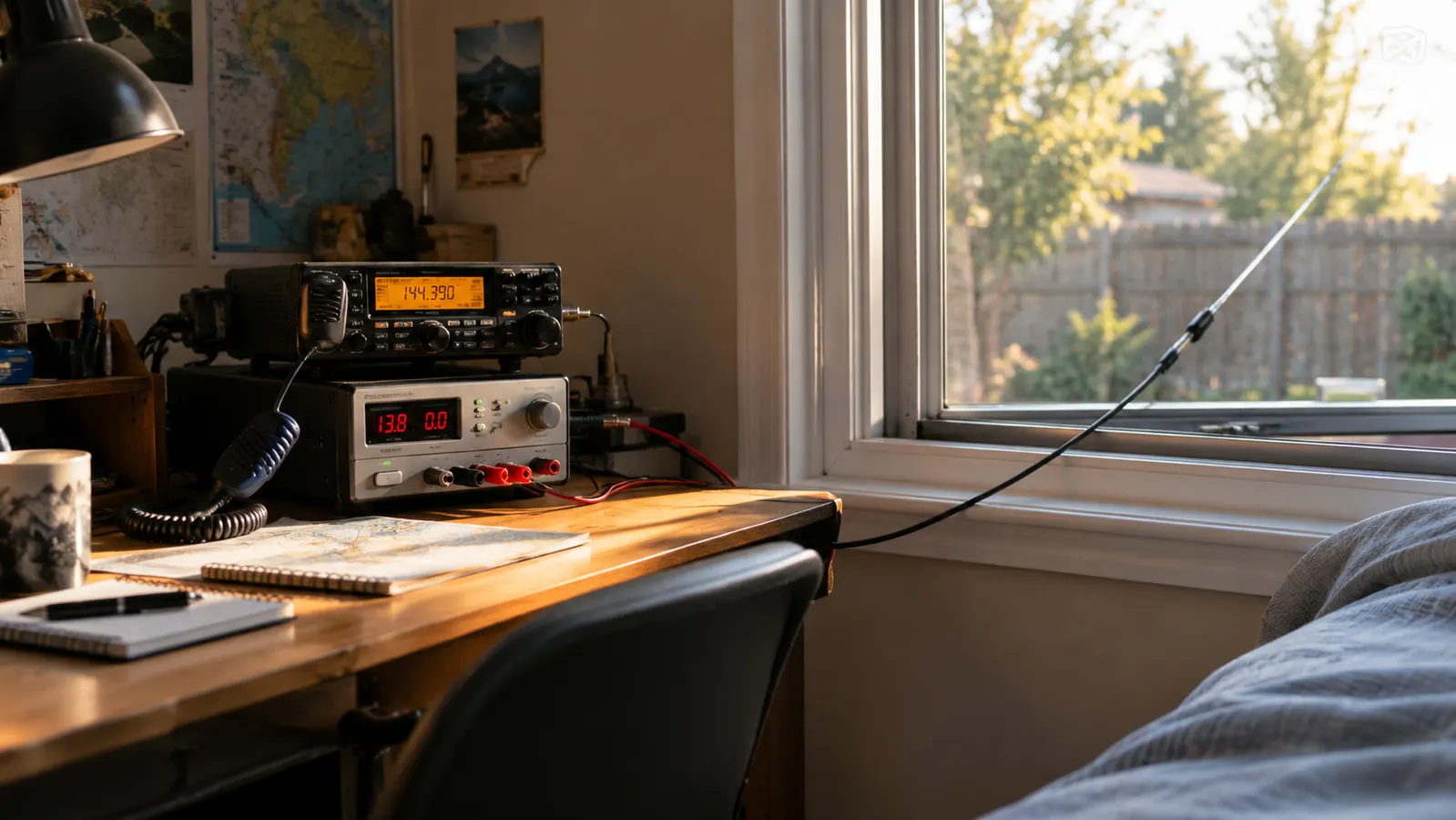
The radio in the truck runs off the truck. The handheld runs off its battery. But the radio on the bench, the one that does the real work when the power goes out, needs a steady 13.8V DC and it needs it for hours at a time. That is what a bench supply is for. Mine is the Tekpower TP30SWI, a 30 amp switching supply, and it has been on the corner of my radio bench for about two years now.
I got serious about bench power the same way a lot of hams do, after an ice storm. In 2020, an ice storm knocked out power and cell service in our county for four days. The old handheld I bought in 2009 got me through the first day, and then it was done. When I rebuilt the setup after that, I bought the supply before I bought anything else for the radio corner, and I would do it in the same order again.
The whole job looks more complicated than it is. You match the supply to the radio, wire the DC cable with the polarity right, and handle the one thing switching supplies are known for, which is a little noise in the receiver. The TP30SWI has a knob for exactly that. Here is the whole process in five steps, the way I do it every time I pull the AnyTone out of the truck and put it on the bench.
The bench supply I run: Tekpower TP30SWI
30 amps of clean 13.8V DC with a noise offset knob that actually does something. I have run the AnyTone off this supply for two storm seasons.
Amazon Check Today's Price on Amazon →Step 1: Size the supply to the radio's draw
Every radio has a current draw, usually printed on the back or listed in the manual. My AnyTone AT-778UVII, the mobile radio I normally keep in the F-150, draws about 8 to 10 amps on high power transmit. The Tekpower TP30SWI is rated for 30 amps continuous, so it runs that radio with plenty of headroom. Headroom matters because a supply run near its limit runs hot, and a hot supply is a supply that shuts down at the worst possible moment.
The rule of thumb I use: take the radio's maximum transmit draw, double it, and buy a supply at least that big. A radio that draws 10 amps wants a 20 amp supply at a minimum, and a 30 amp supply is comfortable. The TP30SWI covers everything from a handheld charging on the bench to a 50 watt mobile radio on high, so it is the last supply most people need to buy.
Voltage matters too. The radio wants 13.8V DC, which is what a car electrical system puts out while the engine runs. The TP30SWI delivers 13.8V. A supply that puts out 12V will still run the radio, but you give up a little transmit power and some radios get fussy about it. Matching the voltage is the cheapest performance you will ever get, and I explain why 13.8V matters for a bench setup in more detail in a separate article.
Step 2: Put the supply where it can breathe
Switching supplies run cool compared to the old transformer bricks, but they still need airflow. I keep the TP30SWI on the left side of the bench, clear of the radio and clear of the wall. The fan pulls air in the front and pushes it out the back, so nothing should sit against either end. Give it a few inches on both sides and it will run all day without complaint.
Before you wire anything, plug the supply in by itself and turn it on. Check that the fan spins, the meter settles around 13.8V, and there is no buzz from the box itself. A switching supply that makes noise sitting on the bench is a supply to send back, not one to build a station around. Mine has been quiet from day one.
The other thing I did was set the supply on a short scrap of rubber mat. It stops the box from sliding when I plug cables in, and it keeps the metal case from scuffing the bench. Not necessary, but it costs nothing and it makes the setup feel finished.
Step 3: Wire the DC cable with the polarity right
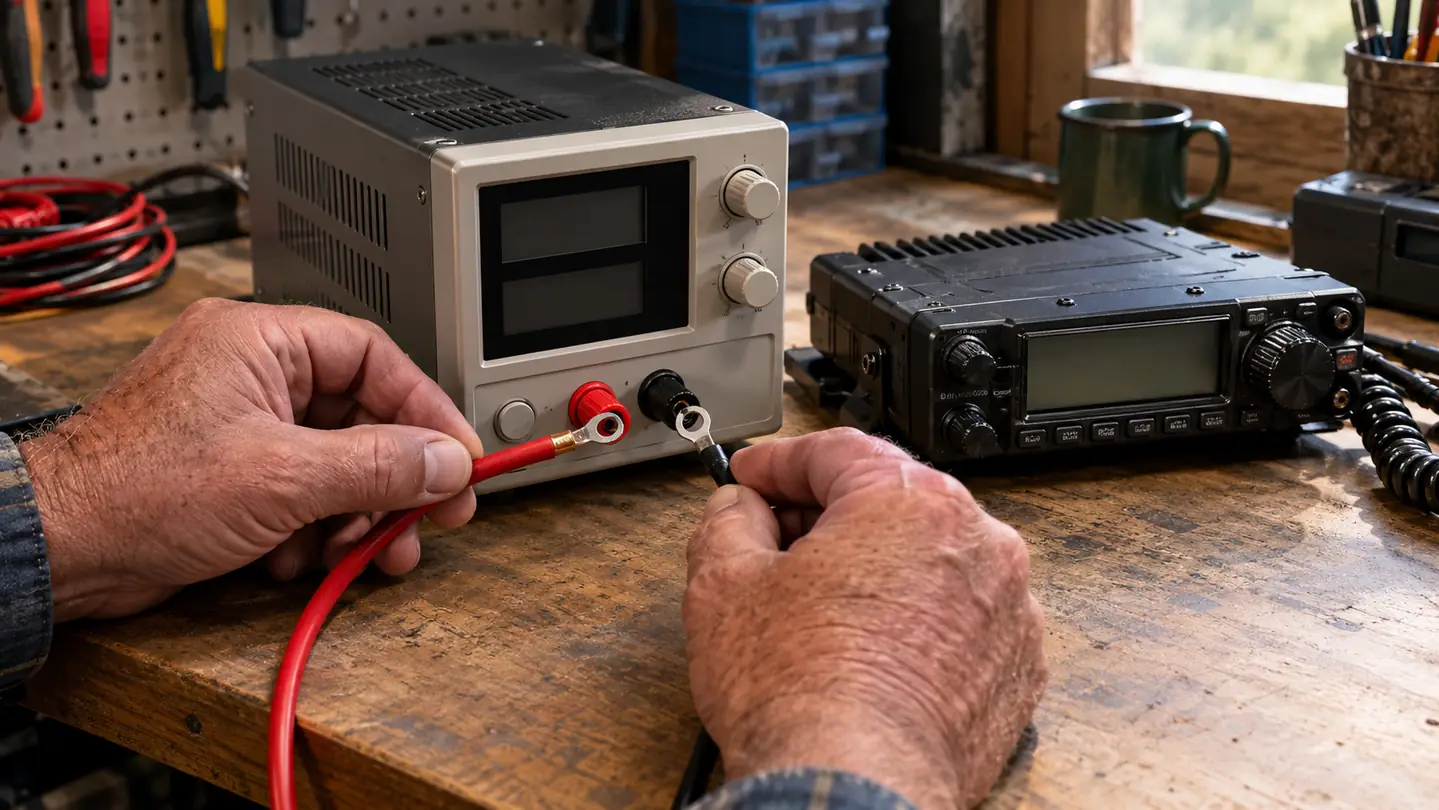
This is the step that separates a quick setup from a very expensive mistake. The supply has a positive output post and a negative output post. The radio has a positive input and a negative input. Red goes to red, black goes to black, and you check it twice before you tighten anything. Hook a mobile radio up backwards and you can let the smoke out of it in about half a second.
The supply end of the included cable is ring terminals that bolt to the output posts. The radio end needs to match whatever your radio expects, which on the AnyTone is a fused power cord. I put a fuse in the positive line regardless. The radio draws around 10 amps on high, so a 15 amp fuse protects it without blowing every time you key the mic.
You can run a mobile radio off a cigarette lighter plug, and a lot of people do. The problem is that a lighter socket is made for a plug, not for a radio, and the connection gets loose over time. A bench supply with a proper cable removes that whole class of problems. Make sure the cable has a little slack so it is not stretched tight between the supply and the radio.
Step 4: Use the noise offset to kill the whine
The one complaint you hear about switching supplies is that some of them put a whine or hash into the receiver. That is the switching circuit doing its job, and it is exactly what the noise offset on the TP30SWI is for. A switching supply turns the line voltage on and off very fast, thousands of times a second, and that switching can show up in the speaker. The noise offset shifts the timing of the switching so the whine lands somewhere your radio does not care about.
To set it: put the radio on a quiet frequency, turn the volume up a little, and slowly turn the noise offset knob until the hash drops. It took me about a minute and I have not touched the knob since. This is the feature that separates the TP30SWI from a plain supply with the same amp rating.
One note: the noise offset fixes the whine the supply puts into your receiver. It does not fix a noisy antenna or a bad ground. If you still hear hash after setting the knob, look at the antenna feed line before you blame the supply.
Step 5: Key up and check the whole loop
Now the real test. Turn the radio on, listen to a local repeater, the relay that extends your signal, for a minute, then key the mic and talk. You need a license to transmit, so if you are new, get that squared away first. Watch the meter on the supply while you transmit. You should see the radio drawing current and the voltage should hold steady around 13.8V. If the supply trips or the voltage sags hard, you have a wiring problem or a supply that is too small.
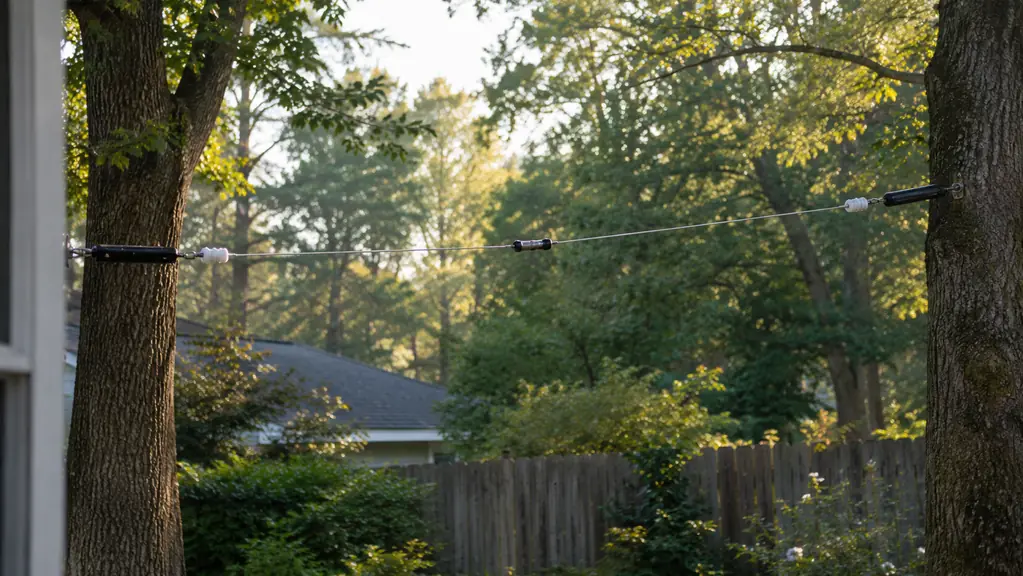
Then check the antenna side. I use the NanoVNA to confirm the SWR, the standing wave ratio that tells you how well the antenna matches the radio, on the backyard wire antenna before I trust it for a long session. A bench supply will happily push power into a bad antenna, and a bad antenna is how radios get cooked. That check takes five minutes and it is the one I never skip, storm season or not.
While you are at it, listen to the radio on a couple of bands, not just the one repeater. Some switching noise shows up on one band and not another. The noise offset knob is on the supply, so you can adjust it any time. I set mine once and have not needed to touch it since.
Common Mistakes I See
The most common mistake is buying a supply that is exactly big enough for the radio, with no headroom. The second most common is wiring the cable backwards, which is usually a one-time mistake because the radio does not survive it. The third is ignoring the noise offset and returning a perfectly good supply because of a whine that takes a minute to tune out.
I have also seen people run a bench supply off a cheap extension cord and wonder why the voltage reads low. The supply needs a solid feed from the wall. Use a heavy cord, plug it straight into the outlet, and check the meter. If you want to see how the TP30SWI compares with another popular 30 amp supply, I did a side by side comparison with the Pyle model.
A Note on Storm Season
The reason I care about any of this is the four days in 2020 when the county had no power and no cell service. A bench supply does not generate power, of course. It runs off the wall. But the radios and the supply are the part of the setup I can carry to a battery or a generator in minutes, and the supply is what makes the mobile radio practical inside the house instead of sitting in a cold truck.
When a storm is in the forecast, I pull the AnyTone out of the F-150, set it on the bench, and hook it to the TP30SWI. Joan keeps the handheld on the kitchen counter so she can reach me without coming into the radio room. The setup takes about ten minutes, and it is ready before the rain starts. That is the whole point of doing it now, calmly, instead of in the dark.
What Else Helps
A fused distribution block is worth the money if you run more than one thing off the supply. I have the radio on one fused output and a trickle charger on another. Anderson Powerpoles are the standard connector in this hobby, and once you switch everything over to them, swapping radios on the bench takes ten seconds. A cheap digital voltmeter tells you what the supply is actually doing instead of what you assume it is doing.
Keep the receive antenna a few feet away from the supply. Even with the noise offset, a wire antenna draped over the box will pick up hash that the offset cannot fully cancel. A little separation fixes it. I also keep the supply unplugged when the bench is not in use, mostly out of habit from my lineman days, and it has never hurt anything.
I keep a spare set of ring terminals in the drawer. They cost almost nothing and they mean I can move the supply to a different radio without hunting for the right hardware. Small stuff like that is what makes a bench pleasant to use instead of a chore.
The Bottom Line
Powering a ham radio from a bench supply is a one-evening project, and most of that evening is reading the manual. The Tekpower TP30SWI has run my AnyTone for two years now, through two storm seasons and a lot of casual evening listening. It holds voltage, it stays quiet, and the noise offset knob does what it says. I went into the long-term behavior in my full review of the supply.
If you are setting up a station from scratch, this is the order I would do it in: radio, power supply, antenna, and then a way to check the antenna. A 13.8V supply is the backbone of the whole setup, and it is worth getting one that is bigger than you need today. Radios get upgraded. The supply does not have to be.
On 20 meters, the noise offset dropped the hash from an S3 to barely an S1. It took about a minute to set and I have not touched the knob since.
Set up your bench the same way
The Tekpower TP30SWI is the supply I reach for every storm season. 30 amps, 13.8V, and a noise offset that works.
Amazon Check Today's Price on Amazon →