
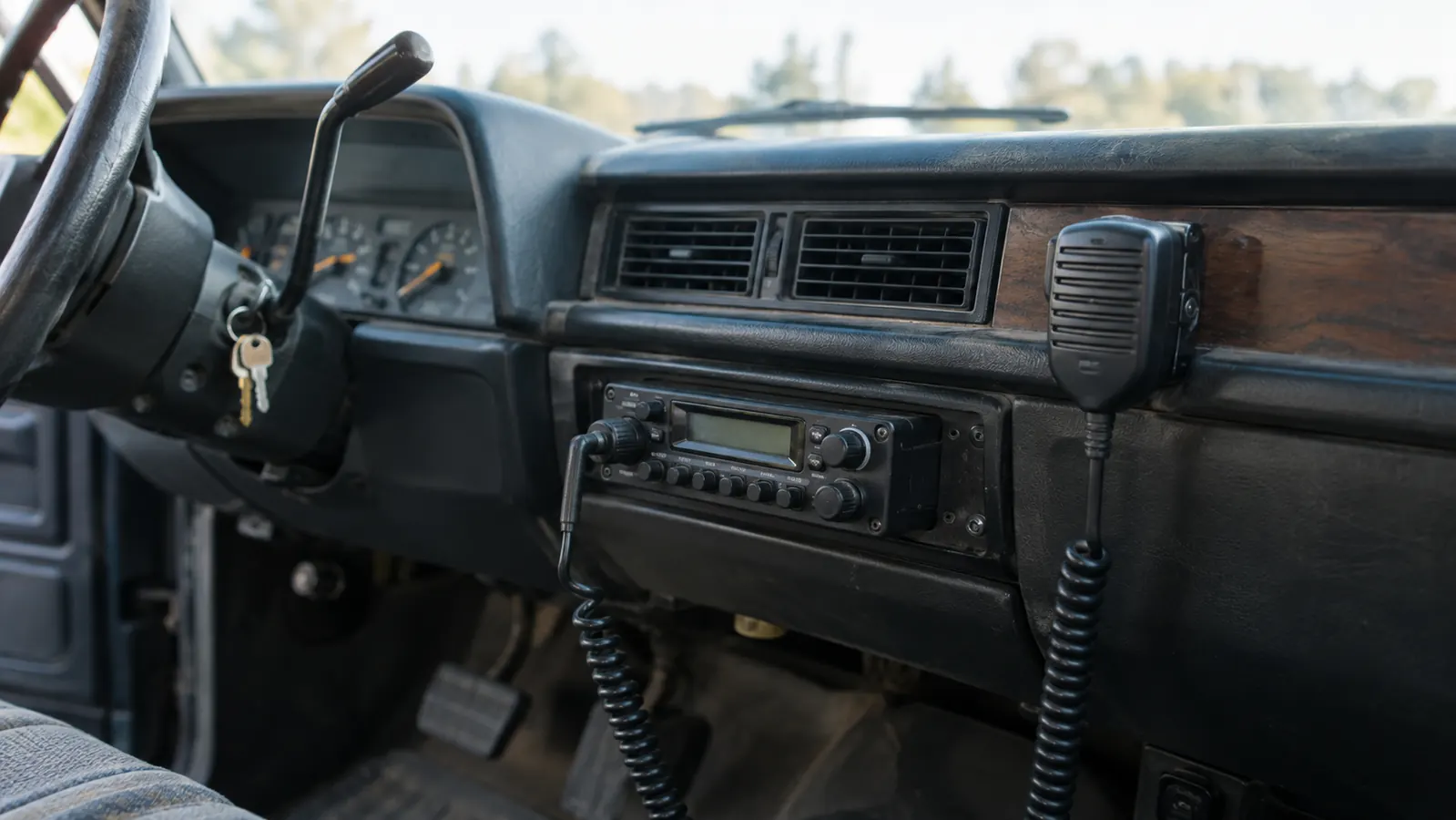
Let me start with the part most reviews skip: the AnyTone AT-778UVII has been sitting under the dash of my F-150 for two years, and I have said things to it that I would not say to a person. The menu system has made me cuss. The little speaker has made me turn the volume up until Joan yelled from the kitchen. And I would still buy it again tomorrow. That is the honest version, so let me explain how a radio can frustrate you and still be the right call.
I am Lyle, retired telephone company lineman, General class licensee since 2012. I bought this AnyTone when I rebuilt my setup after my old handheld finally died, and it has been in the truck almost every day since. It is the radio I reach for when I head to town, the one I pull out and set on the workbench when a storm is coming. I have opinions about it, and not all of them are flattering.
The Quick Verdict
A capable dual-band mobile that rewards patience with its menus. The best value in the price range, as long as you are not expecting a plug-and-play experience.
Amazon Check Today's Price →Want the radio I keep coming back to?
After two years, this is the AnyTone that stays in my truck. If you want a dual-band mobile without spending twice as much, check today's price on Amazon.
Amazon Check Today's Price on Amazon →How I've Used It
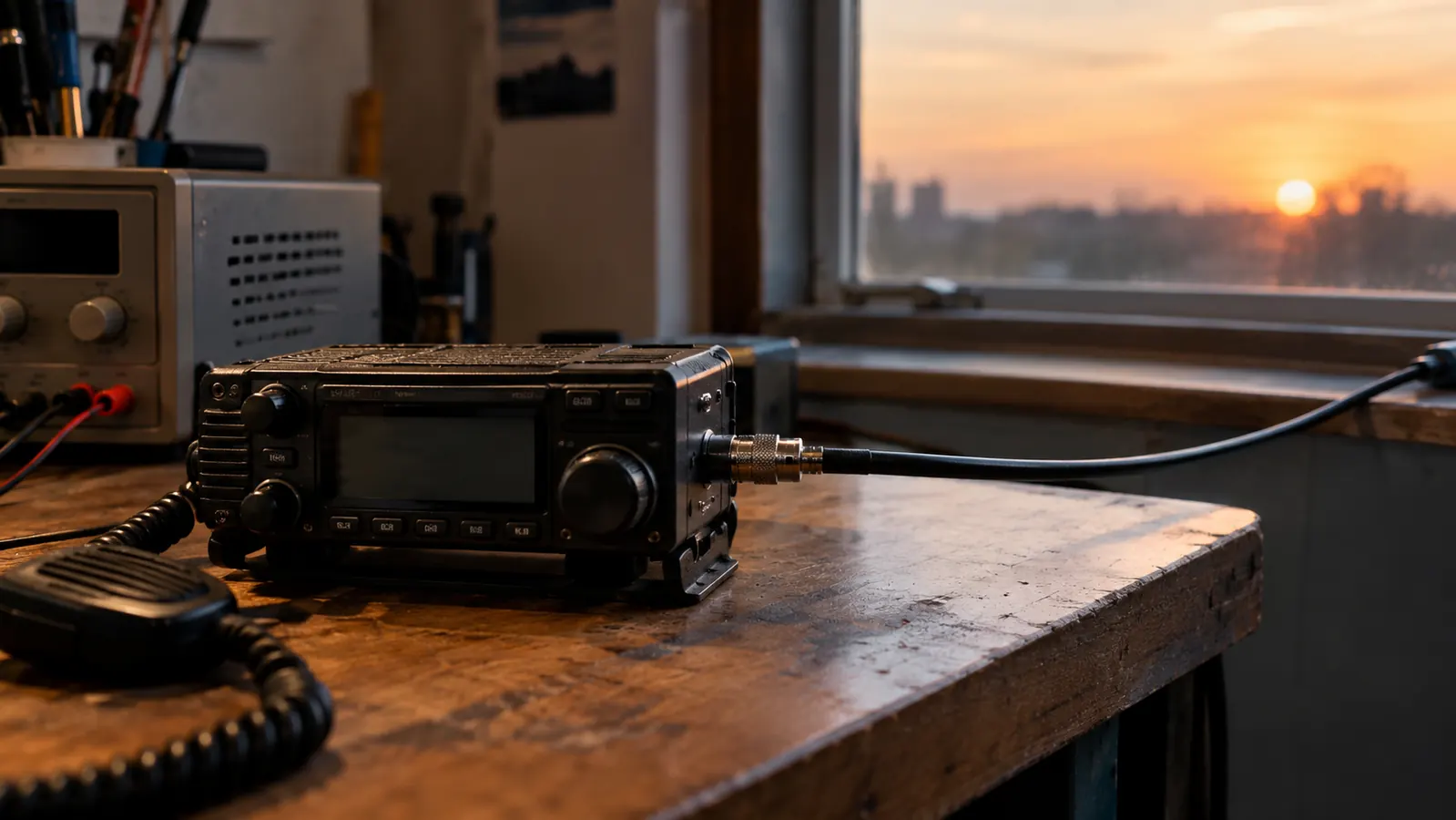
The AT-778UVII lives in my truck, mounted under the dash with the bracket it ships with. The microphone hangs on the clip next to it, and the coax runs from the back of the radio up to the VFAN magnet-mount antenna on the cab roof. That is its daily job: local repeaters, the odd simplex contact, radio to radio with no repeater in the middle, and monitoring while I drive. When the weather looks serious, I pull it out of the truck, carry it inside, and set it on the workbench next to the Tekpower 30-amp supply. Same radio, two homes.
On the bench it runs the backyard wire antenna I put up after the 2020 ice storm knocked out power and cell service for four days. That storm is the reason I take this stuff seriously. The wire is a simple dipole, about 33 feet of copper on each leg, strung between the corner of the house and a locust tree at the back of the lot. I raised the feed point about 30 feet, checked it with the NanoVNA-H, and the SWR, standing wave ratio, the number that tells you how well the antenna matches the radio, came in at 1.3 to 1 on 146.520, which is plenty good. The coax comes through a gap in the window frame that I sealed with a scrap of foam pipe insulation, and the whole move from truck to bench takes about three minutes. I timed it during a thunderstorm watch last June because I wanted to know I could beat the lightning.
A radio you cannot power off-grid is a paperweight when it matters, so I like that this one moves between the truck and the bench without tools. The Tekpower supply on the bench runs it all day without complaint, and the same radio that sat in July heat under the dash is the one I listen to when the power flickers. In two years I have put maybe a thousand hours on it, between commuting, road trips, and storm season listening. It has been hot in the cab in July, cold in January, and it has never once failed to power on. That matters more to me than any feature list.
One evening last winter, the power went out at 6:40 and did not come back until the next afternoon. I had the radio on the bench within ten minutes, running off the Tekpower, and I spent the evening on the county repeater listening to neighbors check in and watching the thermometer drop. Joan came in with her Baofeng and asked if I could hear the school board closing announcement. I could. That is the whole job of this radio.
What Nobody Tells You Before You Buy
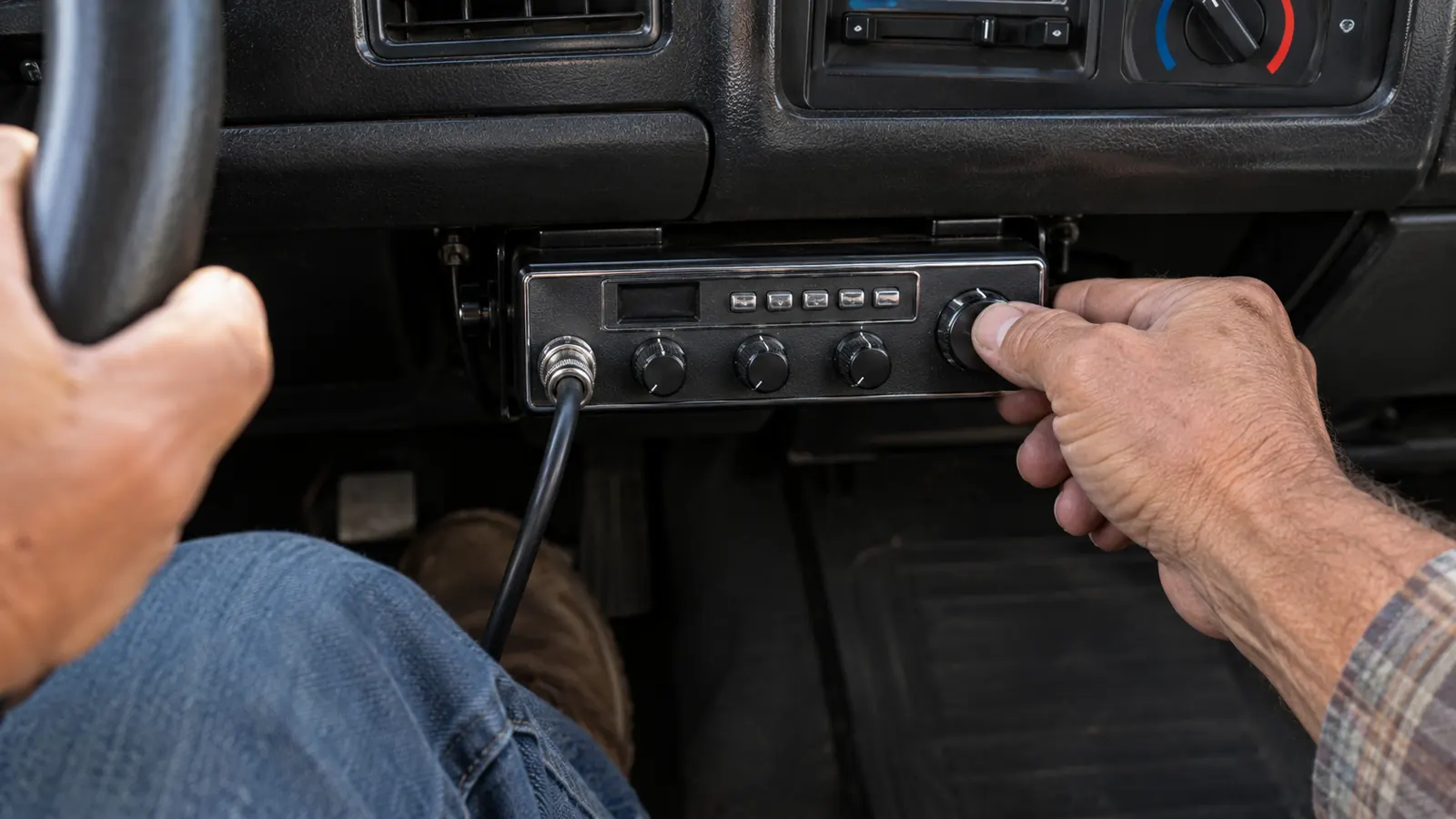
Here is the thing every listing skips: the AnyTone AT-778UVII is a radio for people who are willing to read the manual. The menus are deep, the button labels are small, and the way you change a repeater offset, the frequency shift that makes the machine hear you, is not obvious the first time you try it. CTCSS tones, the sub-audible tones that keep a repeater from squelching on you, are in there, but you will hunt for them. The first time I programmed a repeater, I sat in the truck with the manual open on the passenger seat and the frequency written on an old envelope. It took me the better part of an evening to get the offset right, and the next morning I discovered I had set it backwards anyway. I have programmed this radio a dozen times since, and I still keep a cheat sheet in the glovebox.
The second thing nobody tells you: the front speaker is small and it is aimed at your shins. At highway speed with the windows up it is fine, but with the window down and the radio on a busy repeater, you will wish for an external speaker. I bought one, an amplified speaker about the size of a paperback, and bolted it under the dash with a pair of self-tapping screws. It fixed the problem completely. Budget for it, because the stock speaker is the one thing I would change if I could.
The third thing: the microphone is where a lot of the magic lives, and also where a lot of the frustration lives. It has the controls for volume and channel on it, which is wonderful. But the buttons are stiff when the radio is new, and the little rotary knob is easy to bump when you grab the mic. I have changed channels with my thumb more times than I can count. You learn to grab it a certain way, but it is worth knowing before you buy that the mic is not just a mic, it is also the control panel.
The first week I owned it, I nearly sent it back. I programmed our main repeater wrong, the one I had been hitting from the driveway for years with a handheld, and I blamed the radio. It turned out the radio was fine and I had set the receive frequency right but the shift wrong, so it would hear the machine but never open the squelch. Once a local ham walked me through the menu over the phone, it clicked. That is the real story of this radio: the hardware is solid, the software is just picky about how you talk to it.
The Good, Specifically
Let me give the AnyTone its due, because the good stuff is genuinely good. The receiver is hot. I can sit in my driveway and hear the repeater on the ridge twenty miles away with the squelch barely open, and that is with a magnet-mount antenna on the cab roof, not a big antenna on a tower. On the bench with the backyard wire, it opens up even more; stations that are scratchy in the truck are armchair copy in the house. One Tuesday evening in October, a station running 5 watts from a handheld checked into the net from the far side of the county, and I copied him start to finish. My old radio would have missed him. For the money, the receiver sensitivity is the reason I would pick this radio again.
The dual-band part matters more than I expected. VHF for the local repeaters and simplex, UHF for the other repeaters and for talking to Joan's handheld during storm season. She keeps a Baofeng on the kitchen counter, and when the power goes out we can still reach each other. Having both bands in one box means I do not need a second radio in the truck, and it means the same radio that talks to the county repeater can also reach Joan on UHF. That is the whole point of this hobby for me.
The power output is honest, too. It is rated at 25 watts, and when I checked the VFAN antenna with the NanoVNA-H, the SWR read 1.4 to 1 on 146.520 and 1.6 to 1 on 446.000, both well inside where the radio is happy. So I trust it is putting out what it claims. The difference between 25 watts and the 5 watts my old handheld put out is about 7 dB, roughly a band and a half on the S-meter, the meter that shows signal strength, which is the difference between a contact you can copy and one you have to work for. I have hit repeaters forty miles away on a good day, and on a clear evening I have worked simplex across the county. You do not need a hundred watts for most of what hams actually do, and this radio proves it.
It also does VOX, voice operated transmit, which lets you transmit hands-free if you want, and it has a scanning function that is fast enough to be useful. On the bench I use VOX more than I expected, because it means I can sit back and work the radio while my hands are busy with a soldering iron or a cup of coffee. The display is readable in daylight, which is not true of every radio in this price range, and the backlight is not so bright that it bothers me at night. Small things, but they add up.
The Bad, Specifically
Now the part I promised you. The menu system is the biggest knock. It is not intuitive, and the manual reads like it was translated in a hurry. Words like 'REV' for repeater shift and 'TOT' for timeout timer are not explained well the first time you meet them, and there is no glossary to save you. The menu is organized in numbered groups, and the manual numbers them in a different order than the radio displays them, so you will flip back and forth. You will program this radio, think you have it right, and then discover you set the offset backwards. I have done it. Every ham I know who owns one has done it.
The speaker, as I said, is weak for mobile use. In a quiet cab it is fine. At speed, with the window down, it is not. At 55 with the window cracked, I have to turn the volume up until the audio starts to distort before I can copy a call sign. This is the single most common complaint I see from other owners, and it is a fair one. An external speaker under the dash fixed it in ten minutes, but it is still a fix you should know about before you buy, not a surprise to discover on the highway.
The microphone buttons are easy to bump, and the channel knob on the mic means you can change frequencies without meaning to. The knob sits right where my thumb lands when I grab the mic to answer a call, and I have shown up on a repeater more than once wondering why I was on the wrong channel. You adapt, but you should know it is a quirk, not a defect you can fix.
The memory channels are limited compared to radios that cost more. It is fine for the repeaters I actually use, but I have about forty programmed and I am already deciding which ones to keep. If you are the kind of ham who programs every repeater within fifty miles, you will run out of room. Plan for that before you fill it up with machines you will never use. One more thing I will mention, because it surprised me: there is no remote head option on this radio. The control head is the radio, so you have to mount the whole box where you can reach it, which in my truck means under the dash and slightly behind the steering wheel. It works, but if you wanted to hide the body in the back of the cab and run a control head up front, this is not the radio for that.
What I Liked
- Hot receiver for the money; hears repeaters twenty miles out on a simple magnet-mount antenna
- Dual band VHF and UHF in one box, easy to move between truck and bench
- Honest 25 watts of output with clean audio on the repeater
- VOX and fast scanning both work as advertised
- Display stays readable in full daylight
Where It Falls Short
- Menu system is deep and the manual is poorly translated
- Front speaker is weak for mobile use at speed; plan on an external speaker
- Microphone controls are easy to bump and change channels by accident
- Memory channels fill up fast if you program every repeater in range
- No remote head or Bluetooth, features you get on radios that cost more
In two years and maybe a thousand hours, this AnyTone has never once failed to power on. That matters more to me than any feature list.
How It Compares to What You Might Expect
If you are coming from a handheld, the AT-778UVII is a big step up in receiver quality and power, and the difference is most obvious on the fringe. If you are coming from a name-brand mobile that cost three times as much, you will notice the menu and the speaker. What you will not notice is a big gap in basic performance, because it is not there.
I have used radios that cost a lot more, and they are nicer in the details: better speakers, clearer menus, easier programming software. But for the money, the AnyTone gets you into the same conversations, on the same repeaters, with the same license. That is what I tell people who ask.
Who This Is For
Buy the AnyTone AT-778UVII if you are a new ham who wants a first mobile without spending a fortune, or a veteran who wants a second radio that can live in the truck without guilt. Buy it if you want something that runs fine on the bench during a storm and goes back in the truck when the power comes on. Buy it if you are willing to spend one evening with the manual and a cheat sheet.
It is also a good fit if you are building a go-kit or a storm setup on a budget. The radio, a power supply, and a magnet-mount antenna will keep you on the air through most of what a Tennessee winter can throw at you. That is not exaggeration, that is four days without power in 2020 talking.
Who Should Skip It
Skip it if you want a radio that programs itself. This one asks for patience, and if you are not the kind of person who enjoys the tinkering, it will frustrate you. Skip it if you do most of your mobile work at highway speed with the windows down, unless you are ready to add an external speaker. And skip it if you need more than the memory channels can hold, because the limits are real.
I will also say this plainly: you need a license to transmit. No radio in this review changes that. The AnyTone will receive just fine without one, but if you key up without a license, that is on you. Get your Technician license first, then buy the radio.
Still on the fence?
Two years in, I have not found a better dual-band mobile for the money. If you are ready to give it a home in your truck or on your bench, check today's price on Amazon.
Amazon Check Today's Price on Amazon →