
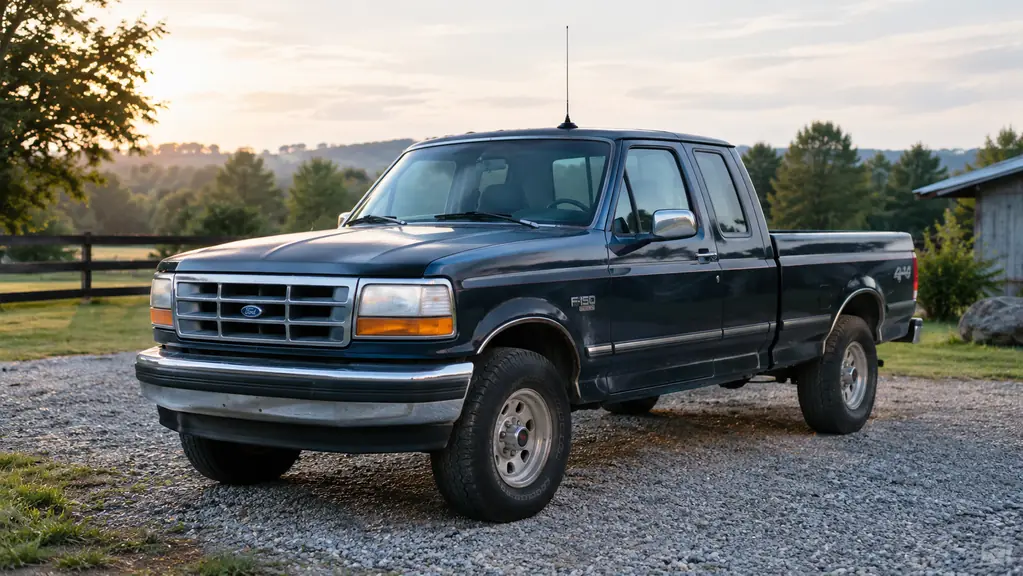
Two years ago I ran a coax cable out the window of my F-150, stuck a VFAN dual band magnetic mount antenna on the cab roof, and plugged it into the AnyTone AT-778UVII I had mounted under the dash. I did it for the same reason a lot of hams do. The 2020 ice storm knocked out power and cell service in my county for four days, and I decided my mobile setup needed to be better than a rubber duck on a handheld.
This is not the review I would have written in the first month. This is the review I can write after two years of daily driving, because the things that matter about a mag mount antenna are exactly the things you cannot learn from the product listing. I am not going to tell you it is perfect. It is not. I am going to tell you what it does well, what it does poorly, and who should buy it. If you are looking for a five star rave with no complaints, there are plenty of those on Amazon. This is the other kind.
The Quick Verdict
A solid dual band mag mount that does its job after two years of daily driving, with honest caveats about placement, coax routing, and the metal roof it needs.
Amazon Check Today's Price →The VFAN Dual Band Mag Mount: Two Years Later
If you want a simple way to get your mobile radio on the air without drilling holes, this is the antenna I would start with. Check today's price on Amazon.
Amazon Check Today's Price on Amazon →How I've Used It
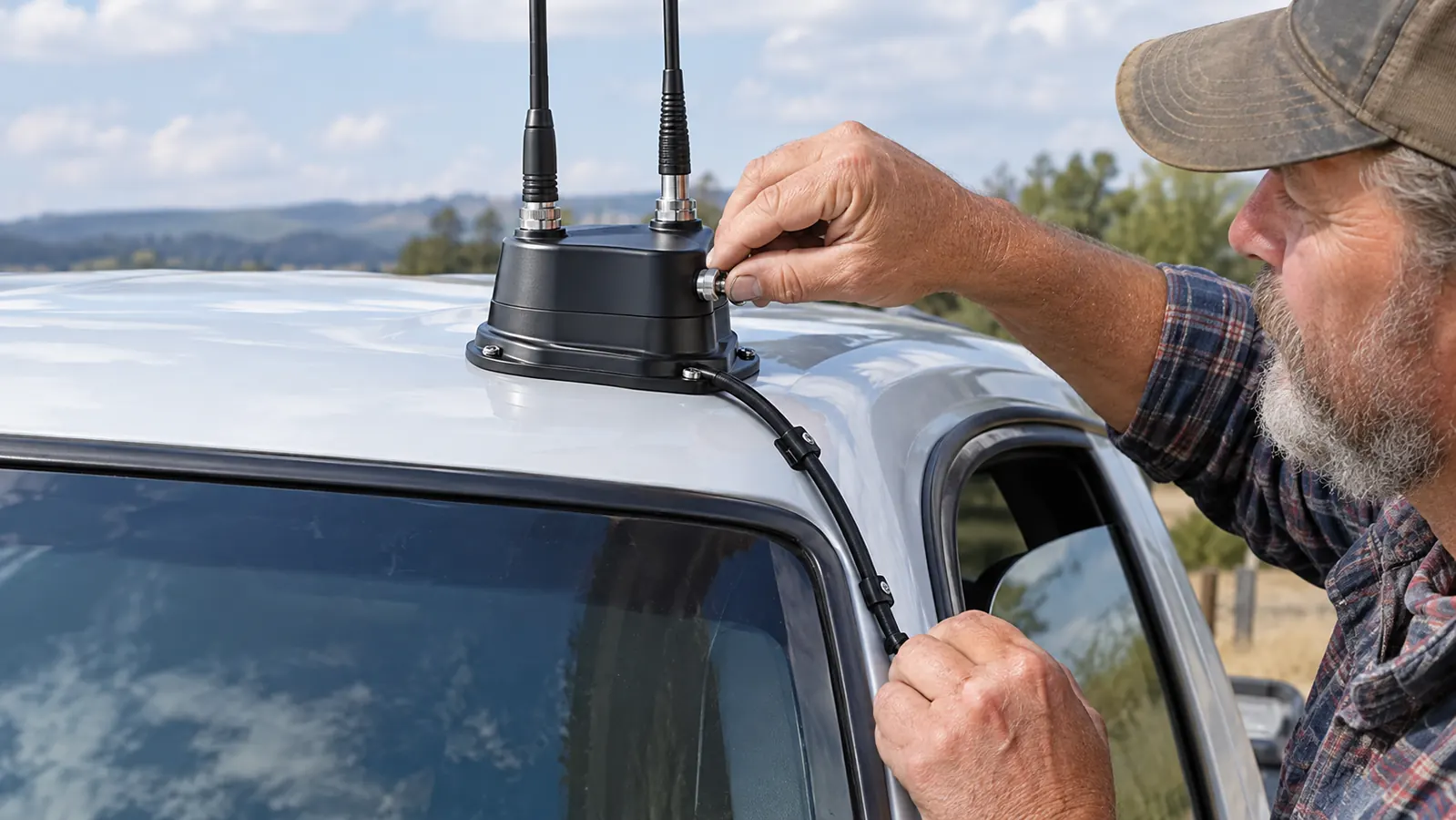
The VFAN sits on the roof of the cab, just behind center. The coax runs down the outside of the windshield pillar, under the door seal, and into the cab to the AnyTone. That placement is the single most important decision I made, and it took me three tries to get it right. The first week I had it on the hood, because that was easier to reach. The SWR was worse and the receive was directionally deaf. Moving it to the cab roof fixed both. If you take nothing else from this review, take that. Put the antenna in the middle of the biggest piece of metal you have.
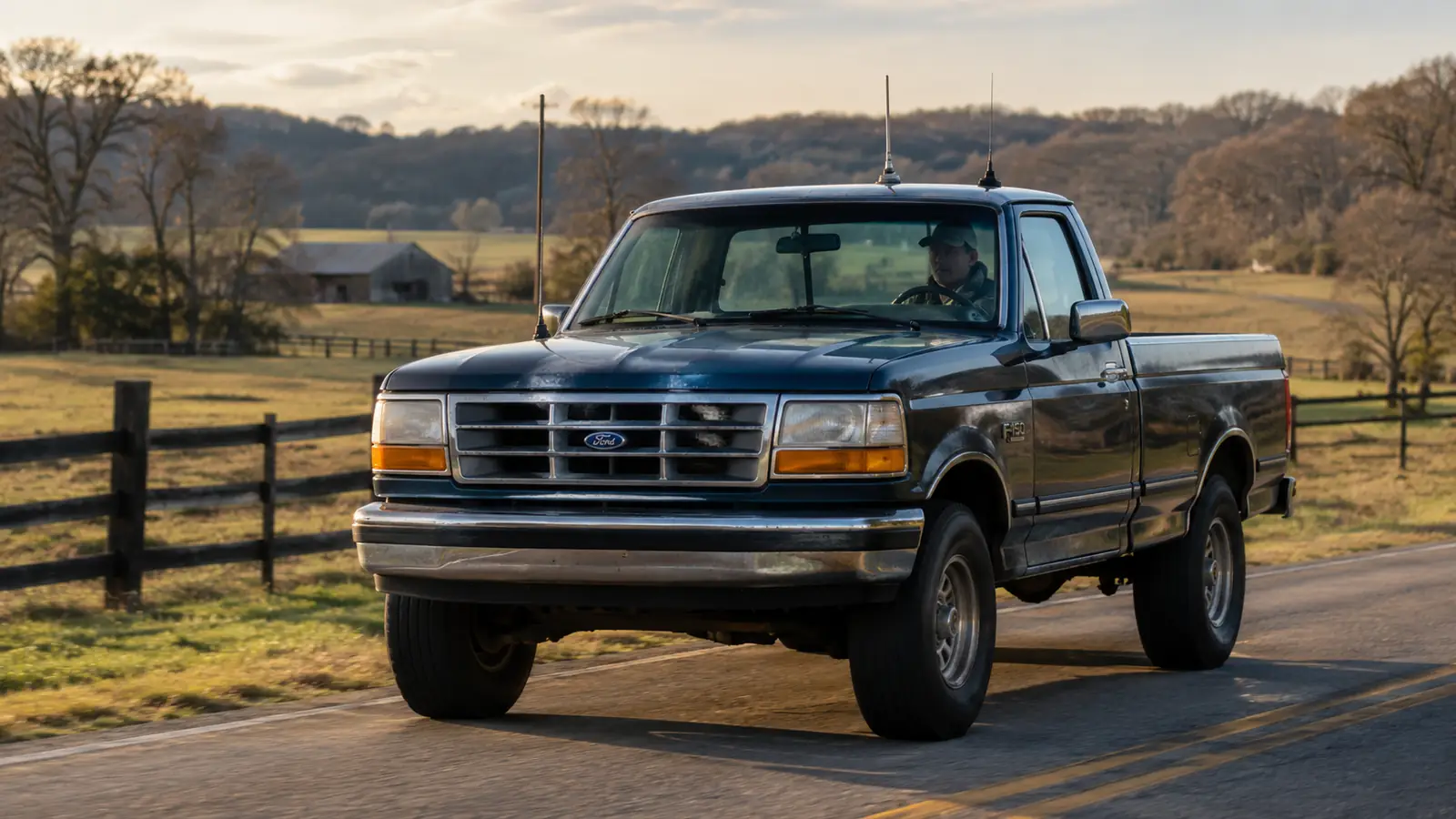
During storm season the AnyTone comes out of the truck and goes on the bench in the spare bedroom, running off the Tekpower TP30SWI supply. The VFAN stays on the truck. That means the antenna only gets used when I am driving, which is most days. I take the F-150 to the feed store, into Cookeville, and out to the county road where my brother lives. The radio is on more than it is off. I mention this because a lot of reviews treat an antenna like a lab instrument. Mine lives on a working truck, goes through car washes, sits in the sun, and gets rained on. That is the test that matters.
I check the SWR with the NanoVNA-H about twice a year, and after any close call with a low branch. That habit caught the one real problem I had with this antenna, and I will get to that in a minute. If you have never checked SWR, it is standing wave ratio, a measure of how well the antenna matches the radio. High SWR means power is bouncing back into the radio instead of going out the antenna. It takes longer to read about than to do.
What the Listing Doesn't Tell You
The listing tells you it is dual band, 2 meter and 70 centimeter, with a magnetic mount. All true. What it does not tell you is that a mag mount is only as good as the surface it is stuck to. The roof of a steel truck cab is a fine ground plane. A fiberglass roof or a plastic tonneau cover is not. If you park the antenna on a non-metal surface, you are wasting your money. I have seen hams do exactly that and then blame the antenna for poor performance.
It also does not tell you about the coax. The cable that comes attached to the base is thin, and the connector at the radio end is the usual SO-239. That is fine for a short run. What matters is that you route it so the door does not pinch it. I learned this the hard way when my SWR jumped after I shut the door on the cable for a week. The fix was simple. I rerouted the cable along the windshield pillar and the SWR came back down. The lesson is that the cable is part of the antenna system, and a pinched cable is a broken antenna.
And it does not tell you that the magnet is stronger than you expect. That sounds like a good thing, and mostly it is. But it means you have to be careful setting it down on the roof, because it will grab the metal with a snap. It also means the antenna is not coming off in a car wash, which is a comfort. I have been through the car wash twice and it did not move. The magnet is also why you should not put this antenna on a hood you care about, because it will scratch the paint if you slide it around. Set it down once, in the right spot, and leave it.
SWR, Ground Planes, and the Fine Print
SWR is standing wave ratio, a measure of how well the antenna matches the radio. High SWR means power is bouncing back instead of going out. With a mag mount on a steel roof, the roof becomes part of the antenna. Get the antenna in the middle of a large metal surface and the SWR on both bands should be respectable. I measured 1.4 on 2 meters and 1.6 on 70 centimeters with the NanoVNA-H. Those numbers are fine, and they have stayed stable for two years.
The fine print is this. The antenna wants to be on metal, and it wants to be high. On the cab roof it clears the cab by a few inches, which puts it above most of the truck body. That helps. If you mount it on a hood or a trunk lid, you are lowering the antenna and putting it next to a big metal surface that blocks signals in one direction. Roof center is the right answer. I know roof center sounds like a small detail, but it is the difference between an antenna that works and an antenna that works when it feels like it.
The other fine print is the counterpoise question. A mag mount uses the vehicle body as its counterpoise, the part of the antenna system that completes the circuit. On a truck with a steel bed and cab, that works well. On a small car with a lot of plastic body panels, it works less well. The VFAN is not the problem in that case. The vehicle is. If you drive a car with a fiberglass hood and a plastic bumper, you may see worse performance than I did, and it will not be the antenna's fault.
Two Years of Daily Driving
After two years the VFAN still works. The magnet still holds. The coax still flexes. The threads on the base connector are still clean, because I put a little dielectric grease on them when I installed it and I check them when I check the SWR. That is the kind of maintenance that sounds fussy until a connector seizes up on you in the middle of a storm. I have had that happen with other gear, and it is not fun.
The one real problem I had came in the first winter. A hard frost had the truck parked outside for a week, and when I finally drove it, the antenna whipped in the wind on the highway and the base rotated slightly on the roof. Not enough to fall off, but enough to change the SWR. I tightened the set screw on the mount, re-centered it, and it has stayed put since. That is the kind of thing nobody puts in a review, and it is exactly the kind of thing you need to know if you live somewhere with real winters.
Performance has been steady. I hit a repeater 40 miles away on 2 meters from the truck, which is about what I expected from a decent mag mount. On 70 centimeters I get into the local repeater with no trouble. The dual band means I do not have to swap antennas when I change bands, which is the whole point of buying a dual band antenna instead of two singles. I have made that swap with two separate antennas before, and I do not miss it.
In a real emergency, the antenna would matter. During the 2020 ice storm I was using a handheld with a rubber duck and I could barely reach the repeater from the house. With the VFAN on the truck and the AnyTone on the bench, I can hit the same repeater from the driveway. That difference is the whole reason I bought it. I am not trying to scare anyone. I am just saying that when the power goes out and the cell towers go quiet, the radio in the truck is the thing that still works.
Alternatives I Considered
Before I settled on the VFAN, I looked at a couple of other options. A permanent NMO mount with a hole drilled in the roof is the classic answer, and it is the better answer for someone who never wants to take the antenna off. I did not want to drill holes in a truck I actually like, and I wanted the ability to move the antenna between vehicles or onto a metal cookie sheet on the bench when I am testing. That flexibility is the real reason a mag mount made sense for me.
I also considered a foldable antenna for the handheld, which serves a different job. The VFAN is for the truck. The Baofeng BF-F8HP stays on the kitchen counter during storm season so Joan can reach me, and that handheld has its own little antenna. The VFAN never goes on the handheld, because a mag mount is a mobile antenna and a handheld is a walk-around radio. Mixing the two is a mistake. I have seen people try to use a mag mount on a handheld and the result is always awkward and usually worse than the stock antenna.
The honest comparison is between the VFAN and a drilled NMO mount. The VFAN is cheaper to start with, installs in ten minutes, and leaves the truck unmodified. The drilled mount is more permanent and slightly more efficient because there is no coax loss through the magnetic connection. For my use, the convenience won. I have not regretted it in two years. If I ever buy a truck I plan to keep for a decade, I might drill that one. This truck is not that truck.
The Cable Routing Problem
If there is one thing I would tell a new ham about this antenna, it is to spend twenty minutes on the cable before you ever key up. The cable routing decides whether the antenna works or not. Run the coax so it does not kink, does not pinch, and does not rub against a sharp edge. I use a few small adhesive cable clips to hold it along the windshield pillar, and I leave a little loop at the base so the cable can flex when the antenna whips in the wind.
The other thing about the cable is the connector. The VFAN uses a standard SO-239 connector at the radio end, which means you can use any decent coax jumper if you ever need to replace the one that came with it. I have not needed to replace mine, but I like knowing the option is there. A lot of cheap antennas use odd connectors that lock you into one cable. This one does not, and that is a point in its favor.
What I'd Do Differently
If I were installing this antenna again tomorrow, I would do three things the same and one thing differently. The same: cab roof, center of the roof, cable clipped along the pillar. The different: I would check the set screw on the base after the first frost instead of waiting for the SWR to tell me. That one check would have saved me a week of wondering why the radio sounded wrong.
I would also keep a spare mag mount in the garage. Not because the VFAN is unreliable, but because a mag mount is the one piece of mobile gear that can fail in a way you do not notice until you need it. A magnet can weaken, a cable can crack, a connector can corrode. I keep a spare of everything else on the bench in the spare bedroom, so it makes sense to keep a spare antenna too. That is not a criticism of this antenna. It is just how I think about preparedness.
What I Liked
- Strong magnet holds the antenna on the roof at highway speed and through the car wash
- Dual band coverage on 2 meters and 70 centimeters with no antenna swap
- Ten minute install with no holes drilled in the truck
- SWR measured 1.4 and 1.6 on the two bands with the NanoVNA-H
- Standard SO-239 connector means the coax can be replaced with any decent jumper
- Two years of daily driving with no real failure
Where It Falls Short
- Cable routing is up to you, and a pinched door seal will wreck your SWR
- Needs a metal roof to work properly, so it is not for every vehicle
- The base can rotate after hard frost if you do not check the set screw
- Not a replacement for a drilled NMO mount if you want maximum efficiency
- The strong magnet can scratch paint if you slide the base around
I hit a repeater 40 miles away on 2 meters from the truck. That is about what I expected from a decent mag mount, and the VFAN has done it consistently for two years.
Who This Is For
This antenna is for the ham who wants to get on the air from the truck without drilling holes. It is for the person who wants dual band coverage on 2 meters and 70 centimeters, who will take ten minutes to route the coax properly, and who understands that a mag mount needs a metal roof. If that is you, the VFAN is a sensible buy. It is not the fanciest antenna on the market, but it is honest, and it works.
Who Should Skip It
Skip it if your vehicle has a fiberglass roof or if you want a permanent installation. Skip it if you expect a mag mount to fix a bad radio or a bad location. And skip it if you are not licensed, because you need a license to transmit, and no antenna makes that legal. The VFAN is a tool, not a workaround. If you want the best possible performance from a mobile antenna, drill the hole and buy an NMO mount. If you want a practical, removable antenna that works, this is a good one.
The Bottom Line on the VFAN
After two years of daily driving, the VFAN dual band mag mount is still on the roof of my F-150, and I would buy it again. Check today's price on Amazon.
Amazon Check Today's Price on Amazon →