
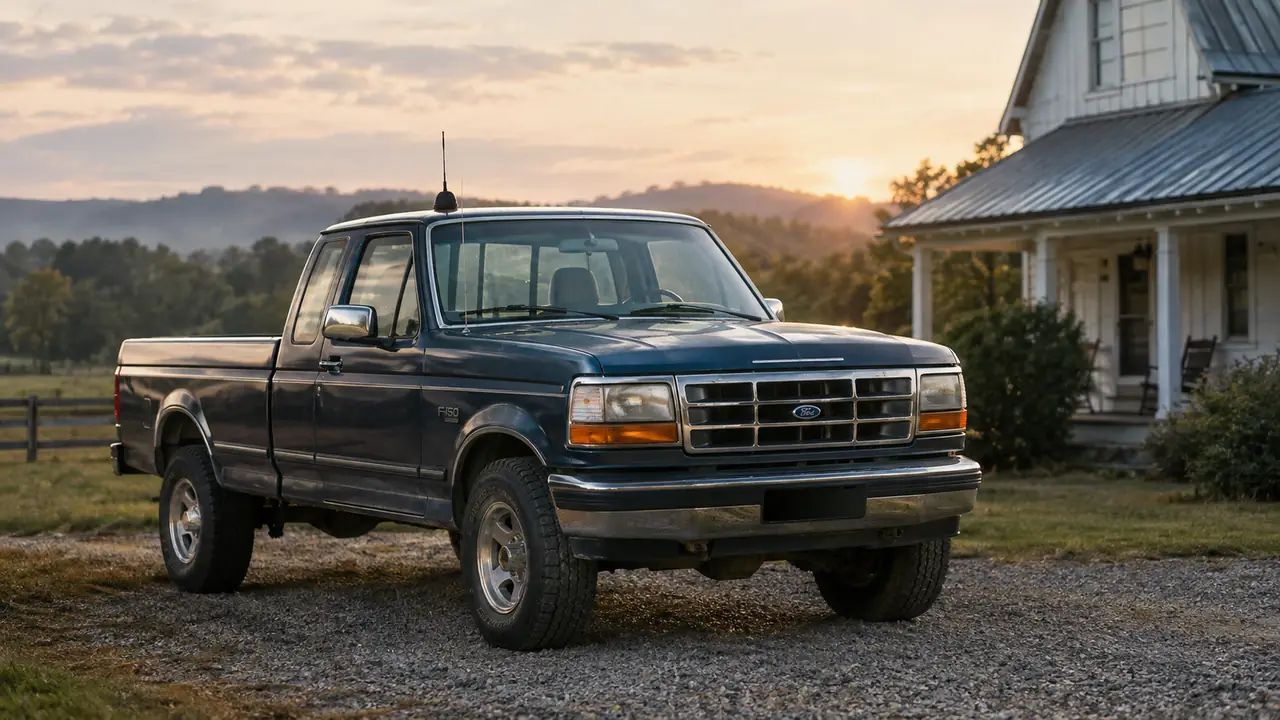
When my old handheld finally died after more than a decade, I did what most hams would do. I went out and bought a better radio. That handheld had been a faithful little radio ever since I bought it back in 2009, but I was ready for an upgrade. The AnyTone AT-778UVII went under the dash of my F-150, and I figured the days of weak receive were over. They weren't. On the drive to work I was still missing half the traffic, and the local repeater sounded like it was on the other side of the county instead of the other side of the ridge.
The radio was fine. I knew that much because the same model was doing good work in a friend's truck. The problem was the antenna. I was still running a cheap magnet-mount I had picked up years before, and it was doing exactly what cheap antennas do. It let the radio hear everything poorly instead of hearing a few things well. What I needed was a better antenna, and the VFAN dual-band magnetic mount turned out to be exactly that.
Here is the part that took me too long to learn. The antenna is the radio. You can spend real money on a new rig, but if the signal never makes it out of the antenna, you have bought yourself an expensive way to hear static. SWR, which is a measure of how much power actually makes it out of the antenna instead of bouncing back down the coax, was the first number that told me something was wrong.
So I swapped the old antenna for the VFAN. Same radio, same truck, same route to work. The difference showed up on the first transmission. Repeaters I had written off as out of range came back in clear. The noise dropped. And when I checked the SWR with the NanoVNA-H, the reading had gone from over 2 down to 1.3, which is about as good as a mobile install gets.
That was two years ago, and the VFAN has been on the cab roof ever since. It has been through Tennessee summers, car washes, and enough gravel-road vibration to loosen half the screws in the truck. The magnet has never let go, and the coax has never needed a second look. I checked the mount after the first car wash, expecting to find it nudged out of place. It had not moved a quarter of an inch. That is the quiet kind of performance that does not show up in a spec sheet.
Same radio, same truck, same route to work. The only thing I changed was the antenna, and the SWR dropped from over 2 to 1.3.
Hear the repeaters you have been missing
The VFAN dual-band magnetic mount is the antenna I have run on my F-150 for two years. It is a simple fix, and it is the one I would make first if I had it to do over. It covers both 2 meters and 70 centimeters, and it has more than 1,300 ratings on Amazon for a reason.
Amazon Check Today's Price on Amazon →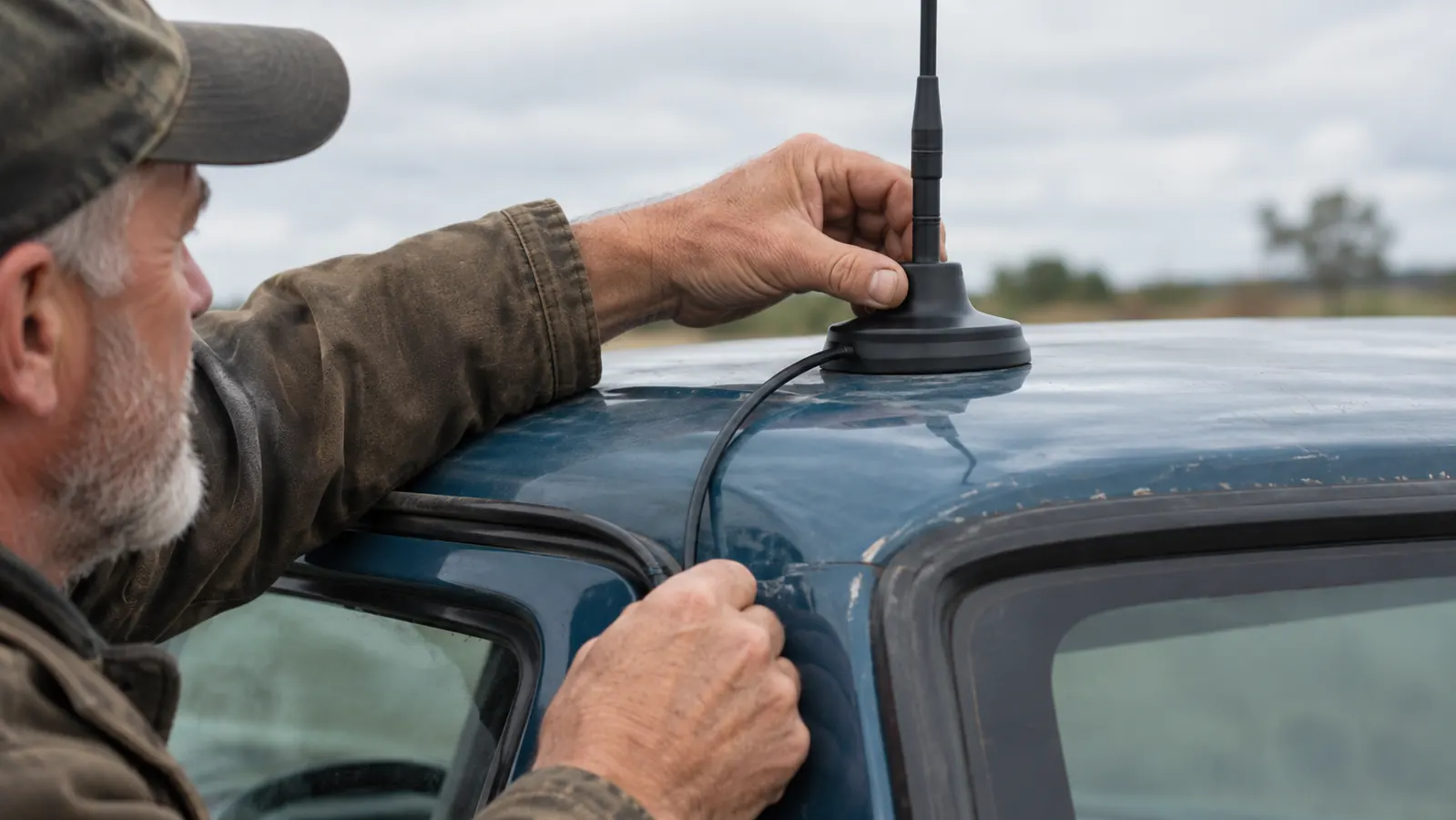
Why the ice storm changed my setup
I have a reason for caring about this that has nothing to do with chasing distant repeaters. In 2020, an ice storm took out power and cell service in our county for four days. We came through it fine, but we also came through it cut off. Joan and I agreed after that week that the house would always have a way to reach the truck, and the truck would always have a way to reach the world.
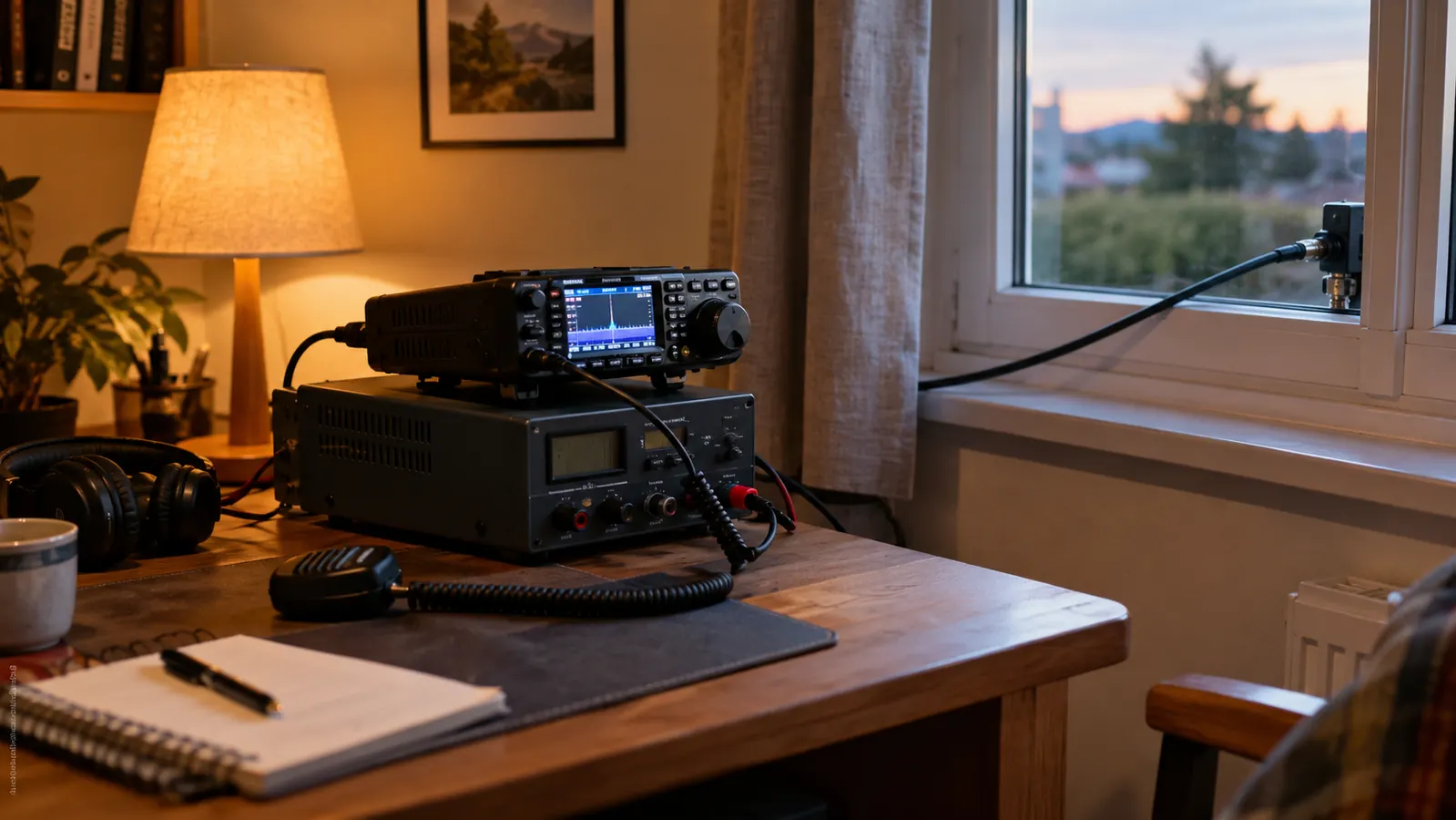
Joan is not a ham, but during storm season she keeps the Baofeng on the kitchen counter, charged and ready, so she can raise me if she needs to. When a storm is coming, I pull the AnyTone out of the truck and run it on the bench in the spare bedroom off the Tekpower supply. The VFAN stays on the cab roof, and the truck stays parked and ready. The point is that we have a plan, and the plan does not start with hoping the cell towers come back up.
The VFAN is a dual-band antenna, so it covers both 2 meters and 70 centimeters, VHF and UHF, the two bands where the local repeaters live. One antenna, both bands, no switching, no second coax. For a mobile setup that is the whole job, and it does the whole job without any fuss.
The other thing I appreciate is that a magnetic mount means I did not have to drill holes in the truck. No holes, no brackets, no rust starting where the drill bit went through. The antenna sits flat on the cab roof, the coax runs in through the door, and when I sell this truck someday the roof will still be solid. That matters more to me now than it did when I was thirty.
Every few months I run the NanoVNA-H over the setup just to confirm nothing has drifted. So far the reading has not moved. I do the same check on the wire antenna out back, and that one needs a tune every spring. The VFAN just sits there and works. That is the kind of boring, dependable result I was after when I rebuilt everything two years ago.
What I'd Tell You If We Were Sitting at My Kitchen Table
If you came over and asked whether you should upgrade your radio, I would tell you to hold off and check the antenna first. Borrow an SWR meter or a NanoVNA-H and see what the number actually is. If the antenna is the weak link, no radio in the world will fix it. A good antenna on a modest radio will beat a fancy radio on a bad antenna every time. Start there. If the antenna checks out, then go shopping. And if you are shopping, a dual-band magnetic mount is about the easiest first step there is. It is not the fanciest antenna on the market, and it does not need to be. It took me ten minutes to install, it has not moved in two years, and it did more for my signal than anything else in the rebuild.
Before you blame the radio, check the antenna
That is the advice I wish someone had given me. The VFAN dual-band magnetic mount is the antenna I have trusted on my truck for two years, and it is where I would start if my mobile setup sounded weak. Check today's price on Amazon.
Amazon Check Today's Price on Amazon →