
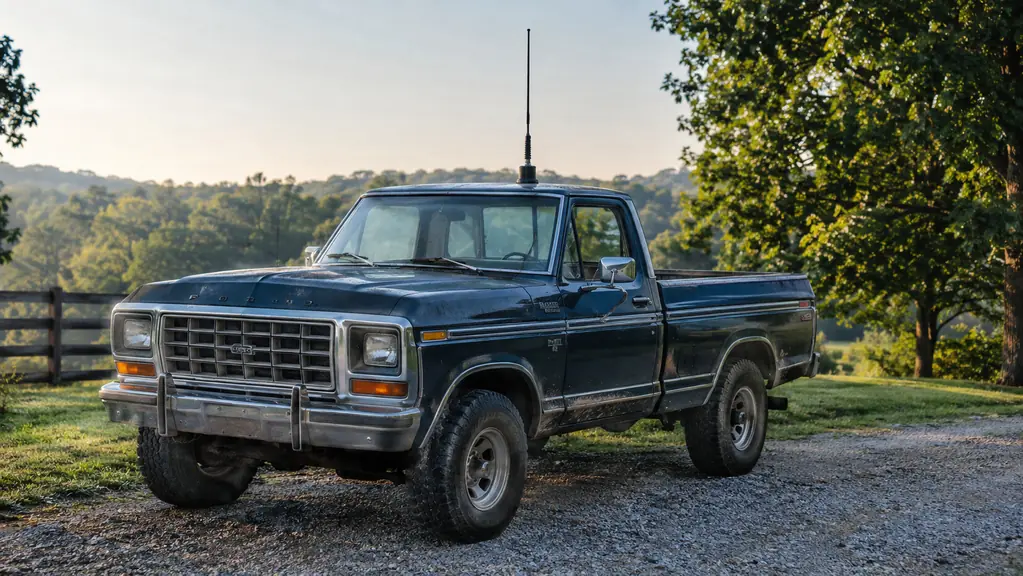
The first time I put a magnet-mount antenna on a truck, I did it the lazy way: slapped the magnet near the back of the cab, ran the coax through the door, and rolled the window up on the cable. It worked for about a week. Then the coax pinched, the SWR drifted, and I spent a Saturday afternoon chasing a problem I had caused myself. Mounting a mobile antenna on a truck roof is not hard, but it rewards a little planning. I have done this on my older Ford F-150 with the VFAN Dual Band Magnetic Mount Antenna, and the steps below are the ones I wish someone had walked me through the first time.
Before we get into it, one thing up front: you need a license to transmit on a ham radio, and nothing in this guide changes that. What I am showing you is the mechanical part, getting the antenna on the roof and the coax to the radio so the signal actually goes somewhere. The VFAN is a dual band antenna, which means it covers the 2 meter and 70 centimeter bands, the two places most mobile hams spend their time.
The antenna I used for this install: the VFAN Dual Band Magnetic Mount
It has been on my F-150 cab roof for about two years now, through daily driving, gravel roads, and a Tennessee summer. If you are starting from scratch, this is the mount I would buy again.
Amazon Check Today's Price on Amazon →Step 1: Pick the right spot on the roof
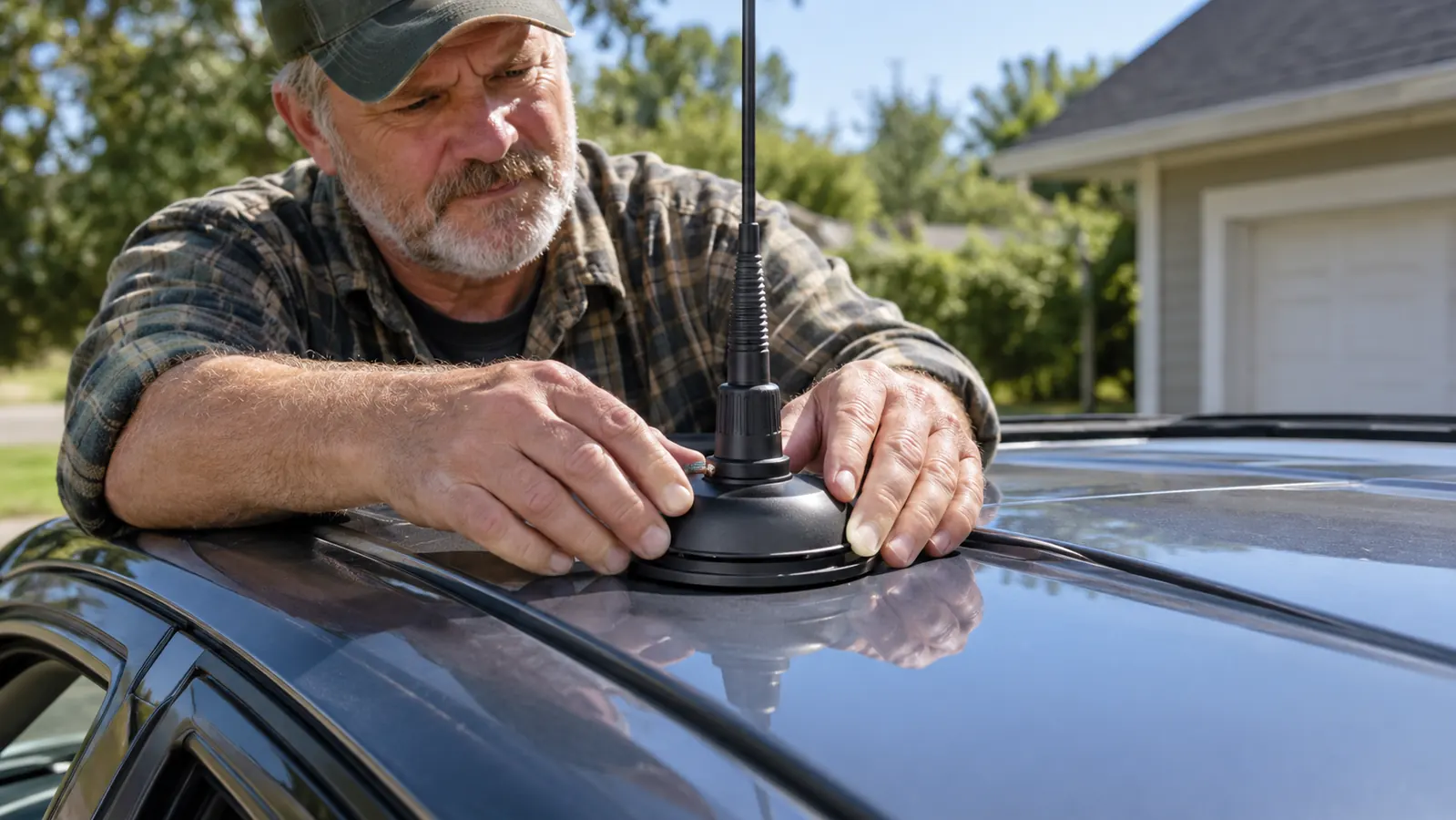
The roof of a truck cab is the best place for a magnetic mount, and the best spot on that roof is the center, about a third of the way back from the windshield. You want the antenna as close to the middle of the metal as you can get. That gives the ground plane, the metal surface the antenna needs to work against, the same amount of metal in every direction. It also keeps the antenna away from the cab lights, the windshield, and the drip rail, all of which can distort the pattern or pinch a cable.
On my F-150, the center of the cab roof is flat enough that the VFAN's magnetic base sits flush with no rocking. If your truck has a rib or a raised seam in that spot, move a few inches forward or back until the base sits flat. A magnet that rocks is a magnet that will eventually slide, and a sliding antenna means a scratched roof and a radio that goes quiet at the worst time.
Clean the spot before you set the magnet down. A quick wipe with a rag to get the dust and road film off makes a real difference in how well the base holds. I do not use anything harsh, just a dry cloth. If the roof is wet, dry it first. The magnet will hold through rain once it is on, but it seats better on a clean, dry surface.
Step 2: Run the coax before you stick the antenna down
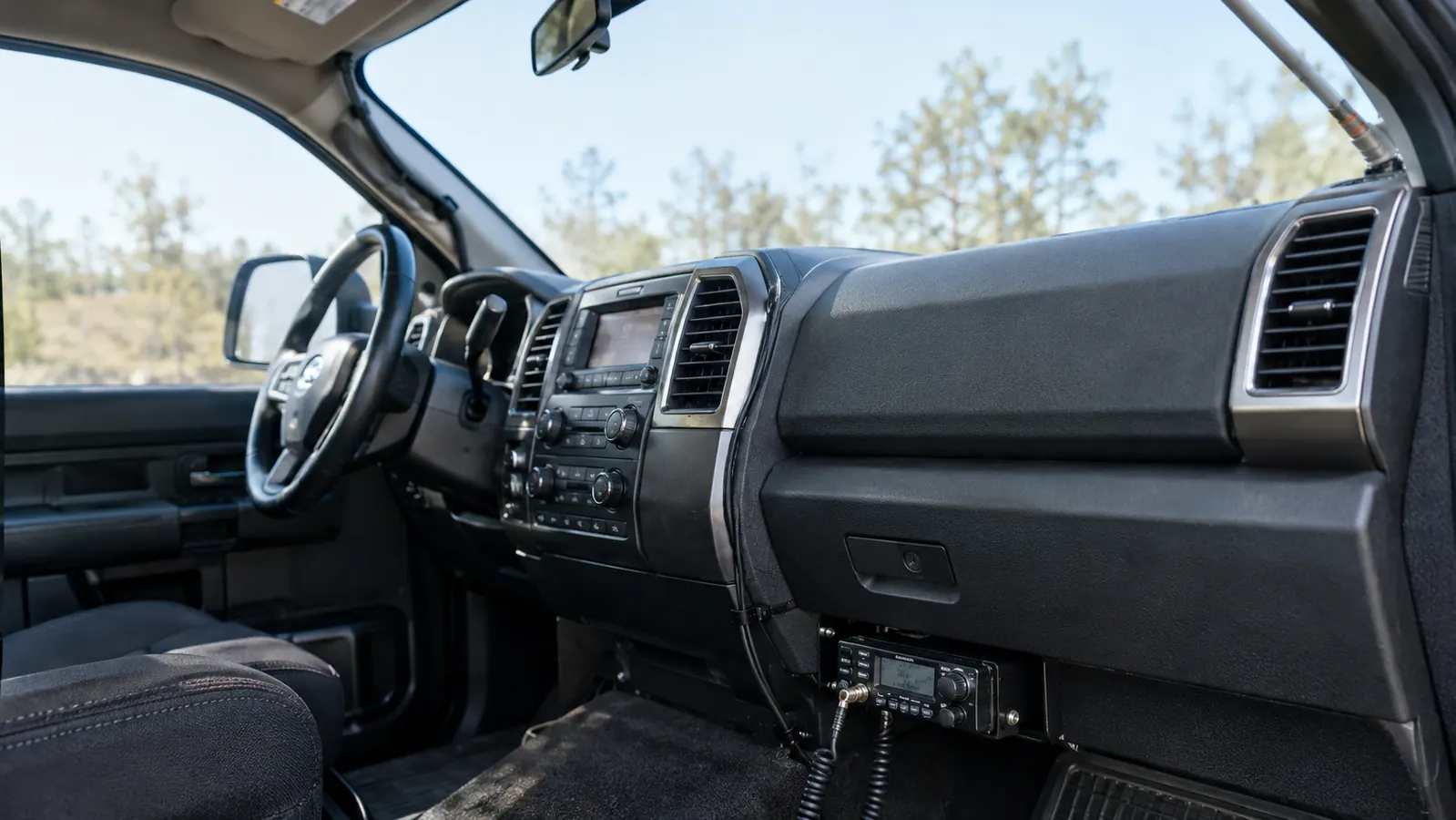
This is the step people skip, and it is the step that causes the most trouble. Route the coax cable from the radio location to the roof before you commit the antenna to the metal. On my truck, the radio is under the dash, so the cable goes up the A-pillar, the post between the windshield and the door, and tucks under the headliner. The goal is a cable run that does not get pinched by a door, crushed by a seat track, or melted by the defroster.
Leave a little slack at both ends. At the antenna end, slack lets you lift the magnet to clean under it or move it a few inches without straining the connector. At the radio end, slack keeps the connector from pulling on the back of the radio when the truck hits a bump. A coax connector that is under tension will fail eventually, and it will fail inside the cable where you cannot see it.
If your truck has a third brake light or a cab light in the center of the roof, route the cable around it rather than trying to run it underneath. The VFAN's cable is thin enough to tuck along the edge of the headliner, and a few small cable clips will hold it in place. I use clips meant for automotive wiring, the kind with a sticky pad and a snap closure, and they have stayed put through two Tennessee summers.
Step 3: Seat the magnet and check the connection
Now set the VFAN down in the spot you cleaned, and give the base a firm press. The magnet should grab the roof with an audible click. If it does not feel solid, lift it, check for debris on the base or the roof, and try again. A magnetic mount is only as good as the contact between the magnet and the metal. That contact is what carries the RF, the radio frequency signal, so a dirty or uneven seat costs you signal before you even key the mic.
Connect the coax to the antenna base and finger-tighten the connector, then give it a quarter turn with a small wrench. Do not crank it. The connector on the VFAN is a standard type, and the threads are soft enough that over-tightening will damage them. Finger-tight plus a gentle nudge is the right amount.
Run the other end of the coax to the radio and connect it the same way. Before you mount the radio bracket or tuck the cable away, do a quick test: key the radio and listen for a clear signal or a good repeater. If you hear nothing, check the connections before you button everything up. It is much easier to fix a loose connector while the cable is still lying across the seat than after it is tucked behind the headliner.
Step 4: Check the SWR and tune if you need to
SWR, or standing wave ratio, is a measure of how much of your radio's power is actually leaving the antenna instead of bouncing back into the radio. A high SWR means the antenna is not seeing the roof as a good ground plane, or the cable is damaged, or the antenna is too close to something metal. I check SWR on every antenna I install, and I use a NanoVNA-H for the job. It is a small device that measures the antenna's performance across the bands, and it has saved me more than once.
For a dual band antenna like the VFAN, check the SWR at the bottom, middle, and top of both bands. The 2 meter band runs from 144 to 148 MHz, and the 70 centimeter band runs from 420 to 450 MHz. A good reading is 1.5 to 1, or lower. If you see 2 to 1 or higher at the edges of the bands, the antenna may be fine and the problem may be the mount location. Move the antenna an inch or two and check again. On my truck, the VFAN reads about 1.2 to 1 across both bands with the antenna centered on the roof, which is about as good as a magnetic mount gets.
If you do not have a NanoVNA or an SWR meter, you can still do a rough check by listening. Transmit to a friend or a local repeater and ask for a signal report. A radio that is getting out well will usually come back with a clear report. But a meter is better, because it catches problems before they cost you a radio. A high SWR can eventually damage the final amplifier in the radio, and replacing a radio is a lot more expensive than buying a meter.
Step 5: Secure the cable and do a final road test
Once the antenna is seated and the SWR looks good, finish the job by securing the cable. Tuck it along the edge of the headliner, use your cable clips to hold it at the A-pillar, and make sure it does not rub against anything sharp. The goal is a cable that stays put for years without you thinking about it. On my F-150, the VFAN's cable runs down the passenger side A-pillar, and I have not touched it since the day I installed it.
Then take the truck for a drive. Listen on a repeater as you go, and note how the signal behaves on hills, under overpasses, and near power lines. A magnetic mount antenna will change its performance a little as the truck moves, because the roof is not a perfect ground plane and the body of the truck acts as part of the antenna. That is normal. What you are listening for is a signal that stays usable, not one that cuts out every time you hit a bump.
After the drive, check the magnet again. If it has moved even a fraction of an inch, clean the roof and reseat it. If it has not moved, you are done. Give the base a wipe now and then, and the VFAN will sit there for years. Mine has been on the truck for about two years, through daily driving and more than one gravel road, and it has not budged.
What Else Helps
A few small things make the install better. A roll of automotive cable clips costs a few dollars and keeps the coax from rattling. A small tube of dielectric grease on the connector threads keeps moisture out and makes the connection easier to undo next time. And if you plan to leave the antenna on the truck full time, take it off once every few months, clean the base and the roof, and put it back. That takes two minutes and prevents the magnet from picking up tiny metal particles that slowly eat into the paint.
One more thing worth doing: label the coax at both ends. A piece of tape with a marker line on it sounds silly until you have two cables running under the dash and you cannot remember which one goes to the antenna. I learned that the hard way when I added the VFAN to the truck and still had the old magnet antenna's cable lying in the garage. A ten-second label saved me an afternoon of tracing.
A magnetic mount antenna is only as good as the contact between the magnet and the metal. Clean the roof, seat it firm, and check the SWR before you trust it.
Ready to put the VFAN on your truck roof?
It is the same antenna I have run on my F-150 for about two years, and it has never let me down. If you are ready to do the install, grab one and follow the steps above.
Amazon Check Today's Price on Amazon →